Starting right makes everything easier. Earl Clay reminds new keepers that the basics form the foundation. Mixing too many “recipes” early creates an unpalatable stew. Hands-on work is how you truly learn.
This guide is for the curious beginner who wants lasting results, not quick fixes. Expect the first year to favor consistency over complexity. Small, repeatable habits protect water quality and fish health.
We walk step-by-step from planning your tank to long-term care. Pick one proven method, stick with it, and watch cause and effect become clear. Ahead, we cover core pillars: water quality, flow and oxygen, biofiltration, lighting and temperature, pacing your stocking, and a steady maintenance rhythm.
Plan your setup to fit real life — time, space, and budget. That keeps the hobby inspiring instead of stressful.
Key Takeaways
- Saltwater Aquarium.
- Define success as stable parameters, healthy fish, and manageable upkeep.
- In year one, consistency beats complexity every time.
- Choose one simple method and stick with it to learn cause and effect.
- Focus on water quality, flow, filtration, lighting, stocking pace, and routine maintenance.
- Design a plan that fits your time, space, and budget to avoid burnout.
Start With Your Dream Tank and a Simple Plan
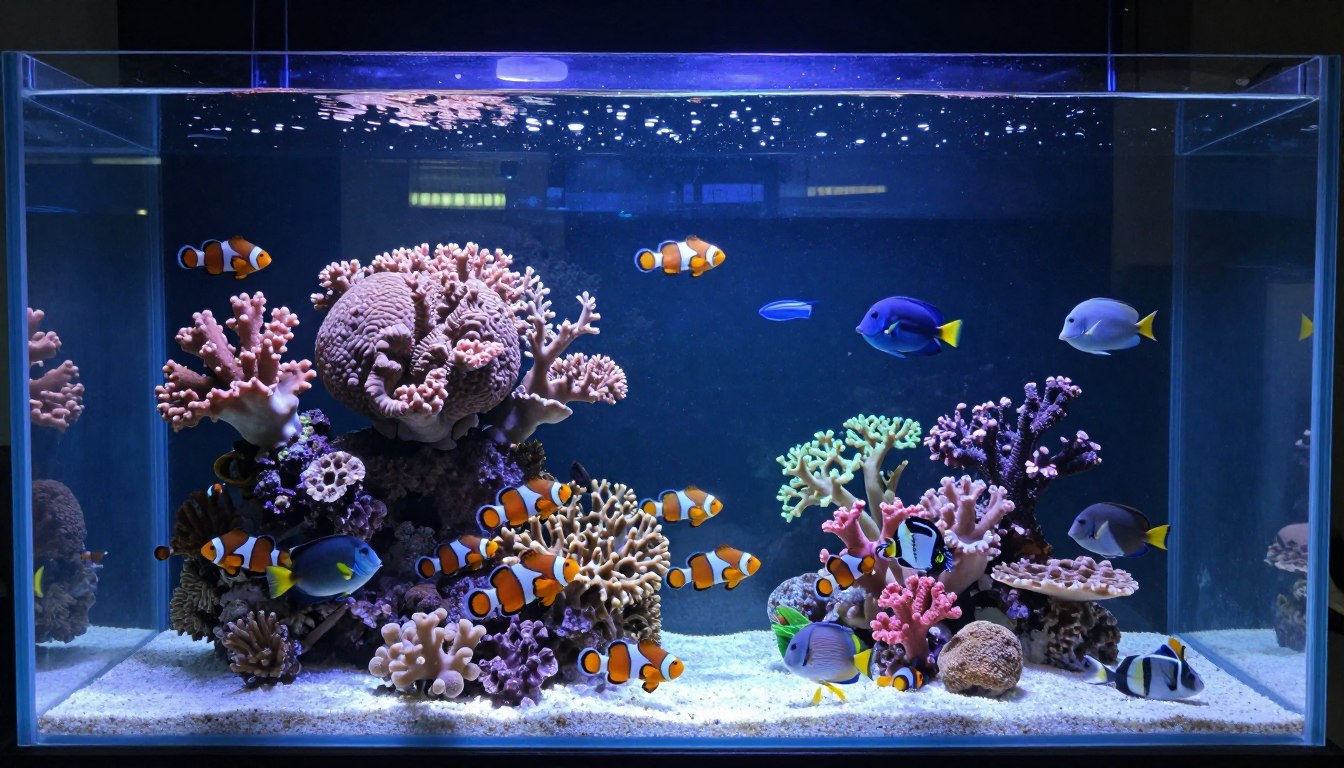
Start with one realistic vision so choices stay simple and steady. Decide whether you want a colorful reef or a fish-only display. A reef tank needs tighter stability and more testing. A fish-only setup is lower maintenance and often cheaper.
Pick one trusted method and copy it. Mixing filtration philosophies or competing nutrient plans usually causes instability for beginners. Follow creators who show wins and failures and explain the why behind their choices.
Budget honestly before you buy. Factor in salt mix, RODI water, test kits, replacement parts, and livestock costs so money surprises don’t force upgrades.
- Match goals to lifestyle: daily feeding checks, weekly tasks, monthly deep cleans.
- Prevent upgrade churn: the right plan limits needless rebuys.
- Starter checklist: salt, RODI, test kits, spare pump parts, and a simple maintenance calendar.
Rule of thumb: time and money are the real limits. Start simple — it’s not settling; it’s building a foundation that lets your dream evolve with confidence.
Choose the Right Tank Size for Stability and Success

Choosing the right size early saves time, money, and frustration down the road. Bigger volumes cushion mistakes. They slow temperature swings and blunt nutrient spikes, which helps a beginner learn with less drama.
“Bigger is better — more gallons mean more stability, room for live rock and substrate bacteria, and space for stronger gear.”
Why larger systems help
Larger tanks dilute errors. A heater hiccup or an overfeed causes smaller changes in a 50–100 gallon system than in a nano tank.
Compare evaporation and salinity drift: small setups swing fast. Mid-size systems give you time to react and keep parameters steady.
Where the system will live: floors, feet, and access
- Measure the stand footprint in feet and confirm floor load and level. Two people should test the placement before the final move.
- Leave service room — at least a few inches behind and above the unit for plumbing, filters, and lid access.
- Plan for water work by placing the tank near a sink or hose access to make mixing and changes convenient.
- Electrical basics: plan outlets, neat cable routing, and reachable power strips so gear stays serviceable.
- Patience pays: if the dream is bigger, save and buy wisely rather than restarting with the wrong size.
For a practical deep dive on sizing, see the tank size guide.
Build Your Core System: Filtration, Flow, and Oxygen

A reliable core system keeps livestock healthy and cuts daily stress. Think steady turnover, good oxygenation, and a simple mechanical filter you can clean quickly. These three pieces protect water quality and make maintenance predictable.
Return pump essentials and planning for spare parts
The return pump moves water from the sump back to the display. Choose a pump sized for steady turnover, not peak bragging rights. Aim for consistent flow that matches your livestock and live rock load.
Plan for spares—an extra impeller or a backup pump saves fish lives during failures. Keep service access clear so you can swap parts without dismantling the whole system.
Protein skimmer basics and why many hobbyists consider it mandatory
“Protein skimmers are mandatory,” Earl Clay says.
A skimmer pulls out dissolved organics before they break down into nutrients. That means clearer water, less algae, and a gentler load on your biological filter. For beginners, a modest skimmer that runs reliably beats a large, finicky model.
Mechanical filter options: filter socks vs fleece roller
Both filter socks and a fleece roller remove solids but differ in cost and work. Filter socks are cheap and simple to change. They need frequent rinsing and can clog fast.
Fleece rollers cost more up front but stretch time between maintenance. They suit keepers who prefer weekly drum changes over daily sock swaps. Choose the option that fits your schedule and budget.
DC pumps and wavemakers for quieter, controllable flow
Modern DC pumps and wavemakers give quiet, adjustable flow. They reduce noise and let you tune currents for coral and fish behavior.
Start simple: avoid stacking nutrient-export tools at day one. Use reliable pumps and a basic filter setup, then upgrade as your skill and goals grow.
- Core checklist: return pump, skimmer, a mechanical filter, and accessible plumbing.
- Maintenance tip: leave space to remove pumps and clean filters without cutting lines.
- Upgrade path: add DC controllers or a fleece roller after stability is proven.
For a shortlist of reliable gear and reliable pump options, plan purchases around serviceability and spare parts rather than lowest price.
Get Water Right From Day One: RODI, Salt Mix, and Salinity
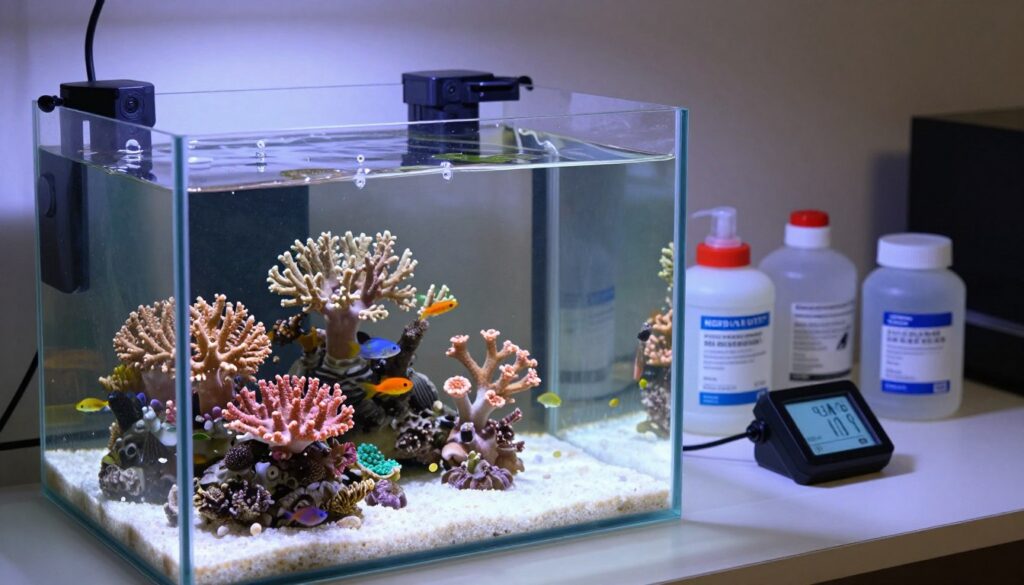
Start with pure water and predictable salinity to make everything else easier. Good water is the invisible foundation for a healthy system. Setting first on quality prevents months of chasing algae and parameter swings.
Why an RODI filter is a foundational upgrade
Buy an RODI filter early. It removes dissolved minerals, chlorine, and contaminants that fuel nuisance algae. Using pure water makes your tests meaningful and gives you control when setting first.
Use a refractometer for accurate salinity
A refractometer beats hydrometer guesswork. It gives fast, reliable salinity readings so you can trust your measurements. Inaccurate salinity costs livestock and undermines confidence.
Match temperature and salinity during top-offs and water changes
Mix new salt to the target salinity, then heat and aerate until it matches the display temperature. That prevents shocks when you add replacement water. Top off evaporation with plain RODI; use mixed saltwater only for planned changes.
- Mix workflow: measure salt, mix with RODI, heat to display temperature, aerate 12–24 hours.
- Top-offs vs. changes: top off with RODI; change with matched salt solution.
- Stability tip: keep temperature and salinity consistent to make cycling and stocking easier long term.
Live Rock and Sand: The Natural Engine of Saltwater Aquariums
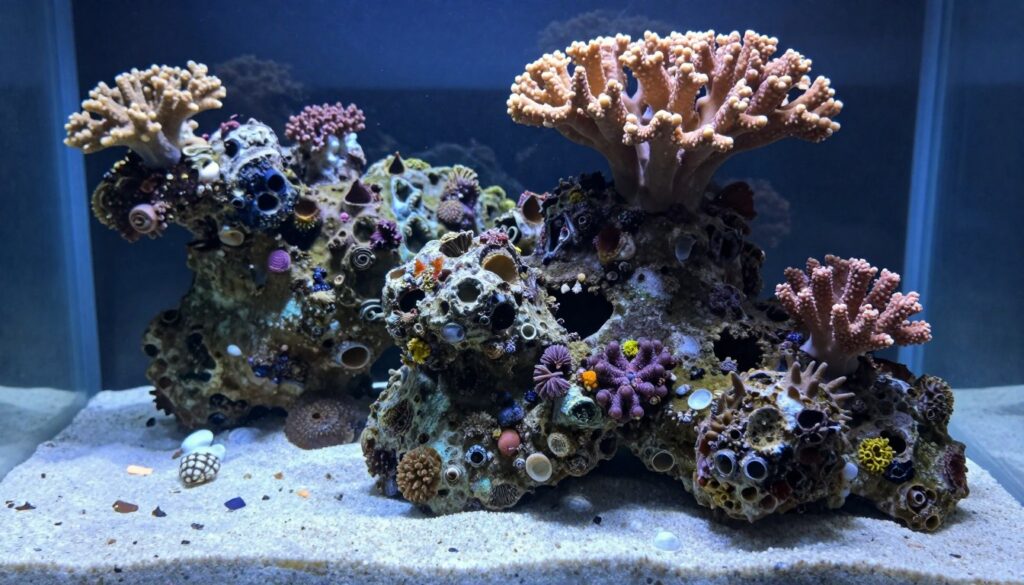
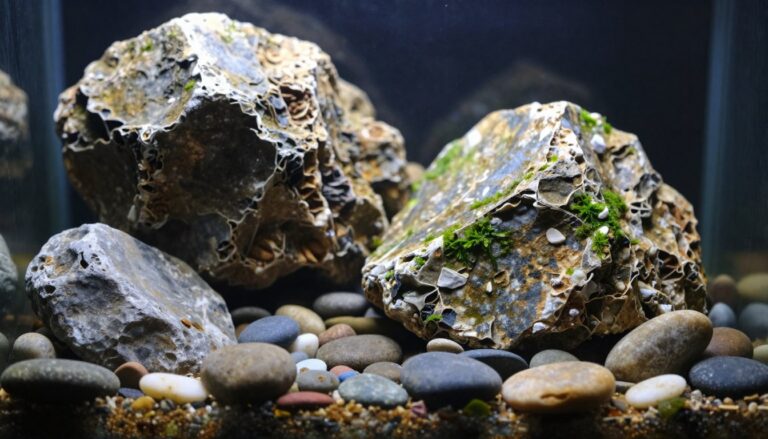
Good rockwork and the right sand turn a new tank from fragile to forgiving. Live rock supplies vast surface area for beneficial bacteria, making biological filtration reliable and reducing the need for complex chemical fixes.
How live rock supports biofiltration
Live rock acts as the system’s engine. Porous surfaces host nitrifying bacteria that convert ammonia to nitrite and then nitrate. That steady processing simplifies early decisions for beginners and lowers day-to-day risk.
Safer aquascaping and stacking tips
Place rocks directly on the tank glass, not perched on sand. This avoids future collapses from shifting substrate or burrowing animals.
Stack like a jigsaw: test each piece for stability, build swim-throughs, and check the layout from multiple angles so the display is both safe and attractive.
Sand types, hitchhikers, and coralline algae
Aragonite sand buffers alkalinity and is forgiving for most reef goals. Prepackaged live sand can seed helpful organisms that speed cycling.
Expect small hitchhikers—many are harmless or beneficial. Observe them with curiosity; they often become part of the system’s clean-up crew.
“Live rock provides incomparable biofiltration,” Earl Clay
Coralline algae often follows as the tank matures. Its purple growth is a good sign of stability and a healthy, maturing system.
- Quick benefits: live rock + smart sand = fewer emergencies and easier upkeep.
- Design tip: prioritize stability over height when stacking rocks.
- Substrate note: choose grain size for desired burrowing and detritus management.
Cycle Your Tank Without Sacrificing Fish

You set your system up for long-term success during the first few weeks of cycling. Cycling builds the beneficial bacteria that convert toxic ammonia into safer compounds so fish can live without harm.
Humane ways to seed bacteria
Live rock and live sand seed your system naturally and jump-start biofiltration. Earl Clay notes these materials often remove the need for a “cycle fish.”
As an alternative, a raw cocktail shrimp provides a controlled ammonia source without harming live fish. Avoid using healthy fish as test subjects.
What to watch as the cycle progresses
Track ammonia, then nitrite, then nitrate. Ammonia will spike first and fall as nitrite rises. Nitrate appears last.
Also monitor salinity and temperature and watch pH for early swings that stabilize with time.
Testing cadence and patience
Test every 48–72 hours during the active cycle. Keep a simple log or spreadsheet of results.
Time is your ally: waiting builds resilient biological filtration and prevents later collapses and algae blooms. Document trends instead of reacting to single readings.
“Patience at the start saves heartbreak down the line.”
- Quick checklist: live rock or raw shrimp, tests for ammonia/nitrite/nitrate/pH, regular salinity/temperature checks.
- Cadence: test every 2–3 days, reduce to weekly once stable.
- Record keeping: notes help you learn cause and effect over time.
Lighting and Temperature Control That Runs on Autopilot
Reliable schedules for light and heat turn guesswork into steady conditions your tank can trust. Stability is the real secret sauce: consistent light and temperature reduce stress and help corals and fish thrive.
Timers and a steady photoperiod
Use timers or built-in scheduling to lock a daily photoperiod. Earl Clay says, “timers, timers, timers.” Aim for about ten hours of full output with gradual ramps if your fixture supports sunrise/sunset.
Set the schedule once, then leave it. Predictable cycles cut algae risk and keep livestock on a healthy rhythm.
Redundancy with two heaters and a controller
Run two heaters for redundancy and connect them to a dedicated temperature controller like an Inkbird or Bayite. A controller keeps tight control and adds alarms so you act before problems escalate.
Program the backup heater a degree or two lower so it only fires if the primary fails. This simple setup creates a safety net without fuss.
PAR reality check
Blue-heavy light can look dim but still be intense. Borrow or rent a PAR meter to set fixtures correctly one time. A single measurement saves months of guesswork and prevents over- or under-lighting.
- Autopilot mindset: automate for consistency, not complexity.
- Practical tip: document settings so you can replicate them across years.
Stocking and Feeding for Healthy Fish and Cleaner Water
Stocking your tank slowly protects both fish and water quality as your system matures. Every new inhabitant raises the bioload, so add one or two at a time and wait weeks to confirm stable parameters.
Quarantine planning to prevent outbreaks
Quarantine is a beginner saltwater aquarium power move, not an advanced chore. Use a small, separate tank with simple hiding spots, a heater, and basic filtration. Observe newcomers daily for signs of parasites so you can treat issues before they reach the display.
Go slow with additions
Add livestock in small batches. This gives bacteria time to scale and keeps nitrates and ammonia from spiking. Slow stocking protects corals and invertebrates and helps the whole community settle into life.
Favor frozen food and reduce nutrient spikes
Frozen mysis and similar foods are easier to portion and usually create less waste than dry pellets. Feed small amounts twice a day and remove uneaten food. Less waste means clearer water and fewer algae problems.
Simple safety: mesh screens and lids
Install a mesh screen or lid to stop jumpers like gobies and wrasses. It’s an inexpensive step that prevents heartbreaking losses and keeps your life plan for the tank on track.
“A short quarantine saves months of heartache.”
- Quick checklist: quarantine tank, slow additions, frozen food, and a mesh lid.
- Goal: a thriving community over time, not a fully stocked tank in a single weekend.
- Tip: for more beginner guides, see a related resource on survivor-io.
Maintenance Rhythm: Water Changes, Testing, and Parameter Stability
Weekly actions are the single most powerful habit a beginner can form. A simple, steady routine of water changes and focused tests keeps small problems from growing into emergencies.
Why weekly water changes are a beginner superpower
For most setups, a 20% weekly water change is a reliable reset. It removes accumulated organics and lowers nitrates so parameters stay forgiving while you learn.
Beginner testing schedule: focus on trends
During the initial cycle, test ammonia and nitrite every 48–72 hours. Once those drop, shift to weekly checks for nitrate, salinity, and temperature to follow trends instead of chasing spikes.
Early-stage reef focus
If you plan a reef or a Red Sea-style system, test alkalinity, nitrate, and phosphate twice weekly for the first six months. Catching swings early protects corals and speeds confident progress across years.
Reagent-based kits and checkers: accuracy matters
Invest in good kits. Reagent tests and digital checkers reduce false alarms and stop costly overcorrections.
“A few accurate tests beat a dozen unreliable ones.”
Phosphate testing example
Try the Hanna Instruments HI713-25 Phosphate Low Range kit (25 tests, $18.99). The workflow is simple: Zero the checker, add reagent to the sample, insert the vial, and read the number. Repeatable, clear readings let you act with confidence.
- Practical tip: match new water temperature before adding it during changes.
- Routine wins: steady water changes and regular tests build predictability that pays off for years.
Protect Your System From the “What Ifs”
A few simple safeguards turn sudden problems into easy checklists. Peace of mind is part of successful keeping—smart, low-cost protections stop small failures from becoming total losses.
Electrical safety basics
Use GFCI outlets for all tank circuits. They trip fast and prevent shocks when water meets power.
Create drip loops on every cord and mount power strips high, out of splash range. Never let cords or strips sit where drips can reach them—salt spray and electricity do not mix.
Practical backup kit
Keep a simple kit ready: a spare heater, spare return pump parts (impellers and seals), and a battery-powered aerator for outages. Test this gear on a schedule so it works when needed.
Backups are cheaper than emergency shipping or replacing livestock and months of progress.
Penalty box and containment
Have a small quarantine or “penalty box” ready to isolate aggressive or stressed fish. A ventilated food-safe container or strainer works for short holds. This saves rockwork and avoids tearing the display apart.
When to add extras like UV
Extras such as UV sterilizers help for specific problems, but don’t add them day one. Use them as targeted tools after identifying a clear need so you don’t overcomplicate your filter chain.
“Safety first: plan for failures. A tested backup beats panic every time.”
- Quick checklist: GFCI, drip loops, mounted power strips.
- Backup kit: spare heater, pump parts, battery aerator—test monthly.
- Containment: penalty box or quarantine to protect fish and the system.
- Extras: add UV for a problem, not as a blanket solution.
Conclusion
A calm, steady plan turns early effort into lasting success. Set a clear goal, pick the right tank size, build a simple, reliable system, and protect stability with a routine you can keep.
Consistency matters: good water practices, steady temperature and light, slow stocking, and patient cycling are the pillars of any thriving aquarium. Use a simple loop—test, observe, adjust, repeat—when things drift.
Keep learning from clubs, trusted shops, and hands-on experience, but avoid information overload. Mistakes will happen; each one is a lesson that makes the hobby more rewarding.
Take one step today: choose an approach, start building, and let time and consistency turn your beginner tank into a more beautiful, sustainable display.
FAQ
How do I choose the right tank size for a stable beginner setup?
What core equipment should I buy first for filtration and flow?
Why is RODI water recommended and how does salinity get measured accurately?
What role does live rock and sand play in biological filtration?
How should I cycle my new system without harming fish?
What lighting and temperature controls do beginners need?
How do I plan stocking and feeding to keep water quality high?
What maintenance schedule should a beginner follow?
Which tests matter most in the early stages of reef keeping?
How can I protect my system from power or equipment failures?
When should I consider adding extras like UV sterilizers or reactors?
What budgeting mistakes do beginners often make?
How do I reduce algae problems in a new setup?