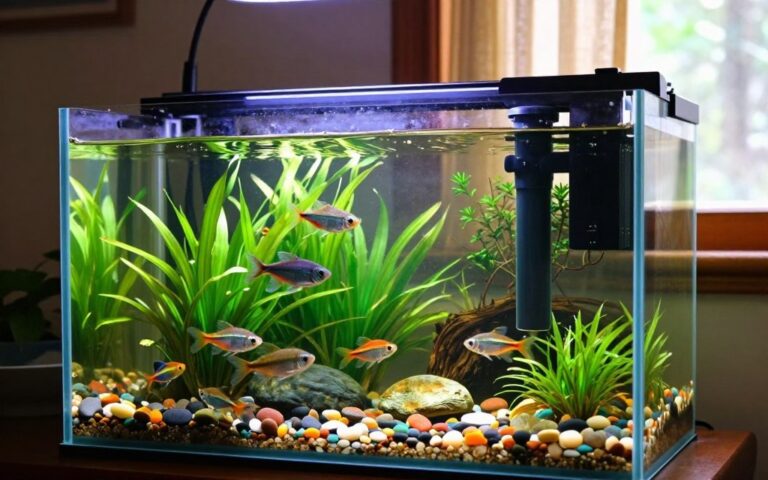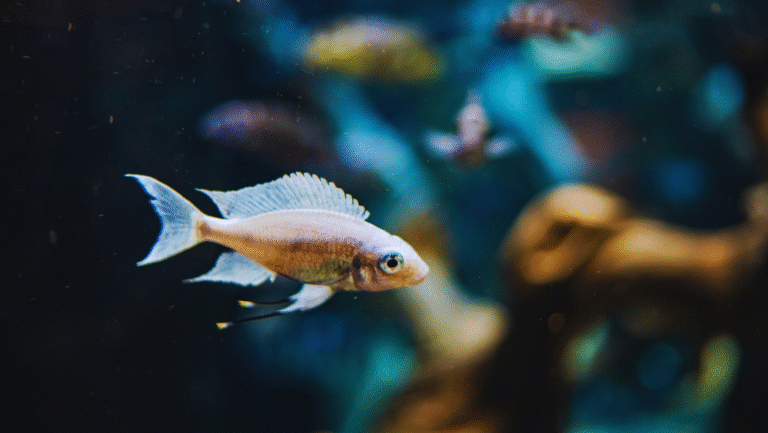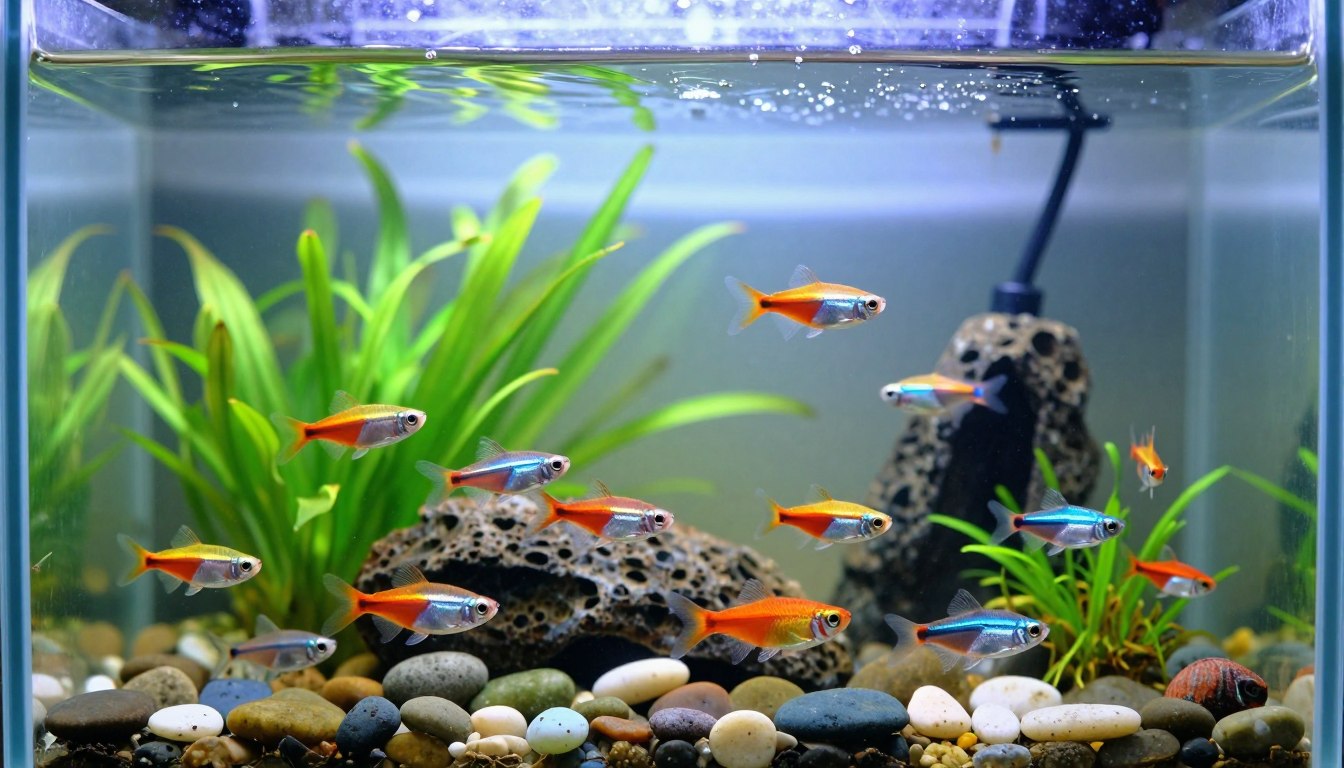
This is a true nano setup. A tiny desktop habitat changes everything. Very small water volume makes stability the main challenge, not showroom style.
Be clear: the best choices often are not typical inhabitants. Experts note that a single one-gallon space is cramped and that many small species need groups and larger tanks to thrive.
This guide promises an honest, experience-led list. I will protect animal welfare and help you avoid common small-tank mistakes.
Expect a compact roadmap: why usual rules fail, what “best” really means, an honest shortlist, top non-fish companions, planted nano strategy, what to avoid, and simple care routines. If you truly want live stock, sizing up is usually the fastest, healthiest solution.
Key Takeaways
- Fish for 2 Gallon Aquarium.
- Stability beats quantity: a steady micro-ecosystem wins over crowding.
- Many small species need bigger tanks or groups to be healthy.
- Non-fish companions often suit desktop setups best.
- Simple planting and maintenance reduce emergency care.
- When in doubt, choose larger size for long-term success.
Why a 2-gallon tank changes the rules for fishkeeping</h2>
Tiny tanks rewrite the basic rules of keeping aquatic life healthy. With only two gallons of water, temperature, pH, and ammonia can swing fast. Small swings that are harmless in larger tanks become serious risks overnight.
Small water volume means fast swings in water conditions
Less water equals less buffering capacity. That means toxins and heat build up quickly and dilution of waste is minimal. Regular testing and tiny, frequent water changes become essential to maintain stable water conditions.
Why the “inch of fish per gallon” guideline breaks down
The simple rule based on inches ignores body mass, activity level, feeding, and filtration. A long but slim species may suit a small space less than a compact, low-energy one. Stocking must consider overall bioload, not just length in inches.
Schooling needs vs. micro tank reality
Many small species are schooling fish and need groups to thrive. Groups push you beyond this tank’s limits quickly. If animals require stable parameters and room to swim, a planted or invertebrate-focused setup is often the healthier, more enjoyable route.
- Tip: Prioritize stability over adding more animals.
- Tip: Choose plants and clean-up invertebrates to reduce waste.
- Tip: When in doubt, size up to a larger tank.
What “best” really means in a nano tank</h2>
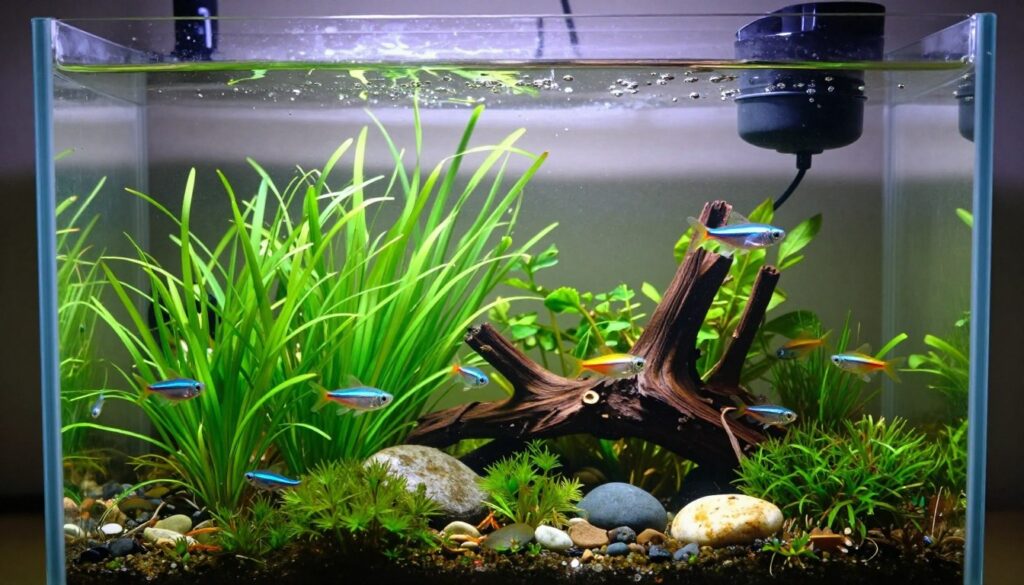
In a tiny tank, “best” means the animal that stays calm, clean, and easy to keep alive. That definition guides every stocking choice and daily care decision.
Prioritizing low bioload, calm temperament, and simple care
Low bioload means less waste and fewer sudden water spikes. Keep schedules simple: small, frequent water checks and modest feedings limit toxins.
“Choose species with similar temperament and chemistry needs,” — Jessie Sanders, DVM, DABVP
Choosing livestock that won’t outgrow the tank in inches
Judge suitability by adult body needs, not the store size. Short but chunky species often produce more waste than a slim one of the same length.
Matching temperature and water chemistry to the animal
Stable temperature and consistent water parameters matter more here than in larger systems. Check pH and hardness before adding any animal.
- Define “best”: low waste, calm behavior, simple routines.
- Bioload explained: waste + leftover food = toxins; keep it low.
- Match needs: use temperature and chemistry to guide choices, especially for a beginner.
fish for 2 gallon aquarium: the honest shortlist</h2>
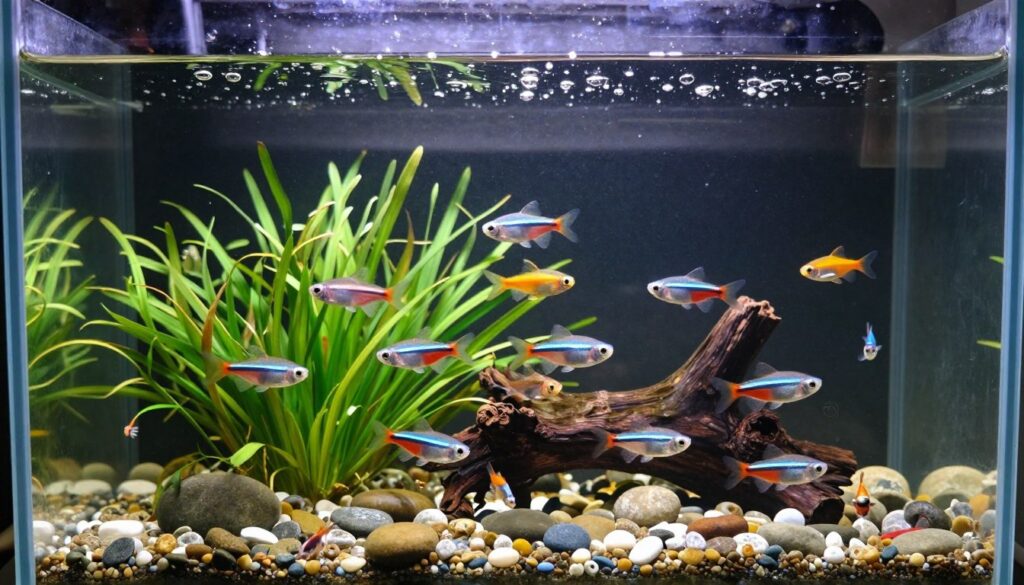
A clear choice makes any small habitat shine: in most cases, the best pick is no fish at all.
This is not giving up. Choosing a fully planted freshwater aquarium reduces emergencies, keeps water stable, and protects animal welfare. Tiny setups do best when you work with limits instead of fighting them.
The best pick for most people: a thriving planted tank
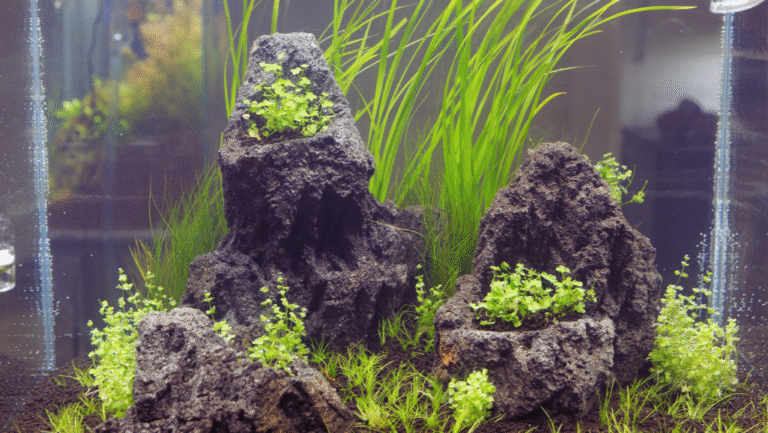
A tiny planted tank can be a masterpiece. Use low-light plants, a simple hardscape, and clean substrate. Add a small snail or shrimp as a tidy, low-waste companion. The result feels lively and stays calm.
When a single animal might be considered—and why it’s risky
People often ask about “just one.” Even one animal can cause rapid spikes in waste and oxygen stress in a small aquarium. That increases emergency care and shortens lives.
- Better option: treat 5 gallons as the practical entry point for live stocking.
- Advanced only: a lone specimen is an exception, not a rule.
- Want ideas? See suggestions for compatible companions and drinks pairing at best canned drinks.
Best non-fish “aquatic companions” for a 2-gallon aquarium</h2>
For a compact setup, select companions that add motion and function without overloading the system.
Freshwater shrimp: low waste, high interest
Shrimp thrive in a planted nano tank because they graze constantly and produce very little waste. They move in groups, create steady activity, and rarely disturb roots or delicate stems.
Tip: tiny portions of food once a day keep them healthy. Remove any uneaten pellets quickly to protect water quality.
Nerite-type snails as algae helpers
Nerite-type snails can be an effective algae control option, but expectations matter. In very small setups their benefit depends on light and nutrient balance, not the snail alone.
These snails do not reproduce in fresh water easily, which helps avoid population booms in a small tank.
Micro clean-up crew: honest limits
Clean-up critters reduce visible waste but they do not replace maintenance. They won’t remove rotting foods or fix poor filtration.
- Keep feedings tiny and timed; excess foods break down fast.
- Use plants to offer biofilm and shelter—this improves survival and stability.
- Monitor water often; even low-bioload companions need steady care.
Bottom line: shrimp and snails make a 2-gallon setup feel alive without the risk of larger inhabitants. With proper feeding and plants, your small aquarium becomes a calm, living desktop ecosystem.
The planted nano tank approach that makes everything easier</h2>
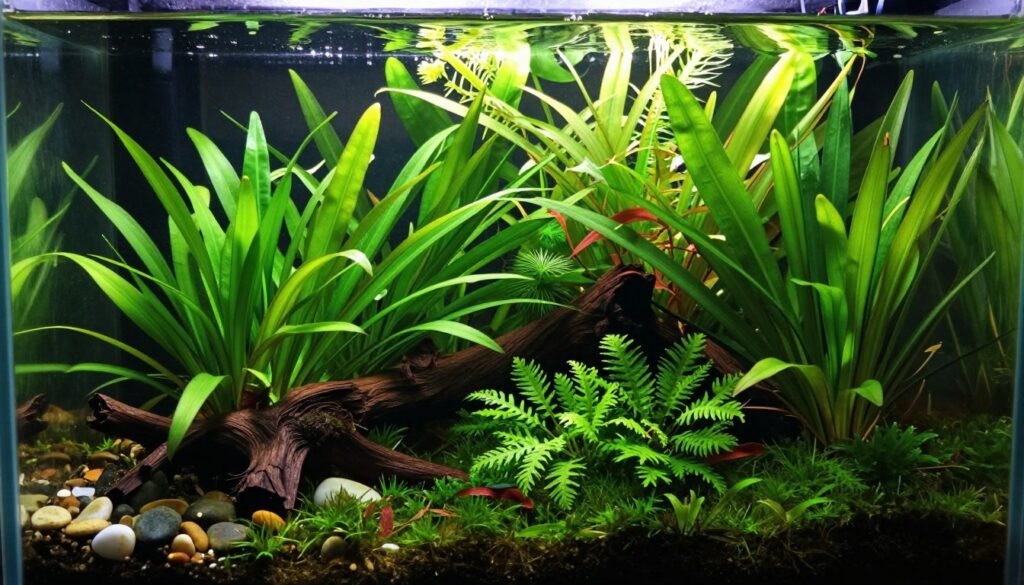
A dense, planted layout is the secret that transforms tiny tanks into forgiving, living displays.
Plants act like living filters. They use excess nutrients and give surfaces for helpful microbes. That matters when very little water can’t dilute waste.
Best beginner plants for tiny tanks
Choose low-light, slow-growing types and easy attachment stems. Think mosses, anubias-style rhizome plants, and small java fern varieties. These need minimal light and match a novice’s schedule.
How plants help stabilize water and reduce leftover foods
Dense planting soaks up nitrates and competes with algae. Roots and leaves host biofilm that breaks down scraps. Still, plants are not a substitute for disciplined feeding; decaying food overwhelms any setup.
Hardscape and hiding spots that reduce stress
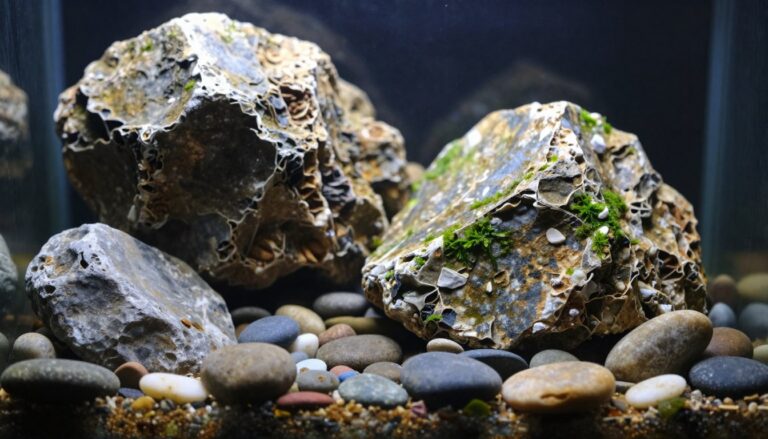
Use a few smooth rocks and a piece of wood to create shaded nooks and visual breaks. Those spots form micro territories and let shy animals hide, which improves behavior and even body color.
- Secret weapon: plants make the system more forgiving and more beautiful.
- Layout tip: combine attachable plants with a small hardscape to create cover.
- Care note: plants help water stability but never replace regular maintenance.
Fish that are often suggested but don’t belong in 2 gallons</h2>
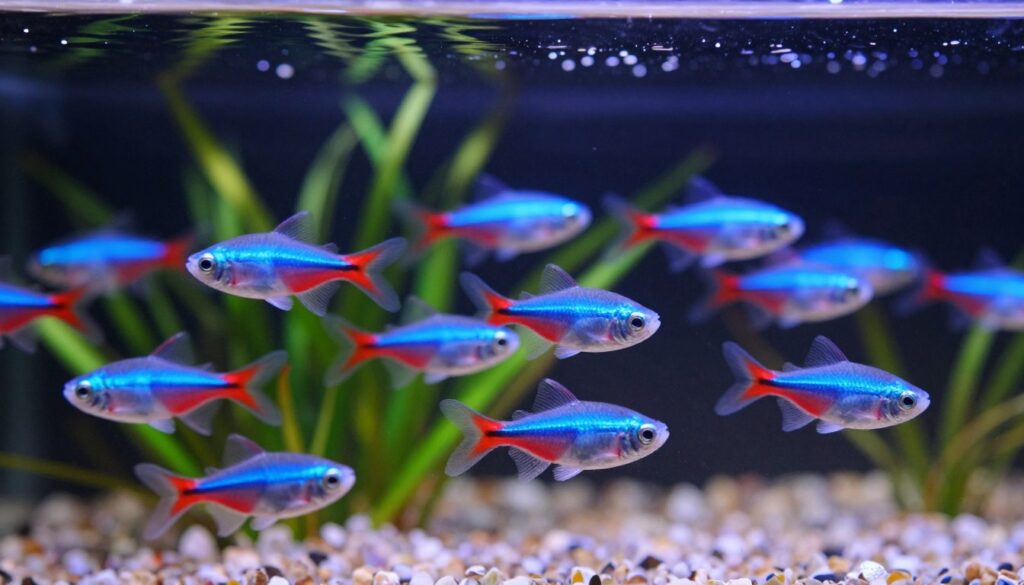
Many well-known species look tiny as juveniles but need much more space as adults. Popular suggestions from stores often ignore schooling needs, activity levels, and breeding risks. In a nano setup, those gaps become health problems fast.
Neon tetras: schooling needs and minimum size reality
Neon tetra species are classic display animals, but they are true schooling fish. Experts recommend groups of six or more and generally list a 10+ gallon minimum. A two-gallon desktop is simply too small for stable social behavior.
White cloud mountain minnow: cool-water needs and space
White cloud mountain minnows prefer cooler temperatures (often under ~72°F) and need room to swim. Guidance commonly places their minimum size near 10 gallons to keep water stable and allow normal activity.
Zebra and pearl danios: high activity demands
Zebra danio and pearl danio are lively swimmers that need long open lanes. Pearl danio recommendations can start at 20 gallons. High activity in tiny tanks leads to stress and poor water quality.
Corydoras and pygmy corydoras: group and bottom space limits
Many corydoras types are schooling bottom-dwellers. They need substrate area and companions to thrive. Calling a small catfish a “cleaner” does not make it suitable in cramped bottoms.
Guppies, Endler’s livebearers, and breeding risks
Guppies and Endler’s livebearers breed rapidly. In tiny setups, a single pair can become a population problem in weeks. That spike raises waste and forces urgent rehoming.
- Rule of thumb: popularity in stores ≠ suitability in micro tanks.
- Better choice: use planted nano methods or upgrade tank size to house schooling species.
- Learn more: see compact stocking ideas at best fish for small tanks.
“Solo fish” myths in small tanks: betta fish and pea puffer realities</h2>
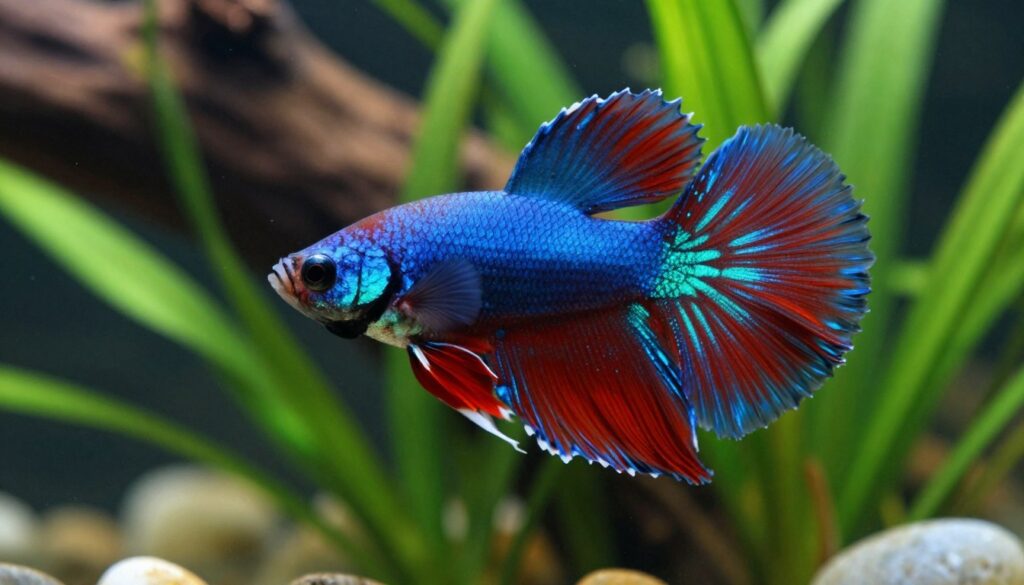
Caring for a lone occupant still means managing water chemistry, heat, and enrichment. Size and stability matter more than solitude.
Betta fish: why 5–10 gallons makes a real difference
Betta fish often appear happy in tiny bowls online, but experts recommend a 5–10 gallon baseline. That extra room helps keep temperature steady, offers gentle filtration, and gives places to rest and hide.
Care in cramped setups raises stress and shortens bright color and life. A proper fish tank makes routine tasks easier and emergencies rarer.
Pea puffer: small body, big needs
Pea puffer are territorial and usually kept alone or in species-only groups in larger tanks. They are carnivores that prefer live or frozen food such as bloodworms and brine shrimp.
Meaty leftovers foul small systems fast. If you want either species, choose a larger tank size and plan feeding and maintenance accordingly.
- Rule: a single animal is not a free pass to tiny setups.
- Decision: upgrade the tank to see healthier behavior and color.
Tank setup essentials for success in 2 gallons</h2>
Set the foundation right: the small scale makes every piece of equipment count. In a tiny tank, gear choices matter more because there is almost no buffer for mistakes.
Filtration, flow, and why gentle circulation matters
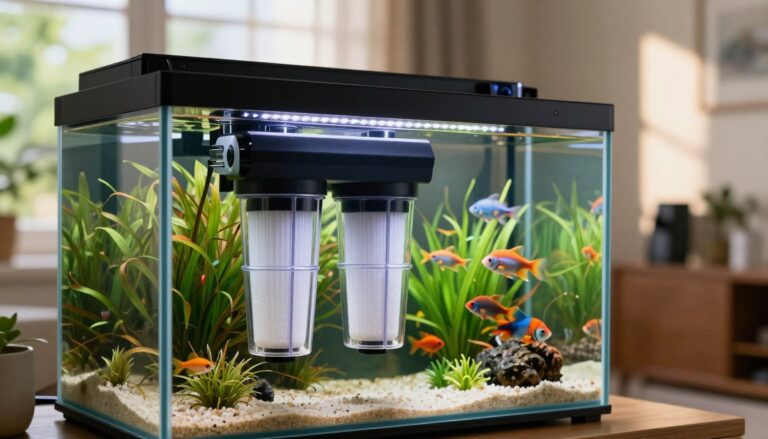
Pick a filter that prioritizes biological stability over brute flow. A sponge filter or low-power internal filter supports beneficial bacteria and cleans without creating a strong current.
Gentle flow prevents livestock from being pushed into corners and helps surface movement for oxygen exchange. Aim for subtle surface ripple rather than a torrent.
Heating and stable temperatures (when to use a heater)
Use a small, reliable heater only when you keep tropical inverts or warm-loving animals. Stability beats exact numbers—avoid rapid swings.
Small volumes heat and cool quickly. Monitor with a dependable thermometer and keep the tank in steady room conditions to reduce overheating risk.
Substrate choices for plants and easy cleaning
Choose a shallow, plant-friendly substrate if you add plants. Gravel or a thin layer of nutrient substrate works well and is easier to clean than deep sand.
- Rule: equipment must protect stability, not complicate care.
- Tip: surface exchange reduces emergencies.
- Goal: a calm, well-set tank equals happier residents and simpler maintenance.
Water quality routine for nano tanks</h2>
A simple, steady routine is the single biggest gift you can give a tiny tank. In a small setup, predictable steps protect life and keep stress low. A clear plan makes daily tasks quick and effective.
Cycling the tank before adding livestock
Cycling means building the beneficial bacteria that break down waste. Start this process before any animals arrive. In a fish tank this small, ammonia and nitrite spikes happen fast, so patience is essential.
Testing schedule: what to measure and how often
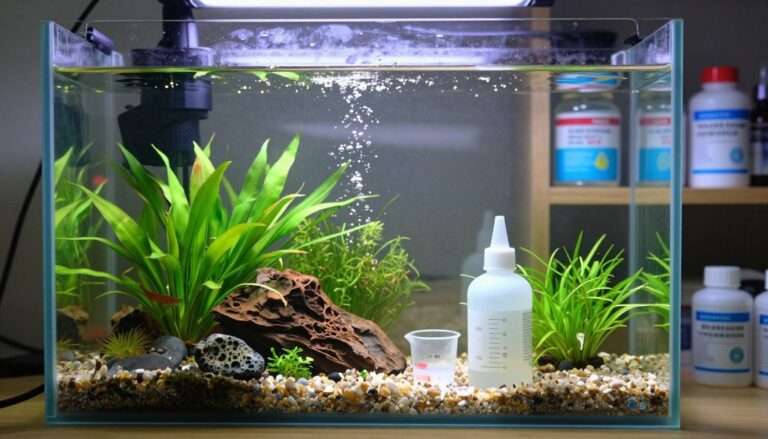
Use a reliable test kit and measure these key parameters: ammonia, nitrite, nitrate, pH, and temperature.
- Startup: test every other day until levels are stable.
- After cycling: test twice weekly for the first month.
- Once stable: test weekly and after any change (new decor, crop-trim, or livestock).
Water change cadence for a small aquarium
Consistency beats perfection. Do regular partial water changes to dilute nitrates and remove organics.
A practical cadence: 20–30% changes twice weekly while new, then 25% once weekly when stable. Match replacement water temperature and pH closely to avoid shocking shrimp, snails, or any fish you keep.
“Routine turns fragile setups into steady, living displays.”
Final note: monitoring and gentle actions make tiny tanks resilient. Good routine and small, steady steps are the heart of responsible care.
Feeding in a 2-gallon tank without polluting the water</h2>
Smart feeding choices keep a nano setup clear, stable, and lively. In tiny systems, feeding is the single most controllable factor that affects water health. Leftover food breaks down quickly and spikes toxins.
Picking the right food sizes and sink vs. float types
Match food size to mouth size. Micro pellets, crushed flakes, and baby brine shrimp suit small fish and shrimp best. Choose options labeled “micro” or “nano” when available.
Floating bits stay near the surface and are easy to skim if uneaten. Sinking pellets feed bottom grazers but can hide in substrate and rot. Rotate types carefully and watch who actually eats.
How often to feed and how to avoid leftovers
Most residents do well with two small feedings per day. Shrimp and snails graze and need far less—offer tiny portions or let biofilm meet most of their needs.
- Control pollution: feeding is the #1 controllable source of waste in a tiny tank.
- Portion tips: pre-portion with tweezers or a micro-feeder; only add what is eaten in 2 minutes.
- Cleanup tactics: remove uneaten bits with a pipette, and use a net to collect sinking debris.
- Watch cues: cloudy water or a sour smell are early warnings of overfeeding.
Small, mindful feedings yield the cleanest display, healthier color, and more active residents. Treat feeding as part of your maintenance ritual and the tiny ecosystem will reward you.
Quarantine and acclimation to protect a tiny ecosystem</h2>
Quarantine is the single habit that protects a tiny desktop ecosystem before any new life joins it. In small tanks there is almost no margin for disease, so prevention matters more than cure.
Why isolate new stock for four to six weeks
Use a separate tank with distinct equipment and run it for 4–6 weeks. This window lets slow illnesses reveal themselves without risking the main system.
Note: wild-caught specimens and newly purchased invertebrates often carry hitchhikers or pathogens. Quarantine stops spread early.
Acclimation steps to prevent shock
Match temperature first, then add small amounts of display water over 30–60 minutes. Slow mixing reduces sudden swings in water conditions and stress.
Watch appetite, fins, spots, and normal behavior before moving any animal into the main display. Beginner keepers who skip this usually see the fastest failures.
- Best practice: separate gear, four–six week quarantine.
- Include: shrimp, snails, and plants can carry pests—rinse and observe.
- Tip: document behavior daily and only introduce healthy stock.
“Patience up front protects the tiny ecosystem you worked to create.”
Learn more about rehabilitation and quarantine approaches in this rehabilitation and quarantine discussion.
Safety upgrades that prevent common nano tank disasters</h2>
A few simple changes can prevent the most common disasters in nano displays.
Why a tight-fitting lid matters (especially with jumpers)
A tight-fitting lid stops animals that leap at the top when startled. Many top-dwelling species are known jumpers and can escape in a blink.
Use a secure cover to reduce evaporation and keep humidity stable. That small step lowers rapid swings in temperature and reduces stress.
Overheating, overcleaning, and other small-tank pitfalls
Small volumes heat quickly. Place a thermostat and check temps daily to avoid sudden crashes.
Aggressive rinsing of filter media strips beneficial bacteria. Clean gently, in aquarium water, and keep a routine to prevent ammonia spikes.
When to size up: the fastest path to healthier aquarium fish
Watch health signs early: torn fin, strange spots, frantic surface gasping, or dull color. Act fast to isolate causes.
Livebearer reality: a single male with females can lead to rapid breeding and dangerous overcrowding. If you plan breeding, choose a larger tank.
“Preventable upgrades and steady habits turn fragile setups into calm displays.”
- Must-have: a snug, well-vented lid to stop jumpers and slow evaporation.
- Care note: monitor temperature and tidy media gently to keep beneficial bacteria alive.
- Upgrade option: moving up to a bigger tank gives instant gains in stability and welfare.
Conclusion</h2>
Good miniature displays reward patience: steady care and honest stocking beat shortcuts every time.
In this tiny setup, success comes from realistic choices and routine maintenance. The best approach is not squeezing in more animals but building a stable freshwater aquarium you can keep healthy.
Many popular names—neon favorites, various tetras, white cloud mountain varieties, active danios, and social corydoras or catfish—need much more room than a true nano allows. Guppies show how fast livebearers can overrun a small tank when breeding starts.
Match adult body needs to the tank size, keep temperatures steady, and feed cautiously. A planted small aquarium with shrimp, snails, and thriving plants offers vivid colors and gentle motion. If you want a classic fish tank, size up—larger tanks are kinder and more forgiving. Build responsibly and enjoy calm, lasting beauty every day.
FAQ
What are the realistic livestock options for a 2-gallon tank?
In a very small, enclosed setup the safest choices are non-fish animals such as freshwater shrimp (Cherry or Amano in larger nanos), nerite snails, or a planted micro-ecosystem with no animals at all. These options keep bioload low, reduce water-quality swings, and offer visual interest without the ethical and husbandry risks of keeping most solitary fish in such tiny volumes.
Why does a tiny water volume make care harder?
Small volumes change chemistry rapidly. Ammonia, nitrite, nitrate, pH and temperature can spike or drop within hours after feeding, adding or removing heat, or when livestock waste accumulates. That makes regular testing, conservative feeding, and frequent partial water changes essential to keep the environment stable.
Can I follow the “inch of fish per gallon” rule in a nano setup?
No. Simple length-based rules break down in nanos because body shape, activity level, waste production, and oxygen needs vary. A single active 1.5-inch fish can create more stress on water quality than several tiny invertebrates. Prioritize bioload and behavior over raw length measurements.
Is a single betta acceptable in this size tank?
Bettas do better in at least 5 gallons. While they can survive in smaller containers short-term, a larger filtered and heated aquarium supports better swimming space, stable temperature, and improved long-term health. For an inspirational, thriving setup, upgrade the tank or choose invertebrates and plants instead.
How do plants help stabilize a nano system?
Live plants consume ammonia and nitrate, provide oxygen during lights-on periods, and reduce algae by competing for nutrients. Fast-growing stem plants or mosses create biological buffering, lowering the frequency of emergency water changes and improving overall water stability.
What are the best beginner plants for a tiny setup?
Low-light species that stay compact work best: Java moss, Anubias nana (tied to wood or rock), java fern (pocket-size rhizomes), and small crypts. These plants need minimal fertilization and tolerate gentle flow in small filters.
Are neon tetras or white cloud mountain minnows okay in a 2-gallon tank?
No. Schooling species like neon tetras require groups to display natural behavior and need larger volumes to maintain water quality and stable temperatures. White cloud minnows need cool, well-oxygenated water and a bigger tank to swim comfortably. These species belong in tanks starting at several gallons, not nanos.
What about guppies, endlers, or livebearers?
Avoid them in a tiny tank. Livebearers breed readily, and even one pregnant female can quickly overload a small system with fry and waste. Start them in larger aquaria where population control and stability are manageable.
Can corydoras or pygmy corydoras live in a 2-gallon setup?
No. Corydoras are social bottom dwellers that need a group and substrate space. Crowding them into a tiny bowl stresses their social needs and increases pollution. Provide a larger tank with soft substrate and room to forage.
What filtration and flow are appropriate for a nano system?
Choose a gentle sponge filter or low-flow internal filter sized for the small volume. Sponge filters offer biological media and low shear, which is ideal for shrimp and delicate animals. Avoid strong currents that stress miniature inhabitants.
When should I use a heater in a tiny tank?
Use a small, adjustable heater when keeping tropical animals that need stable temperatures (mid-70s°F). For cool-water species or planted micro-ecosystems using temperate invertebrates, a heater may not be necessary. Monitor with a reliable thermometer because tiny tanks lose or gain heat quickly.
How often should I test water and do water changes in a small tank?
Test ammonia, nitrite, nitrate, and temperature twice weekly when stocking or during changes in livestock. Perform frequent small water changes—20 to 40 percent one to three times weekly depending on bioload—to keep parameters within safe ranges without shocking beneficial bacteria.
What feeding routine prevents pollution in a nano tank?
Feed tiny portions once daily or every other day, only what is consumed within a minute. Offer appropriately sized foods: micro pellets, crushed flakes, or frozen baby food for shrimp. Remove uneaten food quickly to prevent ammonia spikes.
How should I acclimate new animals to protect a small ecosystem?
Quarantine new arrivals for four to six weeks in a separate container to observe health and prevent disease introduction. Acclimate slowly to tank water using drip or gradual mixing over at least 30–60 minutes to reduce shock from different chemistry or temperature.
Why does a tight-fitting lid matter?
A secure lid prevents jumpers (bettas and some puffers), reduces evaporation that concentrates salts and wastes, and helps maintain stable temperatures. It also keeps curious pets and small children from disturbing the setup.
What are the most common nano tank disasters and how can I avoid them?
Rapid temperature changes, overfeeding, and overcleaning are top culprits. Avoid deep substrate vacuuming that removes beneficial bacteria, feed conservatively, use stable heating, and keep routine partial water changes to prevent sudden chemical swings.
If I want simple movement and life, what’s the best approach?
Create a planted nano with shrimp or a single nerite snail. Combine hardy plants, gentle filtration, and disciplined feeding to build a resilient micro-ecosystem. This approach delivers beauty and motion while honoring the limits of a very small tank.