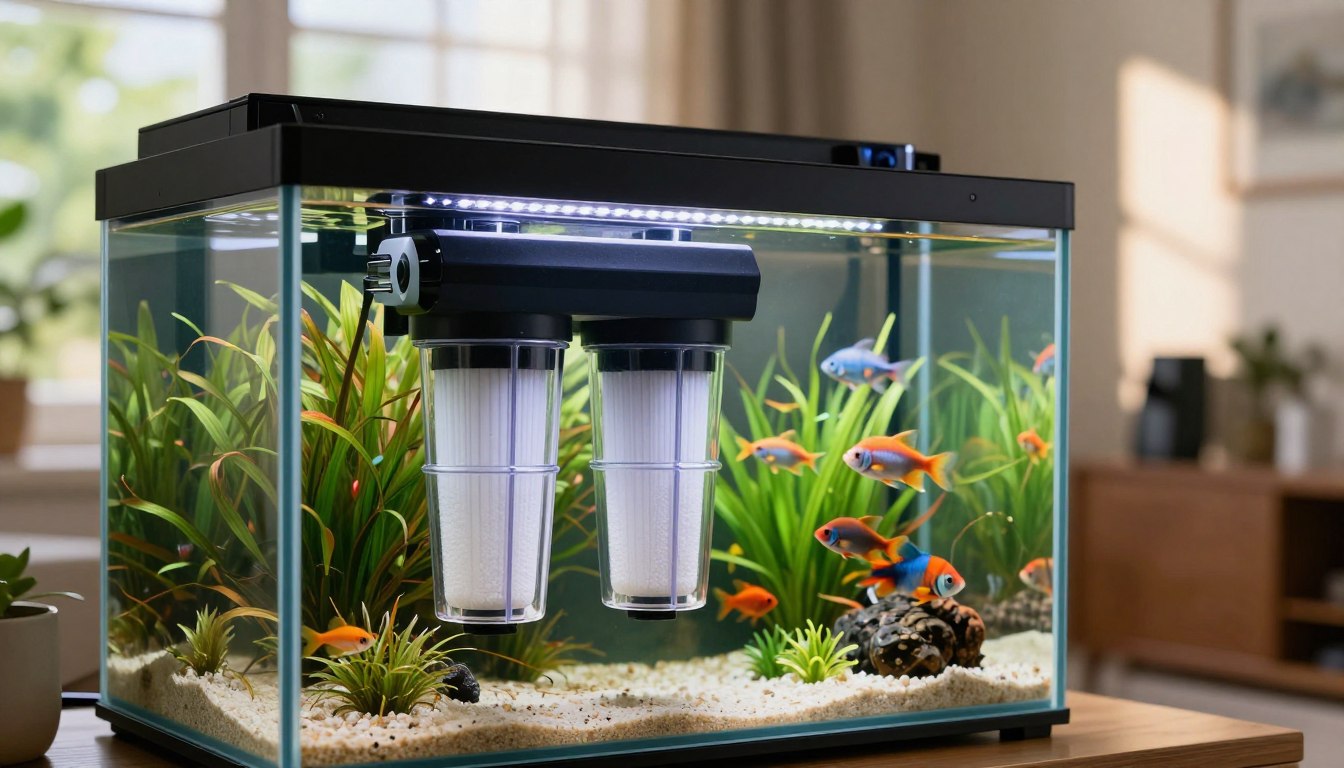
Find a clearer, calmer, more dependable home for your fish. This guide promises practical advice to match equipment to your tank size, livestock, and goals. You’ll learn types, sizing, media choices, setup, maintenance, and where to buy in the United States with confidence.
Great filtration is about steady, reliable performance—not chasing perfect numbers every day. We focus on real-world choices: HOB, sponge, canister, internal, undergravel, and powerhead circulation. Expect straightforward comparisons and examples that make buying simple.
Start with a style that fits your setup. Then size for realistic bioload and pick media and flow that match your animals. Even a basic unit can be upgraded with smarter media and habits over time.
Key Takeaways
- Choose a filter style that suits your tank layout and stocking plan.
- Size for real bioload, not idealized numbers.
- Pick media and flow to match the needs of your fish and plants.
- Consistency and stability matter more than perfect daily readings.
- Start simple and upgrade media or parts as your skills grow.
Why a Quality Filter Makes Your Aquarium Thrive
A dependable filtration system turns a tank from a fragile display into a resilient, living ecosystem. Clean water is the baseline for healthy life and steady care.
Cleaner water, healthier fish, and a more stable ecosystem
Good filtration continuously removes visible debris and processes invisible waste that harms stability. When solids and organics are handled, parameters swing less and algae pressure often drops.
Flow and oxygenation benefits beyond basic filtration
Movement prevents dead spots and keeps detritus suspended long enough to be captured. That circulation also improves oxygen exchange, which directly supports active, stress-free fish.
How filtration works alongside regular partial water changes
Filtration complements—never replaces—partial water changes. Regular water changes refresh trace elements and remove dissolved compounds that media alone won’t fully correct.
“A quality aquarium filter ensures clean water, supports fish health, and keeps the ecosystem balanced when paired with partial water changes.”
- Stability: Reliable operation means fewer emergency fixes and steadier readings.
- Clarity: Less turbidity and detritus buildup make tanks look and feel healthier.
- System thinking: Choice, media, and maintenance together prevent problems before they start.
Aquarium Filter Types and Which Setups They Fit Best

Pick the system that matches your goals—each style brings different flow, capacity, and maintenance needs. Below are common options and the setups they suit best, so you can match gear to stock, size, and aesthetics.
Hang on back choices for easy, beginner-friendly filtration
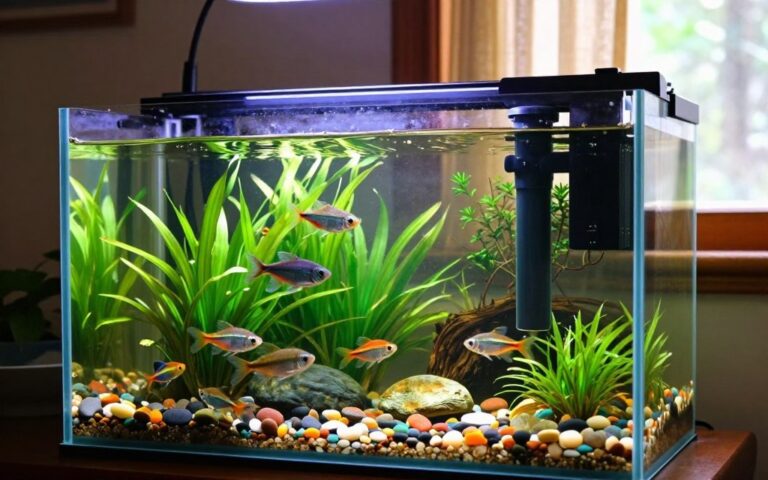
Hang back units sit on the rear glass for simple installation. They’re easy to maintain and let you swap media as your skills grow—ideal for starter kits and community tanks.
Sponge options for gentle flow, nano tanks, fry, and shrimp
Sponge units deliver soft current and reliable biological surface area. Breeders and shrimp keepers favor them for tiny fish and fry because they won’t suck up small livestock.
Canister setups for powerful flow and customization
Canister systems give high media capacity and tunable stages. They work well for large or “monster” tanks where strong circulation and tailored media stacks matter most.
Internal and external choices for compact or clean displays
Internal units are compact, all-in-one solutions when space or budget limits hanging gear. External canister-style units keep the display uncluttered while offering higher long-term capacity.
Power upgrades and undergravel use cases
Adding a powerhead solves dead spots and boosts surface agitation. Undergravel setups still fit classic builds and certain biological goals but aren’t ideal for heavy planting or easy debris removal.
“Sponge filters are easy, affordable, and reliable with gentle flow—ideal for nano fish, fry, and breeding shrimp.”
- Best for beginners: hang back for easy access and simple media swaps.
- Best for breeders: sponge for low flow and safety.
- Best for large tanks: canister for power and customization.
How to Choose the Right Aquarium Filter Size and Flow
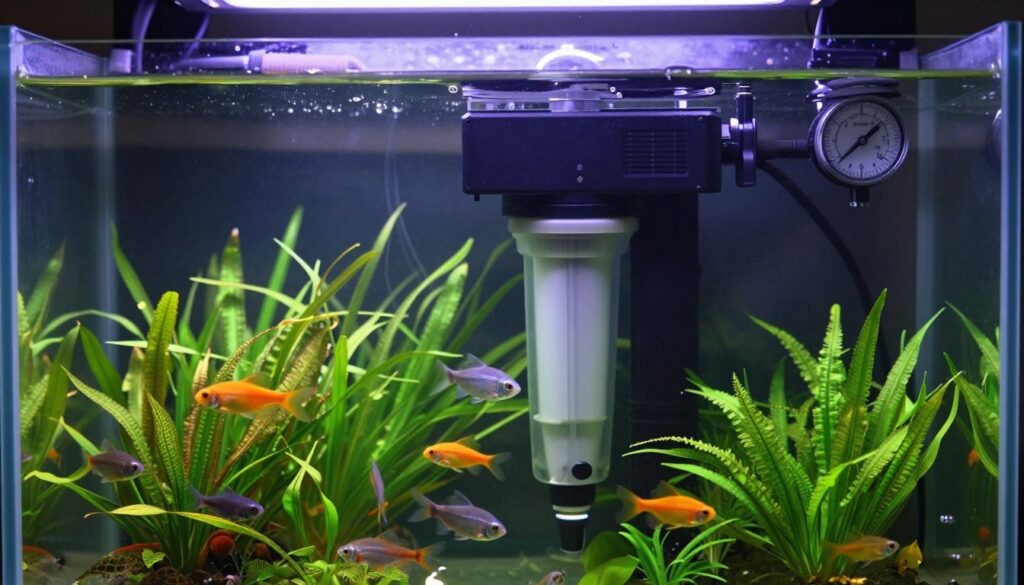
Match capacity to real tank gallons and daily waste, not just the box label. Start by checking the manufacturer’s recommended tank size, then adjust for how many and how large your fish are and how much you feed.
Match filtration capacity to tank gallons and bioload
If your setup is heavily stocked or you feed often, choose a model rated one size up. More bioload creates more waste and demands extra media volume and turnover.
Use flow rate to prevent stagnation without stressing fish
Use the max flow (GPH/LPH) to estimate turnover, but reduce speed for slow swimmers or long-finned species. Aim for steady circulation that avoids dead zones.
When to scale up for large or “monster” tanks
For big tanks, pair a robust canister with supplemental power-driven circulation. Powerheads move debris toward intakes and boost oxygen where a single unit can’t reach.
- Buyer’s checklist: recommended gallons, max flow rate (GPH/LPH), media capacity, and ease of maintenance.
- Adjustable flow: spray bars or valves help tune water movement for livestock comfort.
- Peace of mind: scale up when in doubt—extra capacity equals stability over time.
“Right-sized filtration is about consistent performance, not chasing a single number.”
Aquarium Filter Media Basics That Keep Water Crystal Clear

Small media swaps often bring the biggest gains in clarity and stability. Choose the right pieces to tune performance instead of overhauling your whole system.
Mechanical: trap visible waste
Coarse sponge pads catch bulky debris while polishing pads remove fine particles that cloud water.
Layering coarse-to-fine improves capture and keeps mechanical stages from clogging too fast.
Biological: grow helpful bacteria
Ceramic rings and other porous materials give bacteria the surface area needed to convert toxic compounds.
This biological stage provides steady, long-term stability for fish and the tank environment.
Chemical and targeted media
Carbon-infused pads remove tannins, odors, and medication residues and should be used as-needed.
Specialized pads—ammonia or phosphate media—solve precise problems without running chemicals continuously.
Pre-filter protection
A pre filter sponge on intake tubes blocks small livestock and debris while adding extra biological surface.
Treat media choices like tuning: small, targeted upgrades can clear cloudiness and improve stability without a new unit.
- Mechanical, biological, chemical — the three core jobs to balance.
- Layer coarse-to-fine for better polishing.
- Use targeted pads only when you have a specific issue.
Learn more media ideas and setup tips in our related guide: media upgrade ideas.
Building a Filtration “Stack” That Matches Your Goals

A goal-focused stack combines the right mechanical, biological, and optional chemical pieces to solve the problems you actually see. Choose a compact, repeatable plan you can maintain every week so performance stays consistent.
Fast clarity for cloudy aquarium water
For quick clearing, prioritize mechanical capture. Start with a coarse sponge or pad to trap large debris, then add a polishing pad to remove fine particles.
Tip: Improve intake positioning and increase capture efficiency before adding chemicals; often clarity improves without carbon or adsorbents.
Long-term stability for heavily stocked community tanks
Maximize biological media volume and keep steady flow. More porous media and greater surface area let bacteria process waste day after day.
Pair a high-capacity canister or external unit with supplemental circulation so the system handles spikes in bioload without stress.
Gentle filtration for breeding tanks and shrimp-focused setups
Sponge-centered stacks protect fry and shrimp while still offering reliable biological support. A sponge for bio plus a small hang-on-back for polishing works well.
Keep maintenance simple: gentle rinses and predictable weekly care beat complex routines you won’t follow.
- Stacking options: coarse-to-fine mechanical → ample biological media → targeted chemical only as needed.
- Combine thoughtfully: sponge for safe bio + polishing unit for clarity.
- Sustainability rule: the best plan is the one you’ll maintain consistently.
For deeper media ideas and advanced setups, see our guide on advanced media options.
Setup Tips That Help Your Filter Perform From Day One
A calm, well-planned startup sets the tone for months of steady water quality. Take a few deliberate steps on day one and the system will repay you with steady operation and less stress for your fish.
Priming, placement, and balanced flow
Place the unit where it draws from open circulation, avoiding corners that trap detritus. Aim outputs to sweep the surface lightly for oxygen exchange without blasting timid species.
Prime motorized units per instructions so the pump runs full and quiet. A properly primed motor reduces noisy cavitation and low-flow issues that confuse users.
Jumpstart biological support
Using a live bacteria starter culture can speed beneficial colonization when cycling a new tank or adding a new unit. It doesn’t replace patience, but it gives the biological stage a healthy head start.
Smart, low-cost upgrades
Simple additions—an optimizing pad or an easy-flow sponge upgrade kit—boost mechanical capture and add safe surface area for helpful bacteria. These tweaks often improve clarity without replacing the whole unit.
Start calm and consistent: small, purposeful steps on day one reduce stress for fish and help the system settle into a stable rhythm faster.
Maintenance, Replacement Media, and Easy Upkeep Habits

Keep a simple, steady maintenance rhythm and your system will reward you with stable water and calm fish.
Quick weekly checks spot flow loss and debris before they become bigger problems. Rinse sponges and pads in removed tank water to preserve beneficial bacteria. Avoid scrubbing media too thoroughly—over-cleaning can reset biological colonies and destabilize water.
Cleaning cadence that protects biology
Do light rinses as needed and deeper service only when flow or clarity drops. If output falls or debris bypasses the media, it’s time for a more thorough clean or part swap.
Replacement strategy and parts
Replace disposable cartridges on the manufacturer’s schedule. Durable sponges can be rinsed and reused to save money. Big retailers like PetSmart stock replacement parts and cartridges, making upkeep easier than buying a new unit.
Warning signs your setup is struggling
- Persistent cloudiness or rising debris
- Noisy operation or reduced flow
- Noticeable behavior changes from your fish
Simple habits—weekly checks, smart rinses, and timely replacement—keep maintenance easy and your tank dependable. For more on balancing flow and media, see filtration basics.
Where to Buy Aquarium Filters in the United States
Decide whether you want expert advice or the speed of online shopping before you buy. That choice shapes how you compare specs, spot sales, and bundle the extras that make a unit perform well from day one.
Buying online vs. dealer expertise
Online shopping gives huge selection and fast pricing checks. You can compare listings, read specs like Filter Type, recommended tank size (gallons/L), and max flow rate (GPH/LPH) side-by-side.
Local dealers offer hands-on advice. A short conversation can steer you away from underpowered choices and save time and money over the long run.
Big-box convenience and autoship
Major U.S. retailers now provide curbside or in-store pickup, same-day delivery in many areas, and Autoship for repeat supplies.
This makes it easy to grab replacement cartridges, media, intake pre-filters, and maintenance gear the same day you buy the unit.
What to compare before you buy
- Type — include hang back options when relevant.
- Recommended tank size (gallons/L).
- Max flow rate (GPH/LPH).
- Stock status — in stock, out of stock, or back-in-stock alerts.
Smart shopping tips
Watch sale pricing and use back-in-stock notifications so you can wait for the right model instead of settling for what’s available.
Bundle your purchase: pick up media, pump supplies, and maintenance tools together so your new system runs well from the first day.
“Compare specs and shop intentionally—you’re investing in clearer water and a steadier tank.”
Conclusion
A smart equipment pick balances capacity, flow, and the maintenance rhythm you can keep. Match the unit to tank size, stocking, and the experience you want—easy upkeep, crystal clarity, or maximum stability. This simple approach reduces surprises and keeps daily care manageable.
Follow the roadmap: choose the right type, size it for real bioload, stack mechanical and biological media thoughtfully, and maintain gently on a steady schedule. These habits protect your water and support healthy fish while keeping chores predictable.
Start where you are—many successful setups begin with a basic hang-on-back or sponge and grow through small upgrades. Compare contenders, confirm specs, and commit to a plan you can maintain with confidence. Take action today and enjoy clearer, calmer water tomorrow.
FAQ
How do I pick the right filter size for my tank?
Choose capacity based on tank gallons and bioload. Aim for a flow rate that turns the tank volume 4–6 times per hour for general community setups, and increase that for heavily stocked or large systems. Check the manufacturer’s recommended tank range and match filter media to your goals — mechanical pads for clarity, biological media for stability, and chemical media for targeted issues.
What’s the difference between hang-on-back and canister systems?
Hang-on-back units are beginner-friendly, easy to maintain, and great for small to medium setups. Canister systems sit outside the cabinet, offer higher capacity and customization, and work best for larger tanks or aquascapes where quiet, powerful flow is needed. Both support layered media but canisters excel when you need extra biological or chemical options.
When should I choose a sponge or internal option?
Pick a sponge when you need gentle flow for fry, shrimp, or nano communities. Internal units fit small tanks and all-in-one systems where space is tight. Both provide useful biological filtration; sponges are especially forgiving during routine cleaning and offer a low-cost way to protect intakes and boost bio-capacity.
How often should I clean or replace media?
Rinse mechanical pads and sponges in tank water every 2–4 weeks or when flow drops. Replace carbon and other chemical media monthly or as product instructions advise. Avoid over-cleaning biological media — a light rinse preserves beneficial bacteria and prevents cycling setbacks.
Can I stack different media in one unit?
Yes. A layered approach works best: mechanical first to trap solids, biological media next to nurture bacteria, and chemical last for polishing or treating specific issues. Configure trays or baskets so water flows through each stage for maximum effectiveness.
My water looks cloudy after setup — what helps most?
Use a mechanical polishing pad or floss to clear suspended particles, run moderate flow to encourage circulation, and seed the system with a live bacteria starter to speed biological establishment. Partial water changes and patience are key while the new ecosystem stabilizes.
How can I avoid stressing fish with too much flow?
Reduce flow or redirect currents with spray bars, deflectors, or sponge pre-filters. Match flow patterns to species needs — calm for bettas and many tetras, stronger for river species. Position inlets and outlets to create gentle circulation rather than strong jets.
What are signs my unit is clogged or undersized?
Reduced flow, gurgling noises, visible debris buildup, and frequent cloudy water are common warnings. If you clean media and performance remains poor, upgrade to higher capacity media, add a pre-filter sponge, or choose a larger unit to match the tank’s demands.
Should I use chemical media like carbon all the time?
Use chemical media selectively. Carbon removes odors, tannins, and some medications, but constant use can strip beneficial trace elements. Reserve it for clarity, medication removal, or when treating specific water issues. Replace it regularly for consistent performance.
Where’s the best place to buy equipment and replacement media in the U.S.?
Shop specialized online retailers for wide selection and detailed specs, local fish stores for in-person advice and same-day pickup, or big-box outlets for convenience and autoship options. Compare recommended tank size, max flow rate, media compatibility, and current sale pricing before you buy.