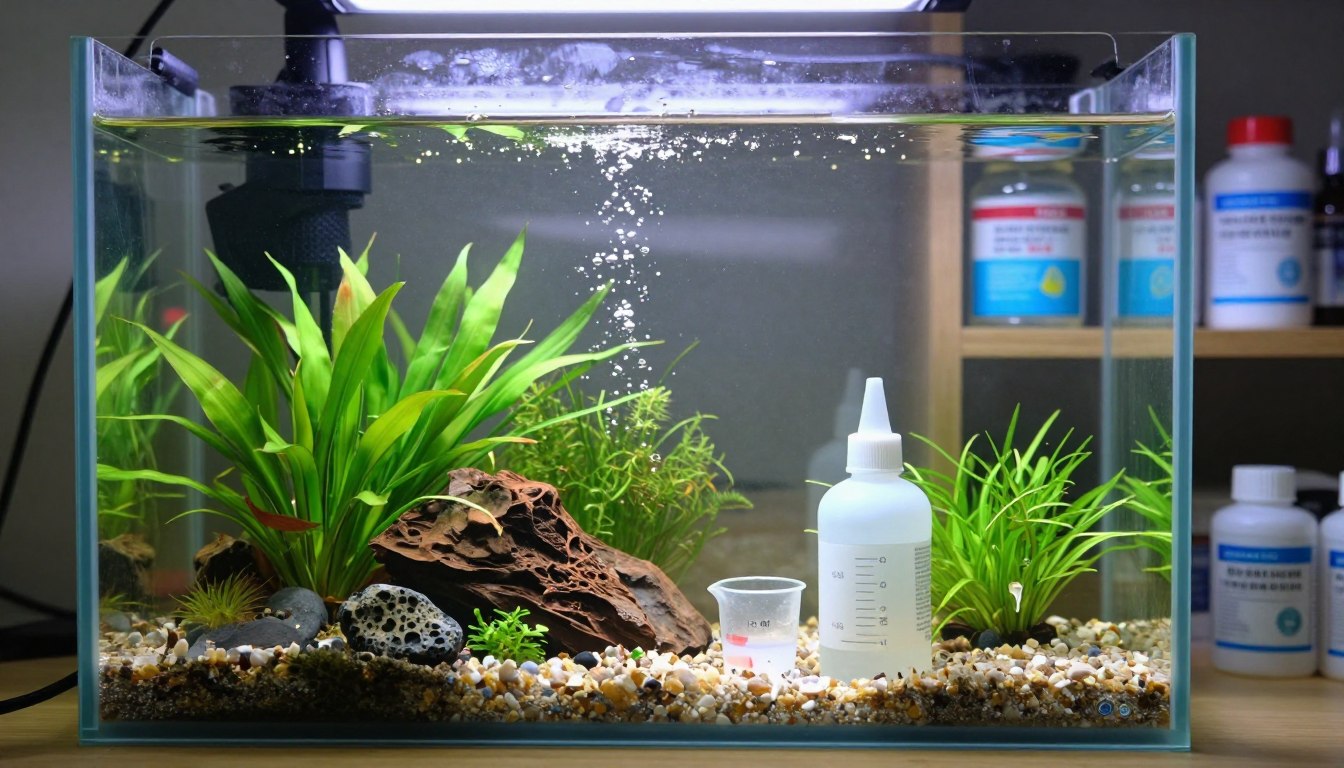
Start your tank right. This short guide shows how to build a stable biological foundation so your aquarium runs confidently from day one. The goal is to grow nitrifying bacteria without exposing fish to toxic spikes.
Controlled dosing means adding measured ammonia and testing on a repeatable schedule. Expect natural cycling to take 30–45 days, but using live nitrifying bacteria or correct dosing often finishes the job in under a week when done correctly.
You’ll learn a step-by-step approach: setup, target dosing, regular testing, and spotting the clear finish line where both ammonia and nitrite read zero within 24 hours after dosing. This process covers ammonium chloride dosing and practical alternatives, plus troubleshooting for real-world tanks.
Key Takeaways
- Fishless Cycle with Ammonia.
- Build a reliable biological base so your tank is ready before adding fish.
- Use measured dosing and tests to protect livestock and speed up cycling.
- Know the finish line: zero ammonia and nitrite within 24 hours after dosing.
- This guide offers a repeatable routine you can apply to any new aquarium.
- Troubleshooting and alternative methods are included for real tanks.
What “Fishless Cycling” Means and Why It’s a Game-Changer
Set up the living filter ahead of time so your first fish never face dangerous chemical spikes. In plain terms, this method means you intentionally feed the future biofilter an ammonia source before any fish enter the tank. That lets nitrifying bacteria grow until they can handle the planned bioload.
Why skipping live fish prevents toxic spikes
Using live fish during early cycling risks exposing them to high ammonia and nitrite levels. Those spikes damage gills, cause respiratory stress, and lead to avoidable losses.
What new tank syndrome really is
New tank syndrome happens when bacteria aren’t established and waste builds faster than the system can process. The result is sudden rises in ammonia and nitrite that can overwhelm fish.
The benefit is predictability: a test-driven approach removes the gamble of using “hardy” stock. The goal is not just some bacteria but enough to process your planned number of fish. Build the biology first, then add fish with confidence and patience.
- Define the method: feed the biofilter before adding fish.
- Protect livestock: avoid early toxic spikes.
- Prevent new tank syndrome by growing enough bacteria to match your initial bioload.
For a practical how-to that follows this exact approach, see how to fishless cycle a new.
Meet the Nitrogen Cycle: Ammonia to Nitrite to Nitrate

Every thriving aquarium depends on one simple natural process. Fish waste and decaying organics release compounds that start a chain reaction. Understanding that chain gives you confidence when testing and maintaining water.
Ammonia: where it comes from and why it’s toxic
Fish waste, uneaten food, and plant decay create ammonia. Even low levels harm gills and breathing, so an uncycled tank is a real risk for fish.
Nitrite: the hidden danger during the cycling process
As ammonia drops, ammonia-oxidizing bacteria turn it into nitrite. Nitrite can stress or kill livestock if you add fish too soon. It often shows up after the first drop in ammonia, so tracking both readings matters.
Nitrate: the end product you control with water changes
Nitrite-oxidizing bacteria convert nitrite into nitrate. Filters don’t remove nitrate well, so routine water changes and good maintenance keep it low.
- Step 1: Waste → ammonia.
- Step 2: Ammonia → nitrite by one bacterial group.
- Step 3: Nitrite → nitrate, which you manage with water changes.
Bottom line: the cycling process is about growing two bacterial communities. Give them oxygen, flow, and steady feeding so test results stop being mysterious and start guiding your actions.
Set Up Your Tank for Success Before You Add Any Ammonia

Start by turning your aquarium into a living system that encourages beneficial microbes to grow. A good setup gives bacteria the surfaces and flow they need. That shortens the path to stable water and steady levels.
Why your filter is a “bacteria hotel”
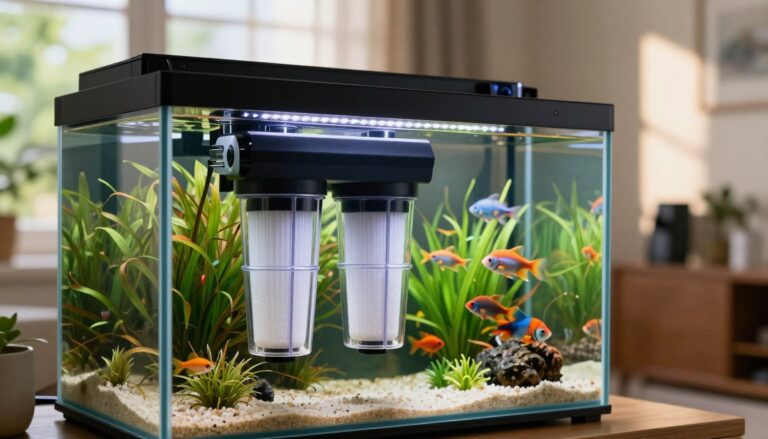
Maximize surface area: sponges, ceramic media, and substrate let beneficial bacteria colonize densely. Place media where flow is strongest so oxygen and dissolved compounds reach colonies.
Temperature and circulation targets
Keep the tank between 75–78°F. Stable warmth speeds bacterial activity. Ensure steady circulation so ammonia-rich water passes through the filter regularly.
Dechlorinate and pause sensitive equipment
Neutralize chlorine or chloramine before adding live cultures; wait 30 minutes after conditioner. Turn off UV units, ozonizers, skimmers, and remove filter socks for at least 48 hours after adding bottled bacteria products so microbes can establish.
- Treat filtration as the core investment for long-term success.
- Prioritize oxygenated flow through media to support nitrifying bacteria.
- Confirm temperature and dechlorination before starting any dosing.
Tools You’ll Need: Test Kit Basics and a Simple Tracking Routine

A simple testing routine gives you the data to steer the process day by day.
Choose reliable liquid kits for actionable readings
Liquid test kits are the backbone of successful cycling. They measure ammonia, nitrite, nitrate, and pH with clarity. Buy quality brands that include color charts and fresh reagents.
Log results so the pattern tells the story
Record every test by day or every 2–3 days. Watch for the classic curve: ammonia rises then drops, nitrite peaks then falls, and nitrate climbs. Confirm progress by dosing a full ammonia amount and seeing it convert to nitrate with no nitrite within 24 hours.
- Why test: testing prevents overdosing and spots stalls early.
- Cadence: daily early on or every couple of days gives clear trends.
- Note: some kits won’t show nitrate below ~20 ppm, so low nitrate doesn’t always mean no activity.
Stay consistent. The numbers are your roadmap; steady logs turn scattered checks into predictable progress and a confident finish line.
Choosing Your Ammonia Source: Controlled vs. “Rotting Food” Methods
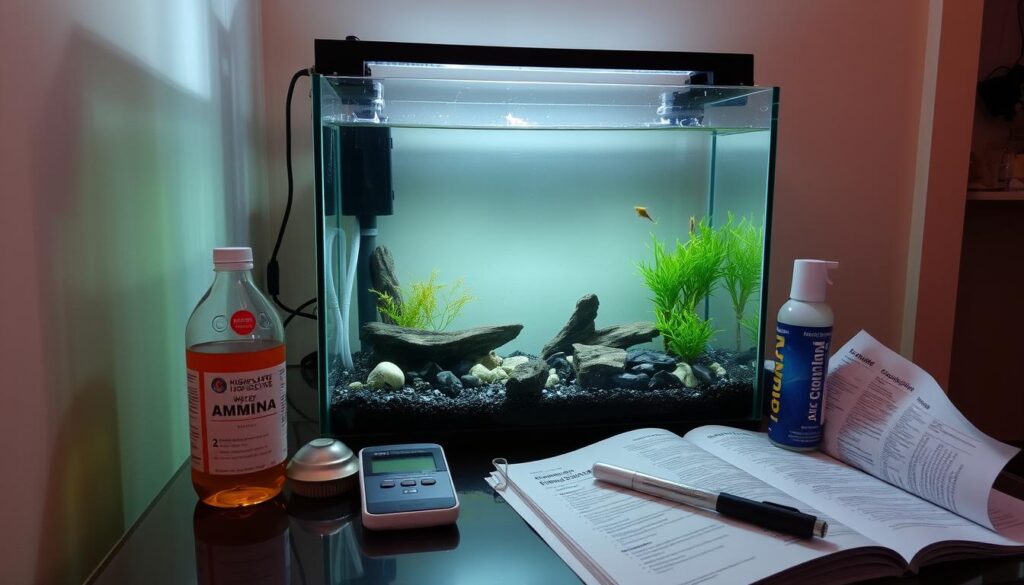
Not all sources of ammonia deliver the same results; pick the right input to steer your biological build-up.
Ammonium chloride: precise dosing and cleaner water
Ammonium chloride lets you measure the exact amount to reach 2–3 ppm. That precision keeps water clear and helps bacteria grow consistently.
Use a measured bottle dose, test, and adjust. This reduces cloudy blooms and speeds dependable progress.
Shrimp or fish food: organic but less predictable
Decaying shrimp or fish food produces ammonia naturally. It works, but output varies by temperature, how much you add, and bacterial activity.
Tradeoffs: this method can cause cloudy water and surprise spikes. Expect slower, more variable results than a controlled approach.
What to avoid: household products and additives
Never use scented or additive household cleaners. Perfumes and stabilizers make them unsafe and concentration may change over time.
“Choose control over guesswork — test before you trust the reading.”
- Controlled dosing = clearer water and steady development.
- Organic food methods = cheaper but unpredictable.
- Always confirm the amount with tests and keep readings under 5 ppm.
Target Numbers That Keep Your Cycle Moving: ppm Guidelines That Matter
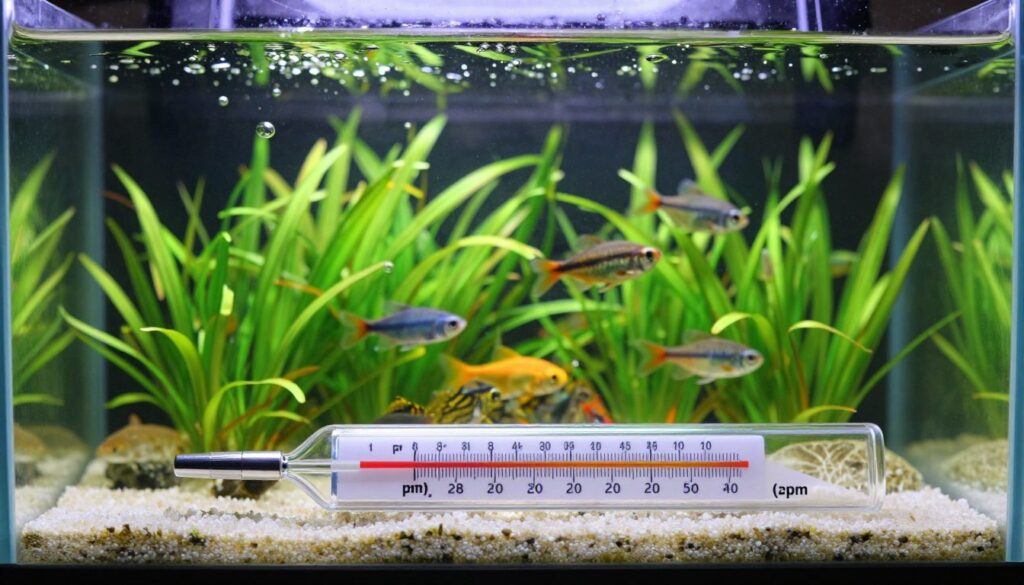
Numbers, not guesswork, keep the process moving and your future fish safe. Aim for clear targets so each dosing step produces predictable growth of beneficial bacteria.
The sweet spot: aiming for 2-3 ppm
A steady target of 2–3 ppm gives bacteria enough food to grow without creating toxic stress. Keep tests frequent and repeatable so readings guide your actions.
The hard ceiling: why going above 5 ppm stalls progress
Never push past 5 ppm. Too much of this compound can inhibit bacterial activity and stall the process. More is not better; it can force an immediate water change and set you back.
Account for displaced water volume from substrate and décor
Always dose based on true water volume, not the tank label. Substrate, rocks, and décor typically displace about 20% of volume.
- Aim for 2–3 ppm to drive steady growth.
- Keep readings under 5 ppm to avoid inhibition.
- Reduce estimated volume by ~20% when calculating the amount to add.
Treat these numbers as guardrails — they make the cycling process repeatable and far easier to troubleshoot.
How to Do a fishless cycle with ammonia Using Ammonium Chloride
Begin by measuring the exact water volume so your first dose matches the tank’s true capacity. Calculate a 2–3 ppm target and write down the amount you add on day one.
Initial dose and confirmation
Mix the measured dose into a cup of tank water, stir, then pour into the main tank near strong flow. Run the filter so the solution disperses, then test to confirm 2–3 ppm. Record the value and the ml used.
Testing cadence
Without bottled bacteria, wait 2–3 days and then test ammonia and nitrite. Repeat every 2–3 days. Log each result so trends guide the next dose.
When nitrite appears
When nitrite shows up, halve the initial dose. This prevents nitrite from climbing too high and helps nitrite-oxidizers establish on filter media.
Peak, drop, and the finish line
Expect a nitrite peak, then a fast drop as bacteria take over. The process is complete when a full 2–3 ppm dose converts to nitrate overnight and shows 0 ammonia and 0 nitrite within 24 hours.
- Calculate volume
- Confirm ppm
- Adjust as nitrite appears
Fast-Track Option: Cycling in Under a Week with Live Nitrifying Bacteria
If you want results fast, a live bacteria boost can shorten setup to under seven days. This method still depends on testing and careful dosing—speed without checks risks setbacks.
Day-by-day flow
Prepare treated water, warm the tank to 75–78°F, and pause UV/ozone and skimmers. Dechlorinate and wait 30 minutes before adding the bottle bacteria.
After the bacteria bottle, dose ammonium chloride using 4 drops per gallon to reach ~2.0 ppm. Run the filter and circulate for at least 24 hours.
Dosing mechanics and safety
Keep ammonia and nitrite under 5 ppm. Test and log results each day. If readings climb, reduce dose and stabilize temperature and flow.
What you may not see on some kits
Many setups won’t show a clear nitrite spike because the product works quickly. Nitrate may read low (
- Day 1: dechlorinate, heat, add bottle, dose 4 drops/gal.
- Days 2–6: test daily and log readings.
- Validation: on day 7 dose again and confirm 0 ammonia and 0 nitrite within 24 hours before stocking fish.
Method Spotlight: Fish Food or Shrimp Cycling (and How to Keep It Under Control)
An organic approach can gently seed your tank by letting food break down on purpose. This method — often called “feeding invisible fish” — uses fish food or a single shrimp to produce low, steady levels of ammonia while bacteria grow.
Feeding invisible fish: building ammonia gradually
Place a measured amount of food in a small mesh bag near strong flow inside the filter. The bag keeps bits contained and prevents spread across the tank.
Shrimp in a media-flow area and cloudy water
A shrimp or prawn in a well-ventilated media area will rot predictably, but output is variable. Cloudy water often signals a bacterial bloom from excess organics; that can be normal early on.
How to stop guessing
Use a reliable test kit to confirm you hit ~2–3 ppm rather than guessing. Adjust the food amount until readings stay steady.
“Measured, monitored, and controlled — the organic way can work beautifully.”
- Contain: mesh bag near filter flow.
- Watch: cloudy water vs. persistent foul odor.
- Verify: use a test and remove excess organics once stable levels appear.
How Long It Takes and What “Progress” Looks Like Over Days and Weeks
Progress in a new aquarium unfolds in clear phases you can track with simple tests. Expect the overall time to be measured in weeks rather than hours. Without added bacteria, most setups need about 30–45 days (roughly 4–6 weeks) to reach steady function.
Typical timeline: ammonia rises first as organics break down. After a few days to a week, nitrite appears as the first group of nitrifying bacteria establish.
Nitrite often spikes later, then slowly falls as the second group grows. Finally, nitrate climbs and confirms completion. This pattern shows the biological chain taking hold.
Key milestones to watch
- Ammonia drops and nitrite becomes detectable.
- Nitrite reaches a peak window and then declines.
- Nitrate rises and stays steady as the tank handles added load.
Measure performance, not dates: a finished cycle means a full dose is processed to nitrate in 24 hours. Keep testing regularly, dose steadily, and resist constant tinkering—stability helps bacteria multiply and the process finish predictably.
Fixing a Stalled Cycle: The Most Common Reasons It Stops and How to Restart
A stalled biological build usually points to extremes—too much feed, chemical swings, or toxic peaks. Diagnose calmly: test every parameter, then act on the single biggest problem first.
Overdosing ammonia: when to do an immediate water change
If readings exceed 5 ppm, perform a partial water change to bring levels down. Removing excess prevents inhibition of beneficial bacteria and stops further harm to the filter community.
pH and KH drops: why bacteria slow down below low pH ranges
Low KH often leads to pH swings. When pH falls below ~6, nitrifying bacteria slow dramatically.
Correct KH gently using buffered products and small, measured tweaks so pH stays stable and bacteria regain activity.
Nitrite too high: how it can inhibit nitrite-oxidizers
Very high nitrite (near or above 5 ppm) can block the second bacterial group. Limit added feed and reduce ammonia dosing until nitrite falls.
Nitrate management: when high nitrate calls for water changes before stocking
If nitrate climbs from heavy dosing, do targeted water changes before adding fish. High nitrate stresses new stock and masks real readiness.
“Small corrections, steady testing, and controlled dosing restart progress without tearing the tank apart.”
- Diagnose the worst reading first.
- Make one measured correction.
- Test daily and resume controlled dosing once stable.
Conclusion
Finish strong, and only stock when the tank proves it can process a full 2–3 ppm dose to nitrate in 24 hours.
This aquarium guide celebrates a fishless approach that builds a resilient biofilter before adding fish. Keep a simple log of tests and the exact amount you dose so people can repeat the plan anytime.
Safe targets: hit 2–3 ppm, never exceed 5 ppm, and cut doses when nitrite appears. Expect nitrate at the end—use water changes to lower it before adding fish.
When you begin adding fish, do it slowly: add a few fish at a time and wait so the tank bacteria grow with the new bioload. This guide is one you can return to whenever you set up a new tank, upgrade a product, or restart the cycling process.
FAQ
What does “fishless cycling” mean and why is it recommended?
Fishless cycling is the process of establishing beneficial bacteria in a new aquarium before adding animals. It prevents toxic ammonia and nitrite spikes that cause new tank syndrome, so your first fish arrive to a stable, healthy environment rather than a dangerous one.
How does skipping live stock avoid toxic ammonia nitrite spikes?
By introducing an ammonia source rather than fish waste, you train nitrifying bacteria to process waste safely. That keeps harmful compounds from ever reaching levels that stress or kill fish, and it lets you control dosing and timing precisely.
What is “new tank syndrome” and how does this method prevent it?
New tank syndrome happens when a tank lacks enough bacteria to convert waste, causing sudden ammonia and nitrite rises. Building a full bacterial colony first removes that risk, so you won’t see the typical stress, illness, or fatalities that come with early stocking.
Where does ammonia come from and why is it dangerous?
Ammonia originates from fish waste, uneaten food, and decomposing matter. Even at low parts-per-million levels it damages gills and weakens immune systems. Controlling the source and monitoring levels keeps animals safe.
Why is nitrite a hidden danger during the processing phase?
Nitrite forms when ammonia is converted by one group of bacteria. It impairs oxygen transport in fish and can be lethal. Monitoring nitrite during the rise-and-fall pattern tells you when the second bacterial group is established.
What role does nitrate play and how do I manage it?
Nitrate is the end product of complete processing. It’s far less toxic but accumulates over time. Regular partial water changes and routine maintenance control nitrate and keep the aquarium healthy.
How should I prepare equipment so bacteria can colonize effectively?
Use a filter with ample media surface area—sponges, ceramic rings, or bio-balls act as a bacteria hotel. Maintain steady temperature and good circulation to support growth. Dechlorinate tap water if it contains chlorine or chloramine before any additions.
Should I turn off equipment when adding bottled bacteria?
Pause any UV sterilizers while dosing live bacterial products, since UV can kill them. Keep filters and circulation running so oxygen and flow support the bacteria’s establishment on media.
What test kit should I use and how often should I test?
Use quality liquid test kits for ammonia, nitrite, nitrate, and pH. Test every 48–72 hours during the initial build so you can log the rise-and-fall pattern and make timely adjustments.
How do I track results to recognize progress?
Keep a simple log with date, readings, and any actions (doses or water changes). Seeing ammonia peak, nitrite peak, then nitrate rise confirms successful colonization and tells you when it’s safe to add fish.
What ammonia source should I choose: ammonium chloride or rotting food?
Ammonium chloride offers precise dosing and cleaner water that’s easier to measure. Using shrimp or fish food works but gives variable results and can cloud water. Choose based on your comfort with dosing and patience for slower, messier methods.
Are household ammonia products safe to use?
Avoid household cleaners that contain fragrances, surfactants, or additives. Only use pure ammonium chloride solutions or clear, unscented ammonia labeled for aquarium use to prevent harming bacteria.
What target readings keep the process moving efficiently?
Aim for roughly 2–3 ppm for your ammonia source so bacteria have enough substrate without overwhelming the system. Stay below 5 ppm to avoid stalling bacterial activity and to keep tests accurate.
How do I account for displaced water from substrate and décor when dosing?
Measure your tank’s actual water volume after adding substrate and décor, or subtract an estimate for displacement. Dose based on the true water volume so your ppm targets are accurate.
How do I perform a controlled run using ammonium chloride?
Add the calculated dose, mix well, and confirm the target reading with your test. Test every couple of days. Maintain target concentrations, and only add more source when readings fall, keeping peaks within safe limits.
What should I expect when nitrite first appears?
Nitrite appears after ammonia is being consumed. When you see it rise, reduce or pause additional source dosing so nitrite producers can catch up. Continue testing frequently until nitrite peaks and then drops.
How do I know I’ve reached the finish line?
The process is complete when a full dose of your ammonia source is converted to nitrate within about 24 hours and both ammonia and nitrite test at zero. That indicates the colony can handle normal waste from fish.
Can I speed things up using bottled nitrifying bacteria?
Yes. Dosing reputable products can cut time dramatically. Pair them with a controlled source and follow the product’s drops-per-gallon guidance, testing daily to ensure levels stay under control.
Why might I not see nitrite or nitrate on some test kits?
Some kits lack sensitivity or are expired. Low-sensitivity kits can miss short peaks; poor storage degrades reagents. Use fresh, reliable liquid kits and store them as the manufacturer recommends.
How does the food or shrimp method work and what are its risks?
Adding food or a shrimp provides organic matter that decomposes into ammonia. It’s affordable but unpredictable and can foul water, cause cloudy cycles, and prolong processing. Monitor closely and perform water changes if levels spike.
What timeline should I expect without added bacteria?
Without seeded bacteria, most systems take about 30–45 days to establish a stable processing colony. You’ll see distinct milestones: first ammonia detection, nitrite appearance and peak, then nitrate rise.
Why does the process sometimes stall and how do I restart it?
Common causes include overdosing the source, low pH or KH, or toxic additives. If stalled, reduce source concentration, perform partial water changes, adjust pH or buffering, and consider adding live bacteria to kick-start progress.
When should I do water changes during the build?
Do partial changes if ammonia or nitrite exceed safe target ranges, or to lower high nitrate before stocking. Small, frequent changes preserve beneficial bacteria while protecting future fish.
How do pH and carbonate hardness affect progress?
Low pH and low KH slow bacterial activity. Maintain stable pH in the appropriate range and adequate buffering to keep bacteria productive. Test and adjust as needed to avoid stalls.
How many fish can I add once processing finishes?
Start with a light initial stocking—add a few hardy fish or a small fraction of your intended total and monitor water parameters. Gradually increase numbers over weeks so the established colony can expand without stress.