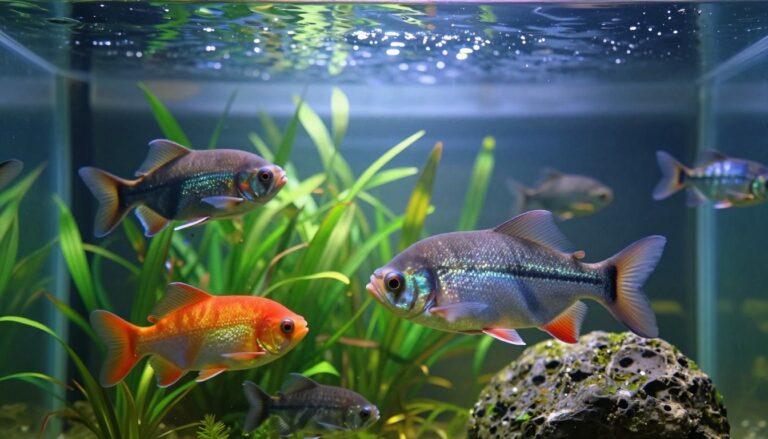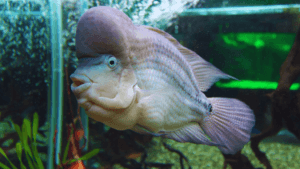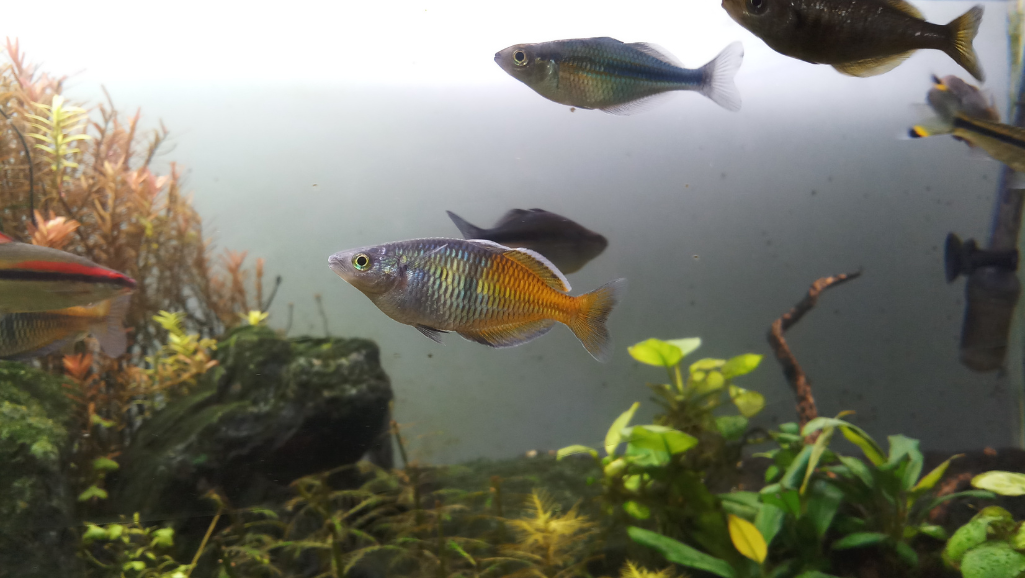
Meet the Boesemani Rainbow fish, one of the most striking freshwater species in the aquarium hobby. Valued by fish keepers for vivid color and graceful schooling, this rainbowfish hails from the Lake Ayamaru region of West Papua (New Guinea) and became widely known to hobbyists in the 1980s.
The Boesemani Rainbow is peaceful and community-friendly, making a dramatic, calming centerpiece in any community aquarium. When kept in proper groups and water conditions, these rainbows bring long-lasting color and activity to a planted tank.
Key Takeaways:
- Boesemani Rainbows are showy additions to aquariums, prized for their blue-to-orange coloration.
- Keep them in groups of six or more to encourage natural schooling and reduce stress.
- Recreate their natural environment—planted tanks, open swimming areas, stable water—to keep them healthy and colorful.
- A varied diet of high-quality flakes/pellets plus occasional live or frozen live foods boosts color and vitality.
- Proper tank size, water care, and compatible tank mates help these fish thrive for many years in the hobby.
Ready to add Boesemani Rainbows to your planted aquarium? Read the care essentials below to prepare a long-lived, colorful group.
Discovering the Boesemani Rainbow Fish: A Colorful Aquarium Addict
Video: Boesemani Rainbow Fish — behavior and care (
)
Exploring the world of freshwater fish is especially rewarding with the Boesemani Rainbow Fish. Properly known as Melanotaenia boesemani, this rainbowfish is prized for intense color and lively schooling. Adults typically reach about 12 cm (roughly 4.7–5 inches), making them a medium-sized, eye-catching species for community tanks.
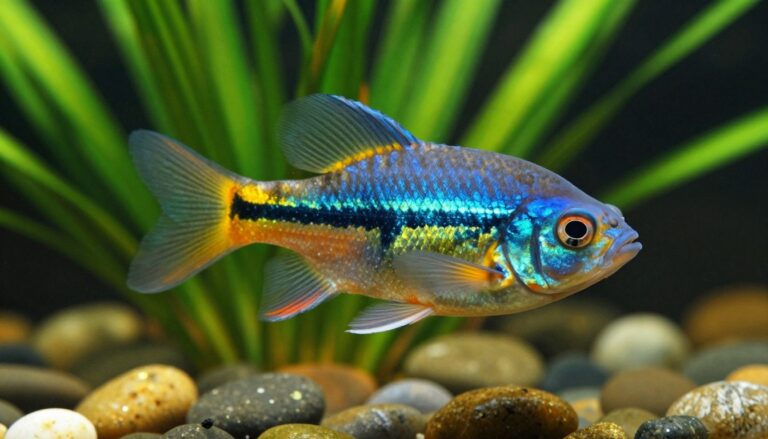
Native to New Guinea, especially the Lake Ayamaru area in West Papua, the Boesemani Rainbow Fish displays a dramatic blue-to-orange split: males show a vivid blue front and warm orange rear, often with a reddish dorsal; females are generally subtler—silver to orange—but still attractive in a planted aquarium setup.
Boesemani Rainbows are peaceful community fish that do best as a school; aim for groups of six or more to promote natural behavior and reduce stress. A minimum tank of about 60 liters (roughly 15–20 gallons) can house a small group, but larger tanks (30+ gallons / 110+ liters) are recommended for comfortable schooling and mixed-species displays. Feed them a varied diet of high-quality flakes or pellets plus supplemental live/frozen treats—Artemia (brine shrimp) and other small live foods boost color and energy.
Joining groups like the International Society for Rainbowfishes can help hobbyists access reputable strains and expert care/breeding advice. The Boesemani Rainbow Fish has medium breeding difficulty but rewards keepers with brilliant specimens that enrich any aquarium and help support conservation of wild populations.
Thinking of expanding your aquarium collection? Consider the Boesemani Rainbow—a jewel of freshwater fish that brings lasting color to the hobby and showcases the beauty of properly kept rainbows.
Understanding Boesemani Rainbow Care for Optimal Health
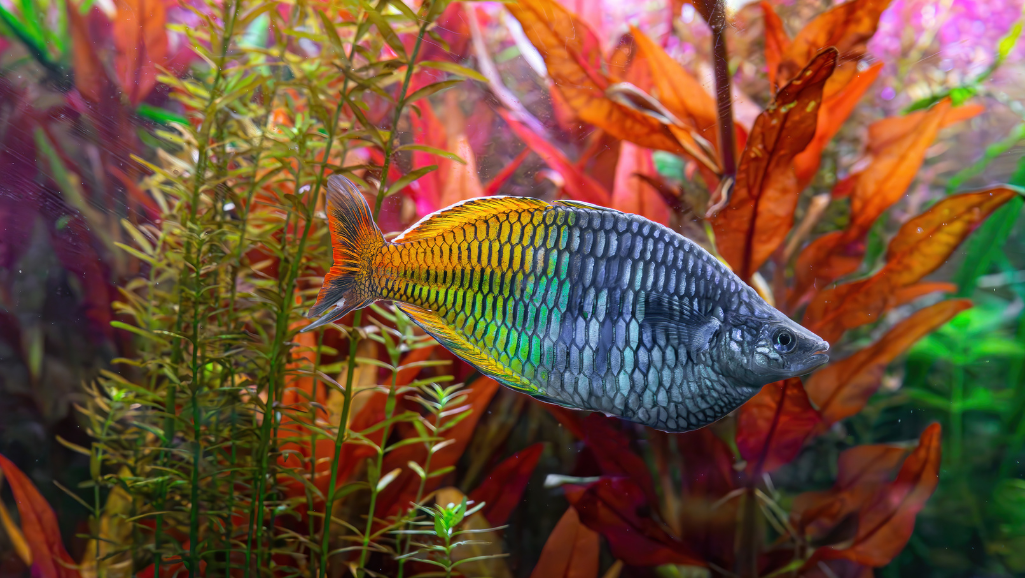
Good care for Boesemani Rainbow fish starts with recreating elements of their tropical home: dense vegetation for cover, open swimming lanes, and stable, clean water. When you match those basics, these fish show stronger color, more natural behavior, and better long-term health.
Natural Habitat and Environmental Needs
Boesemani Rainbows originate from the warm, plant-rich waters of New Guinea. In the aquarium, mimic that environment with plenty of live plants (tall background species plus mid- and foreground variety), driftwood, and smooth rock. Vegetation provides hiding spots, reduces stress, and enhances the fish’s colors by offering contrast and shelter.
Ideal Water Conditions and Parameters
Keep parameters steady to avoid stress. Target these ranges as a practical guideline:
- Temperature: 74–82°F (23–28°C) — toward the upper end (77–82°F) often encourages brighter coloration.
- pH: 6.5–7.8 — slightly acidic to neutral generally works well.
- Hardness: Moderate (GH & KH in the low–mid ranges); avoid sudden swings.
- Filtration: Use a reliable filter with gentle flow; Boesemani prefer moderate current and clean, well-oxygenated water.
- Water changes: Regular partial changes (20–30% weekly or biweekly) keep nitrates low and water quality high.
Monitor parameters with test kits and make small, gradual adjustments — these fish dislike sudden changes in temperature or chemistry.
The Importance of a Balanced Diet
Boesemani Rainbows are omnivores and benefit from a varied, high-quality diet. A balanced plan might look like this:
- Staple: Premium flakes or pellets formulated for tropical community fish (look for color-enhancing ingredients like spirulina and carotenoids).
- Protein boosts: 2–3 times per week offer live or frozen live foods such as Artemia (brine shrimp), daphnia, or bloodworms to build color and energy.
- Vegetable matter: Occasional blanched greens or algae-based foods add fiber and balance.
- Feeding schedule: 2–3 small feedings per day that the fish can consume in 2–3 minutes helps maintain health and water quality.
For young fish and breeding fry, feed appropriately sized foods (crushed flakes, liquid fry food, or newly hatched Artemia) and maintain excellent water quality to support growth.
With proper tank setup, stable water, and a mixed diet of quality foods including live options, Boesemani Rainbows flourish and keep their hallmark colors for years in the aquarium hobby.
Dazzling Displays: The Appearance and Behavior of Boesemani Rainbow Fish
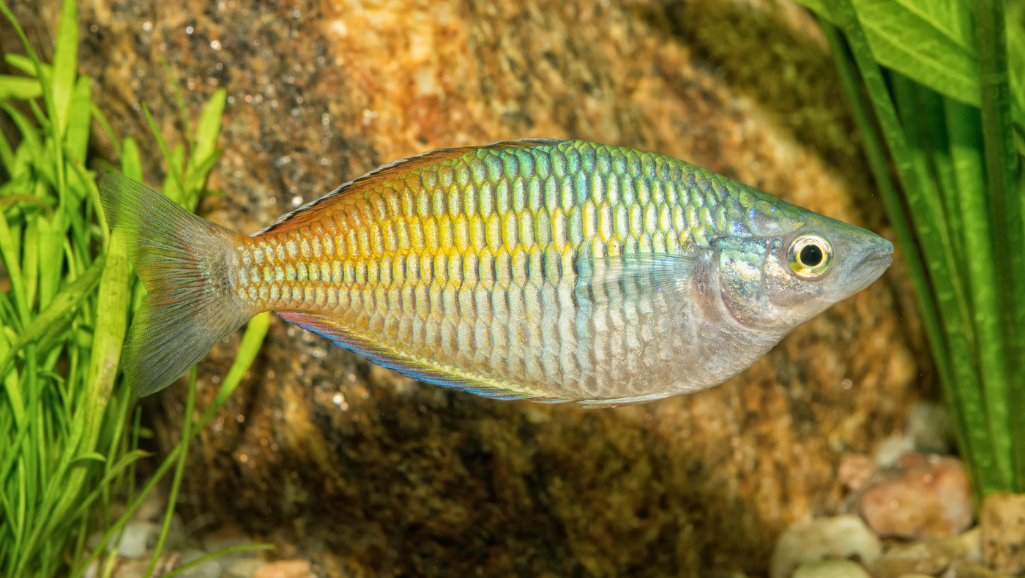
Boesemani Rainbows are instant standouts in any aquarium. Their bodies flash bright blues and warm oranges, creating a strong visual contrast that appeals to both seasoned hobbyists and casual viewers.
Sexual dimorphism is pronounced: adult males usually show more intense blue at the front and vivid orange toward the rear, while females are generally paler—silver to orange—but still elegant in a planted tank.
Quick ID: key features
- Size: Medium-bodied; adults typically reach about 12 cm (≈4.7–5 inches).
- Body and fins: Forked tail, elongated body, and a colorful dorsal fin (often reddish in males).
- Color pattern: Teal/blue front, orange/yellow rear—colors pop against darker backgrounds.
Striking Color Patterns and Sexual Dimorphism
The two-tone color split is the Boesemani’s signature: males intensify colors during display and breeding, using vibrancy to attract females. Display behavior and brighter hues are signs of good health and comfortable water conditions.
Behavioral Traits and Social Dynamics
These rainbowfish are peaceful, active swimmers that thrive in groups. Keep them in schools of six or more to promote natural schooling behavior and reduce skittishness. In a well-planted community tank they coexist calmly with other non-aggressive species.
Watch for signs of stress or poor health: faded colors, clamped fins, rapid breathing, or reduced schooling indicate water or diet issues. A quick check of temperature, water chemistry, and feeding routine often resolves these problems.
Boesemani Rainbows make attractive, lively additions to planted aquaria—particularly when kept in appropriate groups, on stable water, and with good nutrition to show off their best coloration.
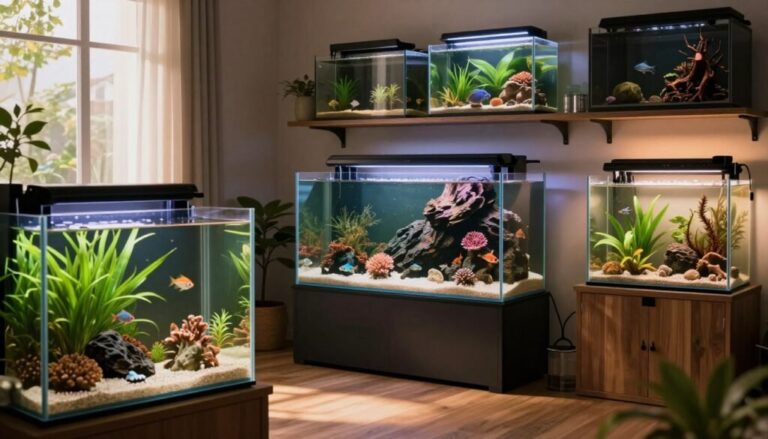
Creating a Boesemani Rainbow-Friendly Aquascape
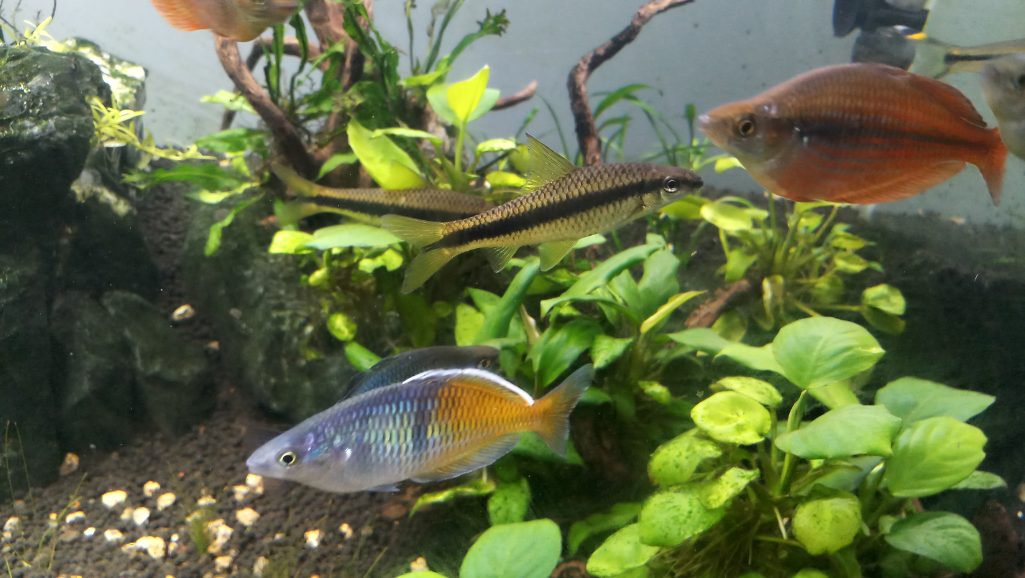
Designing a successful Boesemani Rainbow tank setup balances attractive aquascaping with the practical needs of these active, colorful fish. Aim for a layout that offers dense planted areas for shelter plus long, open swimming lanes so the school can move freely.
Aquascape checklist (layout & essentials)
- Tank dimensions: Aim for a long footprint — 120 cm / 4 ft is ideal. Practically, a 55–75 gallon (210–280 L) tank will provide comfortable space for a school; smaller 30–40 gallon tanks can work for very small groups but aren’t ideal for showing full schooling behavior.
- Zones: Dense tall planting in the rear and along the sides; midground with medium-height plants; open central swim area to highlight the fish’s movement.
- Plants: Use tall background species like Vallisneria or Amazon swords, mid-height Java Fern and Cryptocoryne, and hardy foreground plants such as Anubias or Dwarf Baby Tears for contrast without impeding swimming.
- Hardscape: Smooth driftwood and rounded rocks create natural hideaways and break up sightlines—this reduces stress and gives exploration areas.
- Substrate: A nutrient-rich soil capped with dark gravel provides plant nutrition and visual contrast to make the fish’s colors pop.
- Filtration & flow: A quality filter that provides good mechanical and biological filtration with moderate flow is best—Boesemani like well-oxygenated water but not strong, turbulent currents.
- Lighting: Moderate lighting brings out plant growth and enhances the fish’s colors; avoid overly harsh lighting that stresses shy individuals.
Sample shopping list (starter)
- 120 cm / 4 ft aquarium (55–75 gal)
- Canister or hang-on-back filter sized for the tank
- Nutrient-rich plant substrate + dark gravel
- Vallisneria, Java Fern, Anubias, Cryptocoryne, carpeting plant (optional)
- Driftwood piece(s) and smooth river rocks
- Adjustable LED light with plant-friendly spectrum
Placement tip: cluster taller plants toward the back/edges to create depth and leave a clear central swim corridor. This view not only highlights your boesemani rainbowfish but also reduces territorial stress.
With careful planning—right tank dimensions, compatible plants, a reliable filter, and appropriate substrate—you’ll create a planted aquarium that showcases the vibrant colors of Boesemani Rainbows while supporting their long-term health.
Aquarium Companions: Boesemani Rainbow Tank Mates
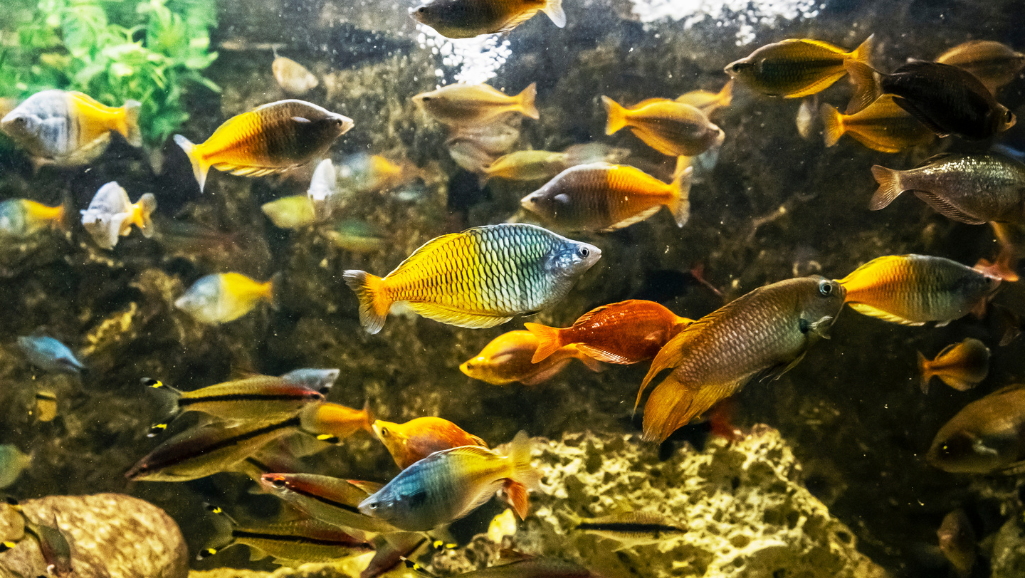
Boesemani Rainbow fish are peaceful, colorful swimmers that shine in community setups. Choosing compatible tank mates and the right tank size will keep your aquarium calm, healthy, and visually appealing.
Good tank mates (and why)
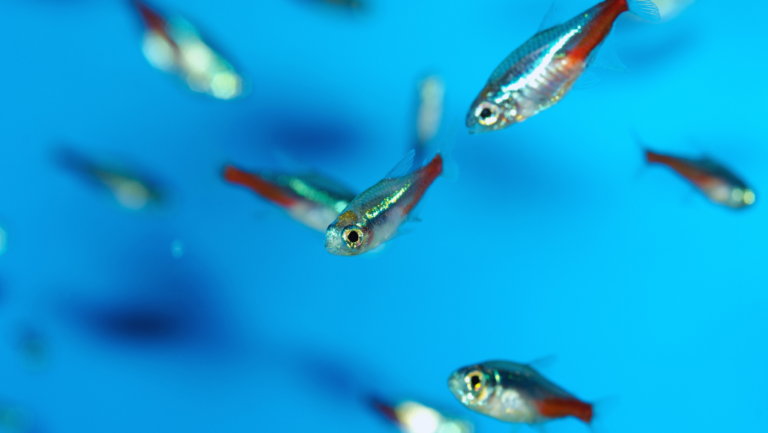
- Tetras: Small, peaceful tetras (e.g., neon, cardinal, or rummy-nose) match schooling behavior and water needs.
- Corydoras catfish: Bottom-dwellers that won’t bother midwater schooling fish and help keep substrate clean.
- Dwarf Gouramis: Generally peaceful center- to mid-level dwellers that coexist well in planted tanks.
- Small Barbs and peaceful community species: Choose non-nippy varieties and ensure tank size is adequate.
Tip: Avoid aggressive or fin-nipping species that stress boesemani and damage their fins.
Size, space and water considerations
Balance is key: match temperament, adult size, and water parameter needs. Recommended guidelines:
- Minimum tank: For a proper school of six Boesemani Rainbows, aim for at least 30 gallons (≈110 L) as an entry point; a longer tank (4 ft / 120 cm, 55–75 gallon) is better for comfortable schooling and mixed communities.
- Temperature: 74–82°F works well for most compatible species and keeps the community stable.
- Plants and zones: Include planted borders and open swim lanes so each species can express natural behavior without territorial conflict.
Species to avoid
- Aggressive cichlids that harass or prey on smaller fish.
- Fin-nippers (some barbs and larger tetras) that will stress and injure boesemani.
- Very large, territorial bottom-dwellers (large plecos) unless the tank is very large and can accommodate them separately.
Creating a peaceful aquarium means planning ahead: pick mates that share similar care and temperature needs, avoid overcrowding, and choose plants that provide cover without reducing open swimming space. With thoughtful pairing, Boesemani Rainbows make a lively, harmonious center for any community tank.
Detailed Guide to Boesemani Rainbow Breeding Practices
Starting a Boesemani Rainbow breeding project is rewarding but requires planning and careful water management. To improve success, mimic the species’ natural conditions, set up a dedicated spawning tank, and follow a clear step-by-step routine.
Breeding setup (quick checklist)
- Spawning tank: Use a separate 10–20 gallon tank or larger depending on your group size; this prevents adults from eating eggs and makes monitoring easier.
- Substrate & plants: Provide fine-leaved plants (Java moss or spawning mops) or a spawning mop where eggs can attach.
- Filtration: Gentle sponge filter to maintain water quality without creating strong currents that dislodge eggs.
- Equipment: Reliable heater, thermometer, aquarium lights on a timer, and test kits for pH, GH, KH, ammonia, nitrite, and nitrate.
Water parameters to target
Use precise numbers for consistent results:
- Temperature: 74–78°F (23–26°C) for conditioning and spawning; slightly warmer (up to 78°F) can stimulate spawning.
- pH: Slightly acidic to neutral — aim for 6.5–7.0 during conditioning/spawning.
- Hardness: Moderate to soft water (lower GH/KH helps mimic natural conditions); avoid sudden shifts in hardness.
Conditioning the breeders
Healthy adults are the foundation of successful breeding:
- Condition with high-quality foods for 2–3 weeks: a mix of premium flakes/pellets plus frequent live/frozen protein (fresh Artemia/brine shrimp, daphnia).
- Maintain stable water and good oxygenation; perform small frequent water changes (10–20%) to keep parameters stable and stimulate spawning behavior.
Spawning and egg care
Boesemani Rainbowfish are egg scatterers that deposit adhesive eggs on plants or spawning mops.
- When males display vivid colors and chase females, spawning often follows in the morning. After spawning, remove adults to protect the eggs.
- Egg development typically begins immediately; expect hatching in roughly 7–12 days depending on temperature (warmer speeds development).
- Keep the spawning tank clean and gently aerated; avoid strong flow near eggs.
Fry rearing (first weeks)
- Temperature: Maintain 74–78°F (23–26°C) and pristine water conditions.
- First foods: Newly hatched Artemia (brine shrimp) or commercial liquid fry food are ideal; crushed flakes or powdered fry foods work as fry grow.
- Feeding schedule: Offer tiny meals multiple times per day to promote steady growth without fouling the water.
- Water care: Perform frequent small water changes (5–10% daily or 10–20% alternate days) and use sponge filtration to avoid sucking up fry.
Stocking and ratios
Maintain social structure to encourage natural breeding behavior: keep groups of at least six individuals and aim for a male:female ratio near 3:2 when conditioning for breeding. Provide ample space—a 30-gallon (or larger) tank for adults is advisable for ongoing breeding activity and to avoid stress.
With careful parameter control (temperature, pH, and hardness), appropriate conditioning foods, and a dedicated spawning tank with gentle filtration, you can raise healthy fry and produce vibrant Boesemani Rainbowfish specimens for your aquarium or responsible exchange with other hobbyists.
FAQ
How do you properly care for Boesemani Rainbow Fish in an aquarium?
What size do Boesemani Rainbow Fish grow to, and how does this affect their aquarium requirements?
What are some ideal water conditions and parameters for keeping Boesemani Rainbow Fish?
- Temperature: 74–82°F (23–28°C). For enhanced coloration, keep toward 77–82°F when compatible with tank mates.
- pH: 6.5–7.8 (slightly acidic to neutral).
- Hardness: moderate to soft; avoid sudden changes.
- Water changes: regular partial changes (20–30% weekly or biweekly) and reliable filtration are essential.
What dietary practices are recommended for Boesemani Rainbow Fish?
- Staple: high-quality flakes or pellets with color-enhancing ingredients.
- Supplement: live or frozen foods (Artemia / brine shrimp, daphnia, bloodworms) a few times weekly.
- Occasional vegetable matter: blanched greens or algae-based foods.
- Feeding frequency: 2–3 small feedings per day, amount eaten in 2–3 minutes.
Can you describe the striking color patterns and sexual dimorphism found in Boesemani Rainbow Fish?
What are the behavioral traits and social dynamics of Boesemani Rainbow Fish?
What steps can be taken to create an ideal Boesemani Rainbow-friendly aquascape?
What species are compatible tank mates for Boesemani Rainbow Fish in a community aquarium?
How do you navigate the compatibility and aquarium space for the Boesemani Rainbow Fish and their tank mates?
What is involved in breeding Boesemani Rainbow Fish, and how can one enhance their chances of success?
Quick reference (care at a glance)
- Temperature: 74–82°F (23–28°C)
- pH: 6.5–7.8
- Hardness: moderate to soft
- Tank size: 30 gallons minimum for small school; 55–75+ gallons ideal for full schooling display
- Group size: 6+ individuals
- Diet: high-quality flakes/pellets + live/frozen protein (brine shrimp)