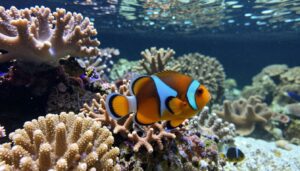
Centropyge bispinosa is a compact, colorful dwarf from the Pomacanthidae family that rewards steady attention. At about 4 inches, this lively fish brings royal blue and orange tones to a marine tank when you meet simple, stable parameters.
Good care in 2026 means more than survival. It means building a calm, mature home aquarium where natural grazing and vibrant colors show daily.
This introduction previews the full path: identifying the species and realistic expectations, setting up tanks and water parameters, feeding for a long life, and choosing tank mates with reef-adjacent caution. Expect a practical U.S.-focused guide on equipment, salt targets, and realistic tank sizes.
Success comes from consistency: ample live rock, steady chemistry, varied diet, and small daily checks with a weekly upkeep rhythm. With that time investment, the striking appearance — blue body, orange patterning, and hints of yellow — becomes the living centerpiece.
Key Takeaways
- Coral Beauty Angelfish Care.
- Centropyge bispinosa reaches about 4 inches and lives 5–10 years with proper routine.
- Priority factors: space, live rock, stable water parameters, and varied feeding.
- This species is reef-adjacent; plan corals and livestock accordingly.
- Small daily observations plus weekly maintenance prevent most problems.
- For detailed species notes and stocking tips, see a practical guide at coral beauty angelfish reference.
Meet the Coral Beauty Angelfish: Color, Size, and What to Expect
Discover the look and life of a popular dwarf from Indo-Pacific reefs. This short profile clarifies names, appearance, and natural needs so you can identify and plan for the fish before purchase.
Scientific name and common names
The scientific name appears most often as Centropyge bispinosa, though some listings show bispinosus. Both refer to the same species, so read labels carefully.
- Common names: Dusky Angelfish, Spined Angelfish, Two Spine Angelfish.
- Use these synonyms when shopping online or checking wholesalers to avoid confusion.
- Tip: ask sellers for origin and size to confirm identity.
Signature appearance
This compact fish has a rounded body with deep purple-to-blue base tones and orange-red vertical bars. Fins show bright blue edging that seems to glow under reef lighting.
“Choose an alert, well-filled specimen that grazes steadily — pattern perfection is secondary to healthy behavior.”
Size, activity, and habitat
Adults reach about 4 inches (10 cm). Despite the small size, this dwarf is active and needs room to patrol rockwork and graze all day.
Native to Indo-Pacific reefs from East Africa to the Great Barrier Reef, it favors coral-rich lagoons and reef slopes near shelter. In captivity, provide plenty of crevices so the fish can show normal cruising, picking, and quick dashes to cover.
Breeding is a marvel in the wild (protogynous hermaphroditism and dusk spawning), but captive breeding remains limited. Understanding this species’ reef life makes the required tank layout clear — not optional.
Coral Beauty Angelfish Care: Setting Up the Right Tank and Daily Maintenance

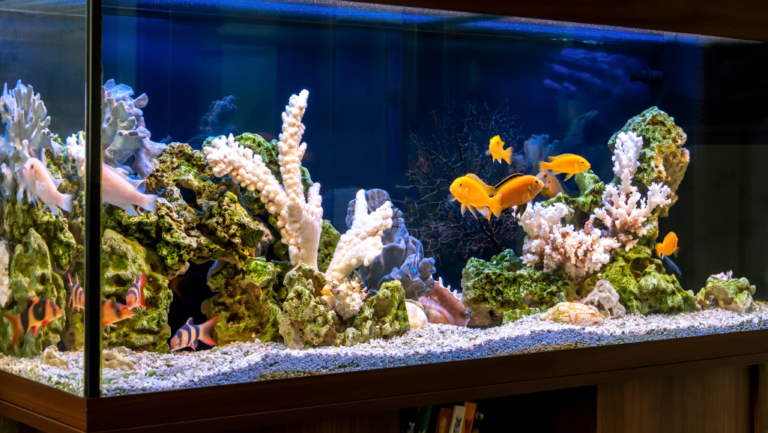
Setting up the right tank gives this lively dwarf the room to patrol, pick algae, and show natural behavior. Start with at least 70 gallons so the fish has open swim lanes and space to claim micro-territories across the rockwork.
Layout and live rock
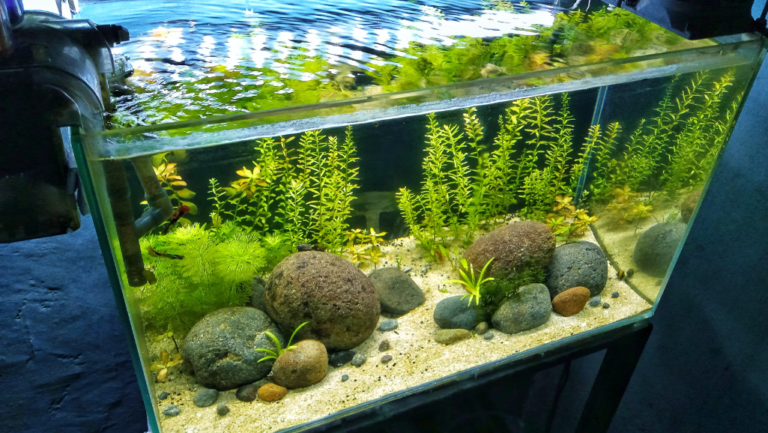
Build a rockscape with caves, arches, and shaded pockets to break line-of-sight and calm territorial disputes. Use abundant live rock — your fish will spend hours grazing biofilm and picking algae, which reduces boredom and supports health.
Water, lighting, and flow
Target stable water parameters: 72–78°F, salinity 1.020–1.025, and pH 8.0–8.4. Moderate, reef-style lighting and steady flow keep oxygen high while providing calm zones so the fish is not pinned by current.
Acclimation and upkeep
On arrival, dim lights, offer hiding spots, and present small foods to encourage grazing. Quarantine to prevent disease, but avoid copper near or above 0.15 ppm — this species is sensitive.
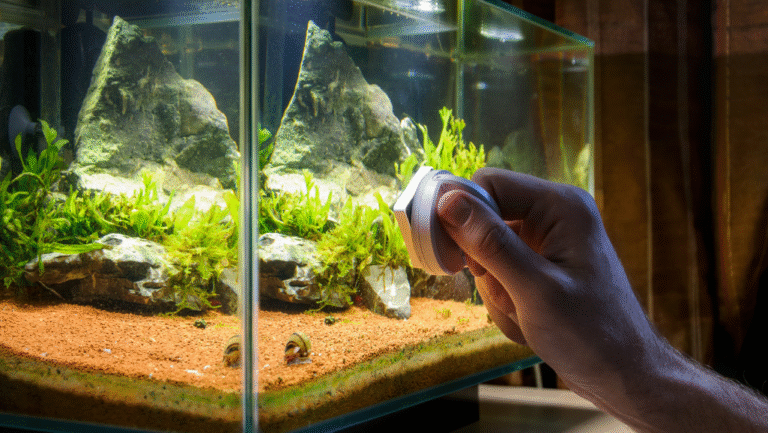
- Weekly parameter checks and gentle water changes.
- Regular filter and detritus control to keep stress low.
- Let stability precede aggressive feeding changes.
“A stable, well-rocked tank is the single best investment for long-term color and calm behavior.”
For a practical plan to set up tanks and equipment, see the coral beauty angelfish setup guide.
Feeding a Coral Beauty: A Diet That Supports Coloration and Health

Small, frequent meals and algae-first options recreate the grazing life these omnivores expect. Feed to mimic natural picking: offer short portions several times per day and keep grazing surfaces available on live rock.
Practical feeding strategy
Provide 2–3 small feedings plus constant access to natural algae. This pattern reduces aggression and supports steady energy.
Best algae-forward options
- Nori sheets clipped to rock for grazing.
- Spirulina flakes or tabs as a daily staple.
- Encourage natural algae growth on live rock for all-day picking.
Protein and variety
Rotate mysis shrimp, brine shrimp, copepods, and frozen marine blends to add muscle and vivid coloration. Shrimp choices supply essential amino acids for body condition.
Role of pellets and flakes
Pellets and flakes work as convenience items but rarely cover every vitamin need. Rotate foods to avoid nutritional gaps.
“Feed like the reef—little and often—and you’ll see steadier temperament and richer colors.”
- Signs of success: rounded body profile, regular grazing, and bright fins and colors.
- Risk note: good nutrition lowers coral nipping from hunger but doesn’t eliminate territorial behavior.
Behavior, Tank Mates, and Reef Considerations

Recognizing territory signals early makes it easier to design a peaceful, lively aquarium. These fish are best described as semi-aggressive: much of the behavior looks like defended rock zones rather than nonstop fighting.
Temperament and territory
Territory shows up when a fish claims a favorite rock or cave. Expect short chases around that area rather than tank-wide battles.
Use layered rockwork and multiple hiding spots to break sightlines. That reduces stress and gives timid tankmates places to escape.
Compatibility tips
Avoid adding another angelfish unless your tank truly exceeds 100 gallons. Two similar dwarf angelfish often lead to long-term territorial fights.
Better partners are peaceful to moderately assertive reef fish that won’t harass grazing along the rock or steal food.
Reef-safe reality check
Not fully reef safe: this species may nip at corals, clams, sponges, and snails. Treat “reef-safe” as a tentative label, not a guarantee.
Reduce risk by keeping abundant algae and grazing options so the fish spends more time picking food than picking at corals.
Practical safeguards
- Add the coral beauty last so it does not claim the entire home.
- Use a netted lid to prevent jumping during stress or aggressive spats.
- Spend a few minutes each day watching interactions to catch nipping or bullying early.
When you match temperament to tank goals, you keep the showy color and motion without constant damage to prized corals or clams. For related stocking tips, see a concise guide to aquarium tools like a nails care kit for quick maintenance checks.
Conclusion
Winning formula: give this species a 70+ gallons tank, abundant live rock for grazing, stable water parameters, and a varied omnivore diet that includes algae and quality proteins like mysis shrimp.
Think long term: small, simple routines repeated weekly create the stability these reef fish need. Over time, consistent checks and gentle maintenance yield 5–10 years of healthy life for many specimens.
Be reef-responsible. Enjoy the colors and personality, but expect possible coral nipping and plan your aquascape and livestock accordingly. Avoid adding another angelfish in most home aquarium setups to keep stress low.
Set a short success checklist: space, stability, diet variety, and daily observation. With the system built around natural grazing and behavior, the reward is a vibrant, always-in-motion centerpiece that lifts any marine aquarium.
FAQ
What is the scientific name and common names for this species?
How big do they get and how much space do they need?
Where do they come from in the wild?
What tank setup helps them thrive?
What water parameters should I keep?
How should I acclimate a new fish to my tank?
What do they eat and how often should I feed them?
Are pellets and flakes enough?
How do I know my feeding plan is working?
What is their temperament like and which tank mates work best?
Are they reef-safe? Will they nip at corals or invertebrates?
What precautions reduce reef risk and escapes?
Can they be bred in captivity?
How long do they live in a home aquarium?