Meet the chili rasbora — Boraras brigittae — a tiny jewel for your nano tank that turns a small setup into a living splash of color. This small fish packs bright red tones and lively schooling into a very compact footprint, making it a favorite for planted nano aquariums and an excellent choice for easy care freshwater setups.
Boraras brigittae comes from the tannin-stained blackwater streams of Borneo and nearby Indonesian islands and shows a vivid scarlet body above a dark lateral stripe when kept in soft, slightly acidic water that mimics its wild habitat.
Adults reach about three-quarters of an inch (roughly 0.7–0.75 in) and thrive in dim, well-planted aquariums with dark substrate, abundant cover, and gentle flow to protect delicate fins and encourage calm schooling.
Keep chili rasboras in groups so the school feels secure and red coloration deepens; feed a variety of fine foods such as crushed flakes, micro pellets, and live micro fare (baby brine shrimp, micro worms) to ensure every fish — and any shrimp tank mates — gets adequate nutrition.
Smart setup choices — floating plants for shade, sponge filtration, and prefiltered intakes — protect these tiny fish and the shrimp you may keep alongside them while maintaining near-zero midwater flow.
This care guide turns wild-habitat cues into clear, practical steps to build a calm, vibrant nano aquarium that highlights Boraras brigittae’s ruby color and synchronized schooling typical of chili rasboras and related rasboras. Read the full care guide below for setup, feeding, and breeding details.
Key Takeaways
- Chili Rasbora Care thrive in dim, planted nano tanks with soft, slightly acidic water that flatters red coloration.
- Keep them in groups (aim for 8–12+ individuals) to encourage confident, schooling behavior.
- Use dark substrate, botanicals (Catappa leaves, peat), and gentle flow to boost color and reduce stress.
- Feed micro-sized staples plus periodic protein boosts (baby brine shrimp, micro worms) and protect filters with sponge prefilters.
- With steady care these small fish can live multiple years (keepers commonly report around 4–8 years) and pair well with peaceful shrimp and other small tank mates.
Why Choose Chili Rasbora for Your Nano Tank
Big color and character in a very small footprint. If you want bold scarlet tones and lively motion without a large setup, chili rasboras deliver. These tiny rasboras come from shaded, tannin-rich blackwater streams and show their best red when settled in soft, slightly acidic water and low-stress conditions.
Inspiration: Big color and character in a small footprint
Choose chili rasboras when you want maximum color from truly small fish that won’t overwhelm limited space. A planted, low-flow nano tank with floating cover makes their red hues pop and lets their schooling display feel natural — for example, a 10-gallon tank stocked with about 10 chili rasboras provides vivid color and confident schooling without a large footprint.
Search intent: What you’ll learn in this step-by-step guide
This care guide walks you through precise water and tank setup, feeding methods for tiny mouths, and how to size a school (6–12+ recommended) for confidence and visibility. You’ll also get stocking advice for a peaceful community and practical tips for pairing with adult shrimp and other compatible nano fish.
- Water and botanicals to flatter red coloration
- Plant choices and gentle equipment for low-stress care
- Practical steps for feeding, health, and breeding
Chili Rasbora
Boraras brigittae packs vivid color and gentle behavior into a tiny, midwater swimmer favored for planted nano aquariums. Commonly called the chili rasbora, this species stays well under an inch, so a small, well-designed tank can showcase their schooling and radiant red tones.
Species snapshot: basics, size, and lifespan
Size: Adults average about 0.7–0.75 inch (roughly 18–19 mm). Keep them in groups so they feel secure and show stronger coloration.
Lifespan: With steady care, stable water, and a good diet, many keepers report healthy chili rasboras living around 4–8 years.
Male vs. female: coloration, body, and fins
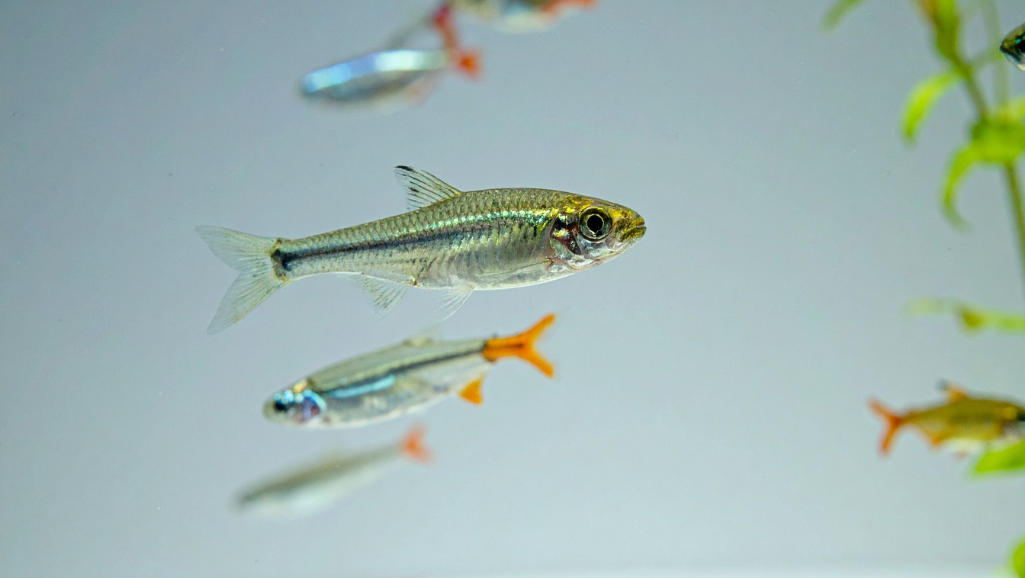
Males tend to be slightly smaller and exhibit deeper red coloration with more vivid fins and tiny red spotting on translucent fin edges. Females are usually rounder-bodied (especially when carrying eggs) and often display softer red intensity.
- Identification: look for a slender body, a dark lateral stripe, and a bright scarlet overlay—traits that distinguish Boraras brigittae from similar rasboras.
- Feeding: rotate crushed flakes, micro pellets, micro worms, and occasional baby brine shrimp to support health and color.
- Conditions: gentle flow and tannin-rich, slightly acidic water mimic their native streams and promote calmer behavior and better red coloration.
Setting Up the Aquarium: From Empty Glass to Thriving Nano
A calm, well-planned nano setup turns empty glass into a stable home where tiny schoolers feel confident and show their best color.
Tank size and layout: 5–10 gallons and beyond
Start with at least 5 gallons, but aim for 10 gallons for greater stability and room for a larger school — a 10-gallon planted tank with 8–12 chili rasboras is a common, reliable layout. Use a dark substrate and warm-toned wood or leaf litter to recreate blackwater stream aesthetics. Plant the edges and background, leaving open midwater lanes for schooling; this balance of cover and swim space helps shy fish feel secure while showing off their red coloration.
Filtration and flow: gentle choices for safety
Choose a sponge filter for steady, low-flow biological filtration — ideal for fry and shrimp. If you prefer a HOB or canister filter, fit a prefilter sponge on the intake to protect tiny fish and shrimp and break strong currents with driftwood, plants, or a spray bar so the school glides rather than struggles. Suggested kit items (brand-neutral): a small sponge filter sized to your tank, a heater appropriate for a 5–10 gallon tank (commonly 25–50W depending on ambient room temperature), and a gentle circulation pump or adjustable output on canister returns for larger nano setups.
Lighting, tannins, and plant selection
Use dim, warm-toned lighting and a dark background to make red tones pop. Add 1–2 Catappa (Indian almond) leaves or a small pinch of peat to release tannins that tint the water and gently lower pH toward the slightly acidic range many keepers prefer. Favor hardy, low-light plants that thrive in tannin-stained water—Anubias, Java fern, Cryptocoryne, and water sprite—and include a patch of Java moss for cover and breeding sites.
Tip: Fully cycle the aquarium before adding fish and test water often in the first weeks to catch rapid swings.
- Quick setup checklist: 10-gallon tank, dark substrate, driftwood/leaf litter, sponge filter + prefilter sponge, heater sized to tank (25–50W typical for small tanks), dim warm LED, 1–2 Catappa leaves, Java moss patch, and low-light plants.
- Example layout: 10-gallon with dark sand, a piece of bogwood and leaf litter along the back, Anubias and Java fern attached to wood, a dense Java moss clump at one corner, and open midwater lanes for schooling.
- Starter kit note: Buy a reliable liquid test kit (ammonia, nitrite, nitrate, pH), sponge filter, heater sized to your tank, and a bottle of dechlorinator.
Dialing In Water Parameters
Small tanks demand steady chemistry. Tiny schoolers like chili rasboras respond quickly to swings, so focus on predictable, gentle conditions rather than chasing extreme numbers.
Target ranges: temperature, pH, and hardness
Aim for steady warmth in the mid-70s°F — about 24–28°C (roughly 72–82°F) — and gentle acidity near pH 6.0–7.0 for reliable results; many keepers prefer a slightly acidic point around pH 6.0–6.8 to flatter red coloration. Soft water (low GH) generally suits planted nano aquariums; pick a stable target you can maintain consistently rather than switching targets frequently.
Tap, RO, or distilled — conditioning right
If your tap water is safe but moderately hard, use a conditioner/dechlorinator and monitor pH and GH after changes. If you use RO or distilled water, remineralize with a commercial freshwater remineralizer (follow the product instructions) or add tiny amounts of buffered mineral mix until GH and KH reach appropriate, stable levels for plants and fish. Tannins from Catappa leaves or peat can gently lower pH and create the soft, blackwater feel that calms fish and enhances color.
Best practices: testing and routine care
Test weekly for ammonia, nitrite, nitrate, pH, and temperature and log trends so you spot slow changes before they become problems. Perform 20–30% partial water changes with temperature-matched, conditioned water — more frequent, smaller changes may be necessary in very small tanks. Use a reliable liquid test kit for accuracy and a thermometer with at least ±0.5°F (±0.3°C) accuracy.
- If your tap water reads high GH/pH: consider partial RO mixing or a remineralizer that lets you control mineral levels; test after each adjustment.
- If using RO only: start with a conservative remineralization target and stabilize for 24–48 hours before adding fish.
- Rinse sponge filters in removed tank water during changes to preserve beneficial bacteria.
- Feed lightly and avoid overstocking to reduce waste and sudden level shifts; consistency is the quiet superpower behind vivid color and relaxed behavior.
Aquascaping for Confidence: Plants, Hiding Spots, and Swim Space
Use low-light plants and soft textures to recreate the shaded streams these tiny fish call home. Start by placing epiphytes like Anubias and Java fern along wood and rock to form vertical shelter. Add rooted Cryptocoryne species and a patch of water sprite in the midground to diffuse light and calm the surface.
Introduce java moss or moss thickets as dense cover. A lush moss tuft gives fry and shy fish safe foraging zones and hosts microfauna that feed shrimp and baby shrimp. For intentional breeding, lay a sheet of plastic craft mesh under moss or use a spawning mop so eggs fall into protected tangle and out of reach of adults.
Keep open midwater lanes for schooling while framing margins with wood and plants. Dark substrate and warm wood tones amplify red color and make the school stand out without stressing fish.
Tip: Aim for a low-maintenance palette of slow growers so you trim less and keep the tank stable.
- Foreground/midground/background plan for a 10-gallon: foreground — small open sand lane; midground — Java moss clump and water sprite; background — Anubias/Java fern attached to wood and a Crypt stand for vertical cover.
- Do: create dense moss thickets and attach Anubias to wood; provide a spawning mop or mesh if breeding.
- Don’t: overcrowd the entire tank with tall fast-growers that remove floating cover and reduce shaded midwater lanes.
- Balance plant mass and open swim space so the school can move freely while staying secure; dense margins + open center equals confident schooling and better red coloration for chili rasboras.
Schooling and Stocking Levels

The right group size turns shy individuals into bold, synchronized swimmers in midwater.
As schooling fish, these tiny swimmers need company to thrive. Plan for a minimum of six, but aim for 8–12 chili rasboras to unlock confident schooling and frequent midwater displays. In practice, a 10-gallon tank with 8–10 individuals is a stable starting point; larger tanks let you expand the school while keeping water chemistry steady.
Stock lightly beyond the main school—these small fish add relatively little bioload, but restraint preserves water quality in nano tanks. Add new rasboras in small batches (2–3 at a time) so filters and beneficial bacteria can adjust without parameter swings.
“Observe behavior as your guide—tight schooling and frequent appearances indicate the group feels safe.”
- Quick rule of thumb: prioritize group size over mixing many species—aim for at least 8 in a 10-gallon to get consistent schooling behavior.
- Signs of an undersized group: persistent hiding, faded color, and a scattered school. Signs of overcrowding: gasping at the surface, poor water readings, or aggressive competition at feedings.
- Match school size to your aquascape; leave open midwater lanes for synchronized movement and select gentle mates that support the school’s confidence.
- Example setups: 5-gallon — best for a tiny nano display with careful maintenance (6–8 rasboras under ideal conditions); 10-gallon — comfortable home for 8–12 chili rasboras plus a small group of peaceful tank mates like dwarf Corydoras or a few shrimp.
Food and Feeding Strategy

Feed with purpose: planned daily staples and periodic protein boosts keep small schooling fish like chili rasboras vibrant, active, and showing strong red coloration.
Daily staples
Build each day around finely crushed flakes and micro pellets that float or suspend in midwater. Choose pellets or flakes ground to match tiny mouths — aim for particles under 0.8 mm — or crush standard flakes to a powder. Offer only what the school consumes in 2–3 minutes to avoid excess waste that fouls the water.
Protein power-ups
Include live or frozen treats several times weekly — baby brine shrimp, Daphnia, cyclops, and micro worms are excellent protein boosts that improve condition and stimulate natural foraging. Rinse frozen foods to remove excess thaw water before feeding to avoid sudden parameter spikes.
Feeding technique
Scatter small portions 2–3 times daily so the school grazes across the midwater column without creating ammonia or nitrate spikes. Use slow-sinking, finely sized particles so timid individuals and shrimp can access food. If you see uneaten perishable items after a few minutes, remove them with a turkey baster or siphon.
Color-up plan
Prioritize quality proteins and carotenoid-rich foods (natural shrimp, krill, or color-enhancing flakes) to deepen red tones over time. Keep a short feeding log for 2–4 weeks — note which foods produce the best color and appetite — and rotate staples with treats to provide balanced nutrition without overfeeding.
“Disperse food widely so shy fish aren’t outcompeted.”
Sample weekly schedule
- Daily: micro pellets or crushed flakes twice daily (what they eat in 2–3 minutes).
- 3× per week: frozen or live baby brine shrimp or Daphnia as a high-protein treat.
- 2× per week: micro worms or finely crushed frozen foods for variety and conditioning.
Quick troubleshooting
- If color fades: confirm water parameters, increase high-quality protein and carotenoid foods, and verify group size and supportive aquascape are correct.
- If aggression or stealing at feedings: disperse food to multiple points, reduce single large feedings, and add more hiding spots so shy fish can access food.
- If leftover food accumulates: reduce portion size, feed fewer times, or offer smaller bites (smaller pellets/crushed flakes) to match the school’s intake rate.
Peaceful Community: Compatible Tank Mates
Build a peaceful community by choosing small, calm species that match the gentle temperament and water needs of Boraras brigittae.
Great companions include ember tetras, lambchop and neon green rasboras, dwarf Corydoras, rosy loaches, small snails, and adult freshwater shrimp. These good tank mates are similarly sized, share overlapping temperature and pH preferences, and are unlikely to outcompete your school for midwater food when fed appropriately.
What to avoid
Avoid larger, aggressive, or fast-feeding species that may harass or eat tiny fish or outcompete them at feeding time. Also avoid fin-nippers (for example, some tiger barbs or larger danios) and big loaches or cichlids that tolerate different water chemistry.
Practical tips for harmony
- Match parameters: choose tank mates that thrive in the same general range (mid-70s°F / 24–26°C and slightly acidic to neutral pH). This improves compatibility and reduces stress.
- Provide dense plants, floating cover, and plenty of hiding spots so shy individuals and baby shrimp have refuge — understock and over-plant for calmer behavior and better color.
- Expect opportunistic snacking on fry; if you plan to breed, add moss and mesh to protect eggs.
- Introduce new tank mates slowly (one or two at a time) and observe behavior and appetite for at least 2 weeks to ensure harmony.
“Understock and over-plant: a calmer, greener tank supports better color and long-term harmony.”
Quick compatibility checklist: prefer small, peaceful rasboras, ember tetras, dwarf Corydoras, and non-aggressive shrimp/snails; avoid large, boisterous species and fast surface feeders. For further reading on pairing choices and setup pointers, see care and community choices.
Behavior and Care: What to Expect Day to Day
Observe a calm, synchronized school that usually cruises upper to midwater once the group feels secure. Chili rasboras are naturally shy after a move but grow bolder as the school bonds and the tank becomes familiar.
Keep current low so they conserve energy and protect delicate fins — strong flow stresses the school and often dulls color for days or weeks. Maintain consistent water, lighting, and feeding schedules to reduce stress and support vivid coloration.
New arrivals may pale or hide for a few days; with steady care and stable parameters, bright tones commonly return within one to two weeks. Feed tiny portions of fine foods multiple times daily and add occasional protein boosts (baby brine shrimp or micro worms) without overfeeding to avoid water-quality spikes.
“Read the school’s body language — tight shoaling, reduced appetite, or sudden flashing spots can flag stress.”
Daily and weekly care checklists
- Daily 5-minute check: note activity level, color, appetite, and any abnormal spotting or frayed fins; confirm heater and filter are running.
- Weekly maintenance: test ammonia/nitrite/nitrate and pH, perform a 20–30% water change with temperature-matched conditioned water, and gently rinse sponge filters in removed tank water.
Quick troubleshooting: if you see X → do Y
- If fish hide and color fades → verify parameters (temperature/pH), reduce light, add floating cover, and check for recent tank disturbances.
- If tight schooling + loss of appetite → test water immediately for ammonia/nitrite and perform a partial change; consider whether a new tank mate or strong current is causing stress.
- If white spots or flashing appears → quarantine affected individuals if possible and follow parasite treatment guidance (raise temp slowly and use targeted meds when appropriate).
Acclimation tip for new arrivals
Use drip acclimation over 45–60 minutes for best results in a nano tank: place fish in a clean bag or container, run a slow drip that doubles tank volume over the hour, then gently introduce fish into the display to minimize shock to water and temperature.
- Watch the group for the first two weeks — increasing curiosity, steady grazing, and cohesive schooling are signs the school feels secure and the tank setup is appropriate.
Breeding Chili Rasboras at Home
Successful breeding begins with a calm, mature aquarium that mimics shaded blackwater streams. A dedicated breeding tank with botanicals, leaf litter, and established biofilm gives adults confidence and supplies the microfauna fry need to survive their earliest days.
Breeding essentials (quick)
- Dedicated 5–10 gallon breeding tank
- Dense Java moss or spawning mop and a mesh floor option
- Sponge filter for ultra-gentle filtration
- Leaf litter / Catappa leaves for tannins and cover
- Stable temp mid-70s°F (24–26°C) and slightly acidic pH ~6.0–6.8
Conditioning adults for spawning
Condition the group for 1–2 weeks with frequent, high-quality live or frozen foods such as baby brine shrimp and micro worms. Keep water very clean (stable temperature and low nitrates) and slightly acidic to encourage spawning behavior. Feed small, protein-rich portions twice daily to boost color, health, and fertility before attempting to breed.
Protecting scattered eggs
Chili rasbora eggs are adhesive and typically fall into moss or detritus. Place a plastic craft mesh on the tank bottom and cover it with dense Java moss or use a yarn spawning mop so eggs lodge in protected tangle out of reach of adults. Many keepers remove adults after spawning to maximize egg survival; if you leave adults in the tank expect significant egg predation. Decide based on your goals: leave adults in for natural population control or remove them for higher fry survival.
Recommended breeding tank checklist: 5–10 gallon dedicated tank, dark substrate, Java moss thicket or spawning mop, sponge filter for ultra-gentle filtration, leaf litter/Catappa leaves, stable temperature in the mid-70s°F (24–26°C), and slightly acidic pH around 6.0–6.8.
Raising fry: stepwise food plan
Day 0–7: Start fry on infusoria or commercially available liquid fry foods and cultured microfauna (infusoria from a mature tank or DIY cultures).
Day 8–14: Introduce vinegar eels or micro worms and continue tiny, frequent feedings.
After ~10–14 days: When fry are larger and actively hunting, offer newly hatched baby brine shrimp and very finely crushed micro pellets.
- Keep filtration ultra-gentle with a sponge filter and minimal flow; aeration should be steady but mild.
- Use a mature planted tank or a cultured infusoria source so microfauna provides constant grazing for fry.
- Feed tiny amounts multiple times daily and perform small, frequent water changes (10–15%) to maintain water quality without stressing fry.
“Patience and steady micro foods create a rewarding trickle of new life.”
Common pitfalls
- Overfeeding fry — leads to fouling and high mortality; feed tiny amounts and remove uneaten food promptly.
- Using strong filtration or currents — fry and delicate eggs are easily lost; favor sponge filters and gentle bubbles.
- Not protecting eggs — without mesh/moss or removing adults, egg survival is typically low.
Health, Diseases, and Prevention
A calm daily routine and consistently clean water are your strongest defenses against common ailments in nano tanks. Tiny schoolers like chili rasboras reveal problems quickly when water chemistry shifts or stress rises, so early observation and steady maintenance matter more than dramatic interventions.
Common issues include Ich (white spots), velvet (a dusty gold or rust sheen), fin rot (frayed fins), and bacterial infections such as columnaris. These small fish are also very sensitive to nitrite spikes; watch for white spots, a sudden golden sheen, ragged fins, lethargy, gasping at the surface, or cottony patches.
Prevention first
- Keep water clean and stable with routine testing and modest feeding — consistent partial water changes prevent sudden chemistry swings and protect levels.
- Quarantine new fish, shrimp, and plants for 2–3 weeks to avoid introducing pathogens; observe for disease and treat in quarantine if needed.
- Reduce stress with dim light, gentle flow, and abundant cover so shy individuals and shrimp can hide.
- Maintain a healthy filter and a steady maintenance rhythm tailored to nano tanks — rinse sponge filters in removed tank water to preserve beneficial bacteria.
Treatment basics (use care with shrimp)
Many parasite and bacterial treatments can work, but some common products are toxic to invertebrates. Never use copper-based medications if you keep shrimp — copper is lethal to most freshwater shrimp. For Ich, a slow, controlled temperature rise (within species-safe limits) and targeted antiparasitic meds are common approaches; aquarium-safe salt may help in fish-only setups if the species tolerates it. Velvet often requires more aggressive antiparasitic treatment in fish-only systems, but those same meds may be unsafe with shrimp present.
For bacterial problems like fin rot or columnaris, first correct water quality (stable temperature, good oxygenation) and then use appropriate antibiotic treatments only when oxygen is plentiful. During any treatment, increase aeration, keep a symptom log with test results, and perform small, frequent water changes to keep parameters safe.
Quick action checklist — if you see white spots or flashing: test ammonia/nitrite immediately, isolate affected fish if possible, perform a 20–30% water change with conditioned water, and consider quarantine treatment following product guidance. If you keep shrimp, always check that the medication is shrimp-safe before use.
Quarantine checklist
- Length: 2–3 weeks observation, longer if symptoms appear.
- Daily checks: watch appetite, color, activity; look for external parasites or unusual spots.
- Treatment: treat observed disease in quarantine with meds appropriate for the species present; avoid copper when shrimp are involved.
- Recovery: return fish to the display only once they are eating normally, free of visible symptoms, and water parameters match the main tank.
After recovery, restore beneficial bacteria gently by rinsing filters in tank water, reduce feeding temporarily, and return to a conservative maintenance schedule. When in doubt about systemic bacterial infections or ambiguous symptoms, consult an experienced aquatic veterinarian or an experienced hobbyist community — prompt expert advice can save stock and protect your display.
Conclusion
With simple routines and the right companions, these tiny fish reward steady care with lively, confident schooling.
Use this care guide to build a calm planted nano aquarium that highlights the chili rasbora’s ruby color. Aim for dim light, gentle tannin tinting (Catappa leaves or peat), low-flow filtration, and stable water to keep stress low and color strong.
Focus on fine foods and a varied diet, the right school size (aim for 8–12 in a 10-gallon), and plenty of cover so behavior and coloration improve. Pair them with peaceful shrimp and small tank mates that share similar water preferences to preserve harmony long term.
For breeding, create moss thickets and use mesh or a spawning mop as a simple nursery. Stay consistent with small, regular maintenance and you’ll enjoy the daily spectacle of Boraras brigittae in a serene aquarium.
- Next steps: cycle your tank, gather a starter kit (sponge filter, heater, liquid test kit), add plants and botanicals, then introduce a small group of chili rasboras once parameters are stable.
- Want help? Use the FAQ below for quick answers, and consider joining a local forum or social group to get region-specific water-parameter advice.
FAQ
What tank size is ideal for these tiny, colorful fish?
How many fish should I keep together for a healthy school?
What water parameters do they need to thrive?
Which foods bring out the best red coloration?
How do I breed them and protect the eggs?
What tank mates are safe choices and which should I avoid?
How do I prevent common health problems?
What kind of aquascape inspires confidence and comfort?
How much and how often should I feed them?
Can I keep them with shrimp and snails?
What filtration and flow work best for a nano setup?
How do I raise fry from hatch to free-swimming?
Are tannins and blackwater conditions necessary?
How can I tell males from females?