Creating a thriving environment for your betta fish is rewarding and essential to their health. This guide helps beginners and experienced aquarists set up and maintain a successful small aquarium, covering everything from choosing the right equipment to managing water chemistry and daily care.
Betta are a popular choice for aquarium owners, especially in compact setups. Because bettas are sensitive to water conditions, a smaller water volume can produce faster swings in parameters like temperature, pH, and ammonia—so regular monitoring and maintenance are important to keep your fish healthy. This article pulls together practical advice, expert recommendations, and helpful tips from social media creators to make keeping a five gallon setup straightforward and enjoyable.
We’ll also show which accessories and enrichment ideas work best to keep your betta active and comfortable. Whether you’re setting up your first tank or optimizing an existing one, this guide gives step-by-step direction so your fish can thrive in a beautiful, well-balanced space.
Key Takeaways
- five gallon betta tanks: Choose a five-gallon betta tank with stable water conditions and the right equipment (heater, low-flow filter, and appropriate lighting) to give your fish a healthy home.
- Smaller aquariums require frequent monitoring of water chemistry: Test temperature, pH, ammonia, and nitrate regularly and perform partial water changes to prevent rapid water-quality swings.
- Low-flow filters and soft decorations are ideal for betta safety: Use adjustable or sponge-style filters and avoid sharp decor so your betta can swim comfortably without stress.
- Live plants enhance water quality and provide hiding spots: Add low-maintenance plants like java fern or anubias to improve nitrogen uptake and create natural cover.
- Regular maintenance routines are essential for a healthy environment: A consistent schedule—daily checks, weekly 25% water changes, and monthly equipment inspection—keeps your tank stable over time.
Introduction: Benefits of a Five Gallon Betta Tank
Starting with a five gallon setup makes betta care more manageable for beginners. A compact aquarium saves space and simplifies routine maintenance, so it’s an excellent choice if you’re new to fishkeeping. Betta are prized for bright colors and engaging personalities that show best in a well-configured, stable environment.
Overview of Betta Fish in Nano Aquariums
Betta do well in nano aquariums because these smaller tanks encourage careful planning and efficient use of space. Nano setups let you create attractive aquascapes with fewer materials, and a planted five gallon aquarium can improve water chemistry by helping remove nitrogen compounds—though plants support, not replace, proper filtration and biological cycling.
One big advantage of a smaller tank is quick feedback on water quality: visible signs (cloudy water, sluggish behavior, gasping) and simple tests (digital thermometer, pH strips, liquid test kits) will alert you to pH or temperature shifts sooner. That immediate feedback helps beginners learn how parameters affect their betta and how to correct problems fast.
Why a Five Gallon Tank Works for Beginners
For novice aquarists, a five-gallon tank strikes a good balance between swimming space and ease of care. It offers more stable conditions than very tiny bowls while remaining small enough to fit desks or shelves. With the right equipment—a reliable heater, a low-flow or sponge filter, and moderate LED lighting—a five gallon aquarium becomes a healthy home for your fish.
Social platforms like TikTok often show creative, beginner-friendly builds that highlight how a five gallon can look and function in a small room. If you’re shopping, consider compact models such as the Fluval Spec-style tanks for tight spaces; they pair well with small heaters and sponge filters. Planning layout, plant placement, and equipment ahead of time makes set up faster and reduces troubleshooting later.
Understanding fish compatibility is important when choosing tank mates or stocking a planted five gallon aquarium—this keeps stress low and helps your betta thrive. Follow these basic guidelines and you’ll have a vibrant, manageable tank that teaches good care habits over time.
Setting Up Your Five Gallon Betta Tank
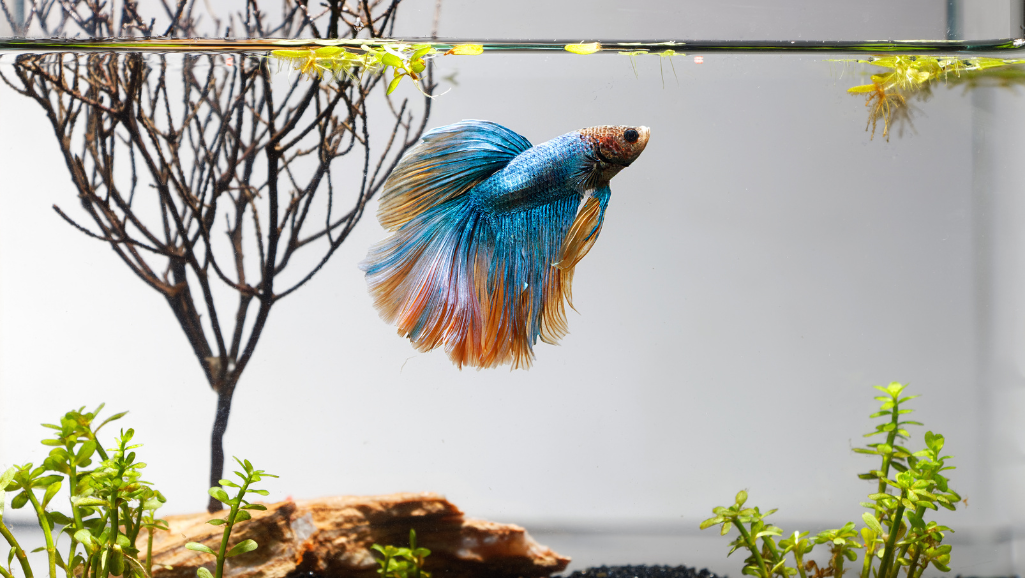
Designing a compact aquarium for your betta takes a little planning but delivers a beautiful, functional result. A thoughtful layout gives your fish open swimming areas plus safe hiding spots, while keeping equipment accessible for maintenance. Below are clear steps and practical tips to build a five gallon tank that fits your space and keeps your betta healthy.
Planning Your Tank Layout
Begin by measuring the footprint where the tank will sit so you choose a five gallon model that fits shelves, desks, or counters. Visualize where you’ll place taller elements (plants, driftwood) and leave a central or front open area for swimming. Too much decor can stress bettas, so balance cover with clear swimming lanes.
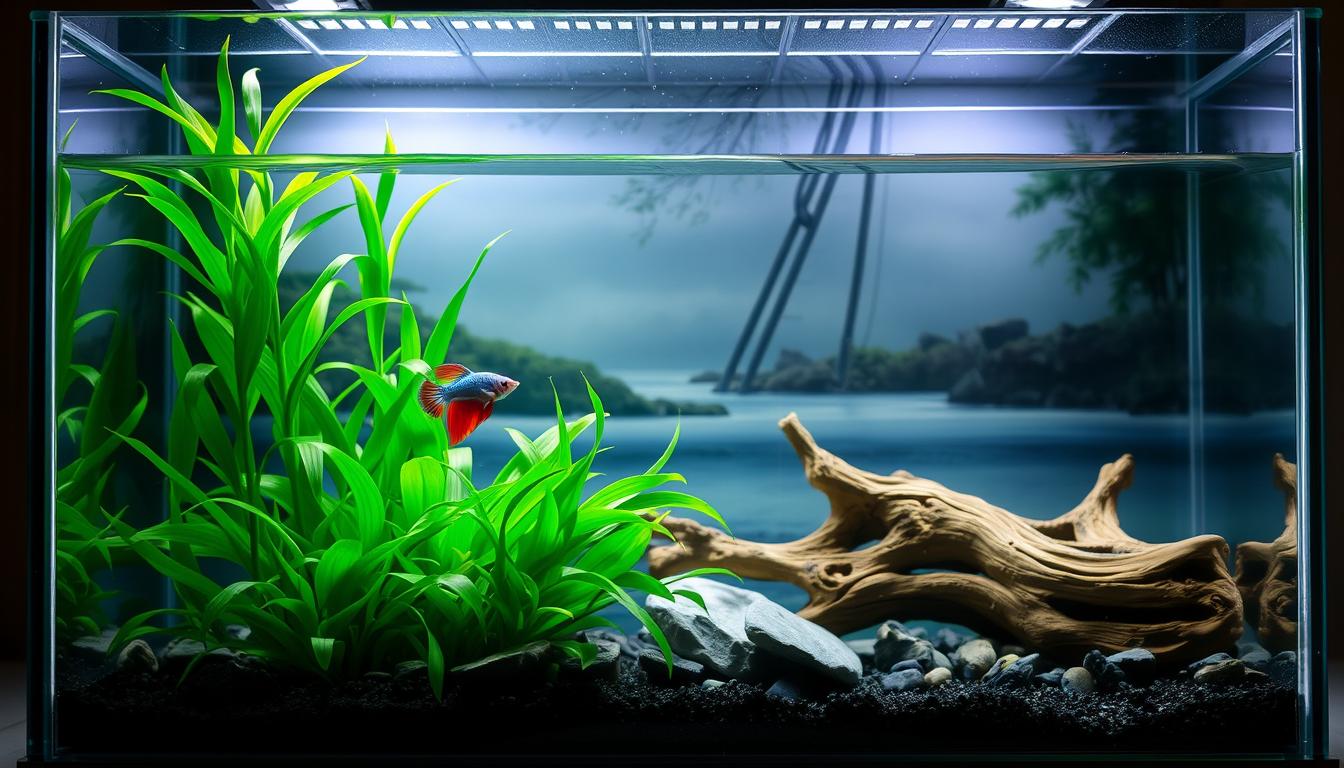
Use low-maintenance live plants such as java fern or anubias—both attach to wood or rock and thrive in low to moderate light, making them ideal for a small planted tank. Position taller plants and decorations at the back and sides to create depth and a natural visual flow, and reserve the foreground for open space where your betta can patrol.
Practical do’s and don’ts: do leave a 2–3 inch open zone for swimming; do anchor plants to décor rather than burying delicate rhizomes; don’t use sharp ornaments or tiny loose gravel that could trap food.
Best Practices for Equipment Configuration
Equipment placement matters in a small tank. Choose a low-flow filter (adjustable or sponge filter) to provide biological filtration and gentle circulation—strong currents stress bettas. Aim for a flow rate that avoids churning the surface; sponge filters or adjustable internal filters are excellent one- or two-gallon-per-hour-per-gallon options for small tanks.
Place the heater where circulation is steady—near the filter outflow if possible—so heat distributes evenly and you maintain the recommended 78–82°F range. Small 25W heaters are commonly sufficient in most five gallon tanks, but confirm with the heater manufacturer and room conditions.
Mount a moderate LED light to promote plant growth without overheating the water. Use a timer to create a consistent photoperiod (about 8–10 hours daily) to support plants and limit algae. Before adding your betta, run and test all equipment (heater, thermometer, filter) for at least 24–48 hours to verify temperature stability and gentle flow.
Equipment suggestions to consider: compact Fluval-style cabinets and nano tanks fit tight spaces, sponge filters for gentle filtration, and small submersible heaters sized to the tank. These are suggestions—compare specs to your exact setup and room temperature before buying.
Following these layout and equipment tips will help you create a five gallon tank that looks great in your space and provides a stable, comfortable home for your betta.
Essential Equipment & Accessories for Your Aquarium
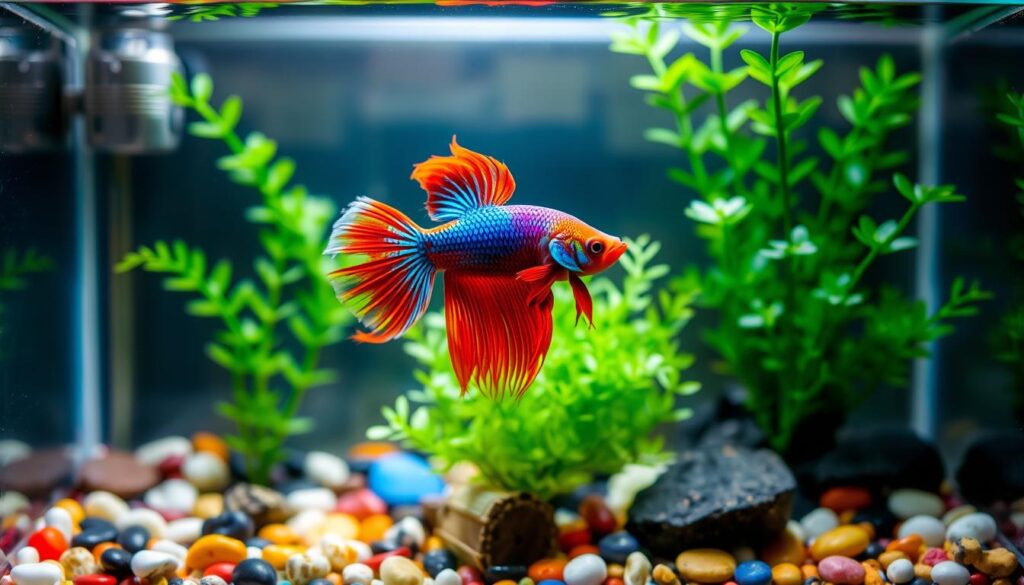
Outfitting a five gallon tank with the right equipment keeps water stable and creates a comfortable home for your betta. The correct heater, gentle filtration, and appropriate lighting support plant growth, biological filtration, and your fish’s overall health. Below are the core items to prioritize and practical buying tips.
Heater, Filter, and Lighting Considerations
A reliable heater is essential to hold the temperature in the recommended 78–82°F range. For most five gallon setups a 25W heater is sufficient; in cooler rooms or poorly insulated spaces consider a 50W option—always follow the manufacturer’s guidance for the specific model you choose.
Filters are central to water quality. For bettas, low-flow options like sponge filters or adjustable internal filters are best because they provide biological filtration without strong currents. Look for units with adjustable flow or choose a sponge filter paired with an air pump to keep circulation gentle. Aim for filtration that suits the tank’s bioload rather than overpowering with high surface agitation.
Lighting should support live plants without promoting excess algae. Energy-efficient LED lights deliver the required PAR for low- to mid-light plants and run cool. Use a timer to create a consistent photoperiod—8–10 hours per day is a good starting point—and reduce runtime if algae becomes an issue. Remember: light is only one factor in algae control; nutrient management and maintenance matter too.
Recommended Accessories for Betta Enrichment
Enrichment keeps your betta active and reduces stress. Floating leaves, leaf hammocks, and resting pads offer surface shelter that bettas appreciate. Add smooth, snag-free décor and caves to provide hiding places without damaging fins—avoid sharp edges and small removable pieces that could break off.
Live plants such as java fern and anubias work well in small planted tanks: they attach to wood or rock, tolerate lower light, and help uptake nitrogen compounds. While plants improve water chemistry, they don’t replace proper filtration—treat them as a complementary tool for healthier water.
Shopping tips: consider compact, reputable models like Fluval spec-style nano tanks or Fluval mini equipment when you need space-saving options—these are suggestions to compare, not endorsements. For filters, weigh sponge vs. internal vs. hang-on-back: sponges are quiet and betta-friendly; internal filters save space; HOB filters can be used if adjustable and gentle.
Prioritize safety, durability, and ease of cleaning when selecting accessories. Read product reviews, check materials for non-toxicity, and choose items that fit your tank’s layout. Investing in quality equipment and thoughtful enrichment will keep your betta healthy, lively, and comfortable in its five gallon home.
Creating an Optimal Tank Environment

Turning your five gallon tank into a natural, low-stress habitat benefits both aesthetics and water quality. Integrating live plants and natural decor gives your betta places to hide and explore while helping to stabilize nitrogen compounds. These elements mimic the fish’s native environment and create a more engaging, healthy space.
Integrating Live Plants and Natural Decor
Choose hardy, low-light plants like java fern and anubias for a small planted setup—both attach to rock or driftwood and don’t require substrate planting, which makes them perfect for a compact aquarium. Live plants assist in taking up ammonia and nitrate, improving overall water chemistry; however, they complement rather than replace proper filtration and regular maintenance.
When arranging decor, follow a simple aquascape plan: foreground (low plants or open substrate), midground (small rocks or medium plants), and background (taller plants and driftwood). Position taller elements at the rear to create perceived depth and leave open swimming space in front so your fish can patrol comfortably.
Prepare natural materials before adding them to the tank: rinse rocks thoroughly, bake or soak driftwood to leach tannins and sterilize, and avoid anything with sharp edges or treated wood. Use smooth stones and sealed, aquarium-safe ornaments to prevent fin damage—betta appreciate gentle surfaces and places to rest near the surface, like floating plants or leaf hammocks.
Lighting for a planted five gallon should be moderate—LED lights on a timer for about 8–10 hours a day support plant growth without encouraging excessive algae. If algae appears, reduce light duration, check nutrient levels, and adjust maintenance routines. For tight spaces, consider compact Fluval-style nano lights and fixtures that fit the footprint of your tank.
With safe decor, appropriate plants, and a simple layout plan, your small aquarium will feel spacious and natural—giving your betta cover, enrichment, and a healthier environment overall.
Betta Care and Daily Maintenance Tips

Keeping a five gallon betta tank healthy depends on a predictable, simple routine. Regular checks of water quality, careful feeding, and routine equipment inspection prevent most problems and help your fish thrive. Below is a compact, actionable maintenance plan tailored to small aquariums.
Establishing a Consistent Care Routine
Daily: Observe your betta for normal behavior (active swimming, flaring when appropriate, bright color). Confirm the thermometer reads between 78–82°F and visually inspect the filter outflow. Feed small portions once a day (or split into two tiny feedings) — only what the fish eats in 2 minutes — and remove any uneaten food promptly.
Weekly: Perform a 25% water change to dilute waste and replenish trace minerals. While doing the change, siphon the substrate lightly to remove trapped debris and rinse any mechanical filter media in removed tank water (never tap water) to preserve beneficial bacteria. Test pH, ammonia, nitrite, and nitrate with a reliable liquid test kit; aim for ammonia and nitrite at 0 ppm and nitrates below 20–40 ppm.
Monthly: Inspect the heater, filter, and light for wear or buildup. Replace or clean filter media according to the manufacturer’s recommendations (sponge media can often be rinsed monthly; cartridges may need regular replacement). Check seals, cords, and the tank lid or cover for damage.
Quick troubleshooting (first steps): cloudy water + odor = test ammonia/nitrate and perform an immediate 25–50% water change; lethargy or gasping at the surface = check temperature and oxygenation, test water parameters; visible fin damage or white spots = isolate diagnosis and consult a trusted care guide or vet.
“A routine care schedule not only keeps your betta healthy but also extends its lifespan,”
Experienced hobbyists recommend keeping a simple checklist by the tank. Consider adding a printable checklist or a small calendar reminder to track water changes and equipment checks — a little time invested each week prevents a lot of stress later.
Resources and test kits: reputable brands for water testing include API and Seachem (liquid kits are more accurate than strips). For filters and heaters on small tanks, compare compact Fluval units and sponge filters to find the best fit for your tank’s bioload and space. For step-by-step setup and maintenance, see our full guide on setting up and maintaining a five-gallon betta.
Stocking Options and Water Quality Management
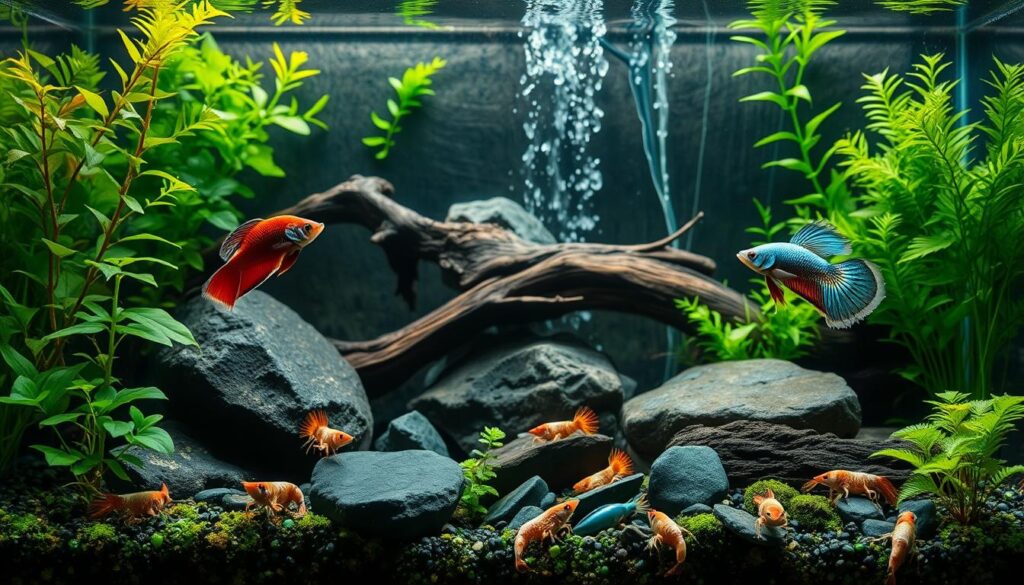
Choosing companions for a five gallon betta tank requires caution: the wrong stocking choices can raise bioload, cause stress, and quickly degrade water quality. In many cases a solo betta with a planted tank is the simplest, lowest-risk setup, but there are a few compatible options for carefully managed nano tanks.
Choosing Compatible Tank Mates
Prioritize species with very low bioloads and peaceful temperaments. Good small-tank options include snails (Nerite or Mystery) and single Amano or Cherry shrimp—note that shrimp compatibility depends heavily on your betta’s temperament (some bettas will eat or harass shrimp). Small schooling fish like Ember Tetras and Celestial Pearl Danios are sometimes suggested, but they typically need a larger group and more swimming room than a five gallon can comfortably provide.
Stocking guideline examples: in a true five gallon aquarium, consider either one betta alone with plants and one or two snails, or one betta plus a very small clean-up crew (1–3 shrimp) only if the betta is known to be peaceful. Avoid adding multiple schooling fish to a five gallon—these species usually require at least ten gallon tanks to thrive in groups.
Always quarantine new tank mates and observe interactions before permanent introduction. If you see chasing, fin nipping, or persistent harassment, separate the animals immediately to prevent injury.
Maintaining Stable Water Chemistry
Water quality matters more in small tanks because changes happen faster. Test pH, ammonia, nitrite, and nitrate weekly (or more often after adding new animals). Aim for 0 ppm ammonia and nitrite, nitrates under 20–40 ppm, and a stable temperature between 78–82°F for most tropical species.
Use a gentle, low-flow filter to keep circulation without stressing your betta; sponge filters are an excellent choice in nano setups because they provide biological filtration and are betta-friendly. Perform regular 25% water changes weekly to manage waste and replenish trace minerals—adjust frequency if the tank is lightly stocked or heavily planted.
If you plan to upgrade or want more companion fish, move to a ten gallon or larger tank—larger gallons dilute waste more effectively and give schooling species the space they need. For compact setups, pairing a Fluval-style nano with snails or a small shrimp crew and live plants creates an attractive, low-maintenance ecosystem when managed carefully.
“A well-maintained tank not only keeps your fish healthy but also enhances its vibrant colors and activity levels,”
Following conservative stocking rules and steady water testing will help your betta and any tank mates live longer, happier lives.
Conclusion
Creating a thriving home for your betta is both rewarding and entirely manageable with a clear plan. A well-planned five gallon setup gives your fish a healthy, stimulating environment when paired with the right equipment, regular maintenance, and thoughtful enrichment.
Smaller aquariums demand attention to detail—stable water conditions, compatible tank mates, and a balanced diet all contribute to your betta’s well-being and can help extend healthy years when combined with consistent care. If you outgrow a nano setup, consider upgrading to a ten gallon for more stocking flexibility and easier chemistry management.
Ready to start? Download our quick 5-gallon setup checklist (add link in CMS) or check compact options like Fluval-style nano kits to find a tank that fits your space. Quick “what to buy” starter list: a reliable 25W heater, a gentle sponge or adjustable low-flow filter, and a small LED light on a timer.
For more buying tips and recommended models, explore selecting the ideal setup. Share your setup photos and questions — the community is a great place to learn and improve over time.
FAQ
Why is a five-gallon tank ideal for betta fish?
What equipment is essential for a betta aquarium?
Can I add live plants to my betta tank?
How often should I clean my betta tank?
Are there tank mates suitable for bettas?
What’s the best way to set up a betta tank?
How do I maintain stable water chemistry?