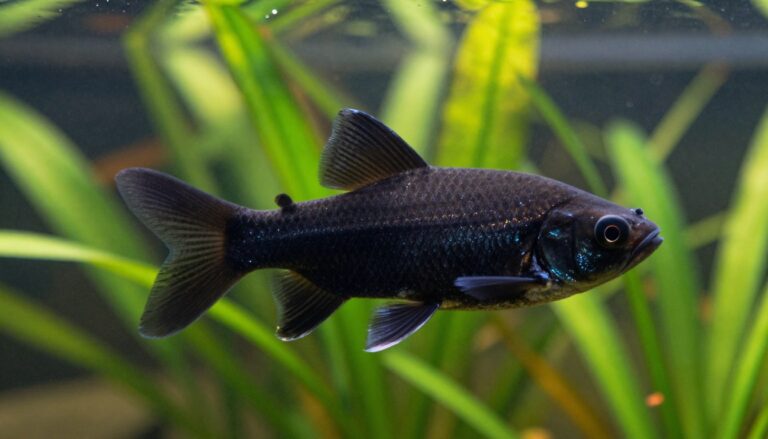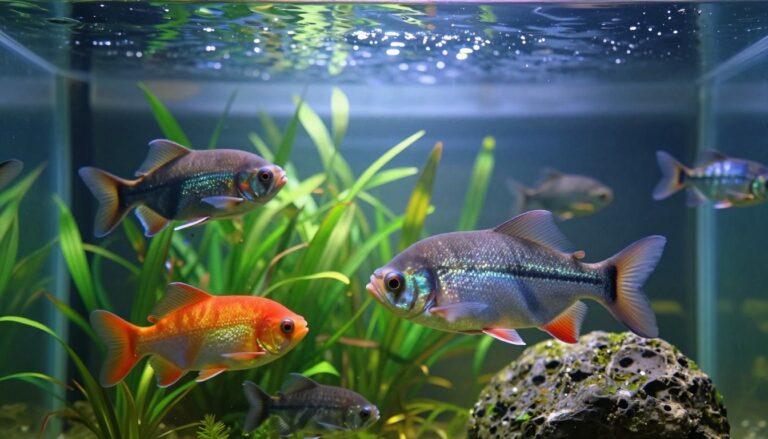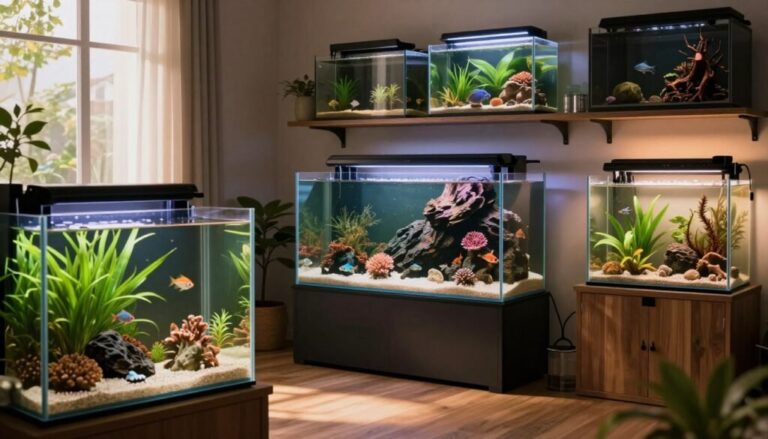
Welcome to simple, reliable care for a popular freshwater species. These armored catfish make great cleanup helpers in a home aquarium and usually reach about five inches. They live around 5–10 years in captivity, with some reports nearing 12 when kept well.
Good care focuses on stable water, proper feeding, and a tank that supports bottom-dwelling habits. Originating from faster Amazon tributaries, this fish prefers well-oxygenated water and gentle current. In a planted tank with driftwood and hiding spots, they often show brighter color and active nighttime foraging.
Remember: algae grazing helps, but it never replaces regular maintenance. For practical setup tips and natural history, see a trusted guide on bristlenose catfish basics.
Key Takeaways
- Keep water stable and well oxygenated for long-term health.
- Provide driftwood, caves, and soft substrate for bottom behavior.
- Feed a plant-forward diet with occasional protein treats.
- Use proper tank size and filtration; algae eating does not replace cleaning.
- This species is hardy when parameters stay consistent — great for beginners.
Meet the Bristlenose Pleco: What Makes This Armored Catfish So Special
Meet a bottom-dweller that blends hardy behavior with unmistakable facial tentacles. This little armored catfish is often sold under several common names, including bushynose and bristlenose catfish, and its scientific name is Ancistrus cirrhosus.
Family basics and appearance
The Loricariidae family includes about 680–700 species known for bony plates and a sucker mouth. These features help them graze algae and cling to surfaces in flowing water.
Size and lifespan
Adults average about 3–5 inches, sometimes cited near 6 inches long, which keeps them far smaller than a common plecostomus that may reach 18–20 inches.
Expect 5–10 years in captivity with good water, oxygenation, and diet; some live near 12 years.
Bristles, sexing, and varieties
Bristles appear around six months as fish reach maturity. Males show larger, taller growth on the head while females have smaller, mouth-centered tentacles.
- Popular looks: albino bristlenose and longfin types are common choices.
- Purpose: armored body and sucker mouth support a foraging, bottom-dwelling lifestyle in both wild and home tanks.
Tank Setup That Helps Bristlenose Plecos Thrive
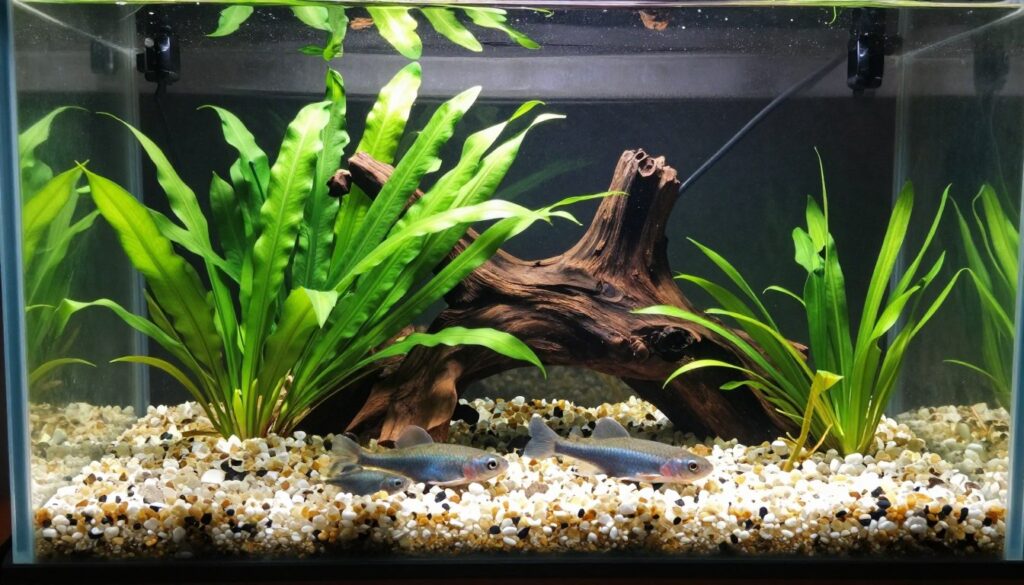
Start with footprint and flow. Aim for a 20–29 gallon tank for one fish as a practical baseline, then scale up for community stocking, décor, and territory. In busy community tanks, floor space and hiding spots matter more than raw gallons on paper.
Smart stocking and minimum size
Think in terms of territory: one adult needs room to forage and claim caves. Add more tank volume if you plan multiple bottom dwellers or larger community fish.
Recreate a South America tributary habitat
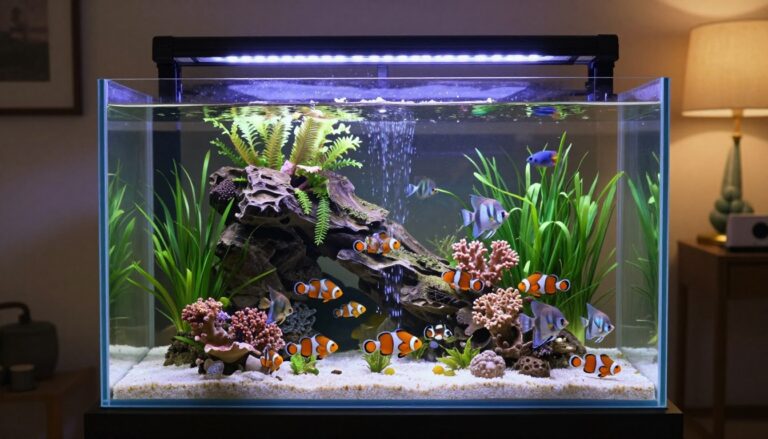
Use driftwood, root tangles, rockwork, and multiple caves to break sightlines and reduce stress. Driftwood doubles as cover and an algae-growing feeding station.
Substrate, filtration, and day-night layout
Choose smooth sand or fine gravel so the fish can sift safely. Fit strong biological filtration (canister or under-gravel) and a gentle-to-moderate current to keep water oxygenated.
“Provide shaded caves for day hiding and open areas for nocturnal foraging to watch natural behavior.”
Design tip: avoid sharp décor that can damage fins and armored plates, and place several caves so the species feels secure and shows up after lights-out.
For creative tank themes and mood ideas, see a quick guide to mixing flavors of display design for a unique centerpiece.
Water Conditions to Keep Your Aquarium Stable and Stress-Free
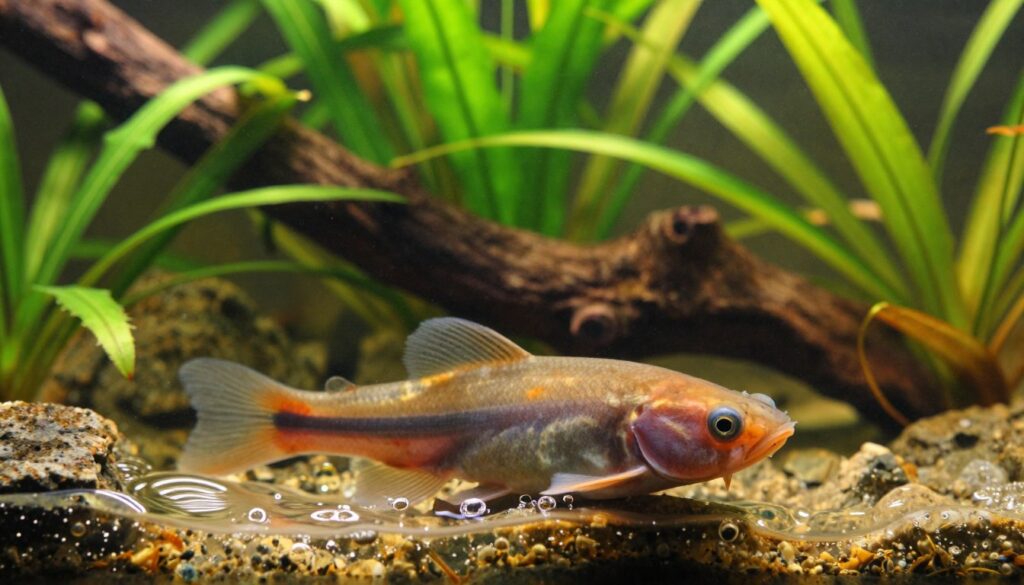
Stable aquarium parameters are the foundation of vibrant color and predictable behavior. Keep the goal simple: steady, well-oxygenated water that mirrors a gentle Amazon tributary.
Temperature range to aim for
Aim for the mid-to-upper 70s°F (about 73–80°F). This range suits most small bottom-dwelling fish and supports good metabolism.
Avoid rapid swings. When you change water, match temperatures to make sure the tank does not shock the residents.
pH and hardness targets
Target a pH near 6.5–7.5 and moderate hardness (roughly 2–15 dGH). Consistency beats perfection—stable conditions let fish eat, rest, and resist disease.
Aeration and current
Recreate flow: use a filter return or powerhead to add gentle current and surface agitation. Good aeration keeps oxygen high and mimics natural habitat.
Warning signs and routine checks
If a bristlenose or pleco repeatedly gulps at the surface, check oxygen, ammonia, nitrite, and nitrate right away.
“Test weekly and after any big change — hours and days matter when water quality slips.”
- Weekly tests and prompt top-offs with dechlorinated water.
- Match temperatures during water changes and keep filter media healthy.
- Small, consistent maintenance yields long life and better nocturnal behavior.
Feeding and Diet: From Algae Wafers to Vegetables
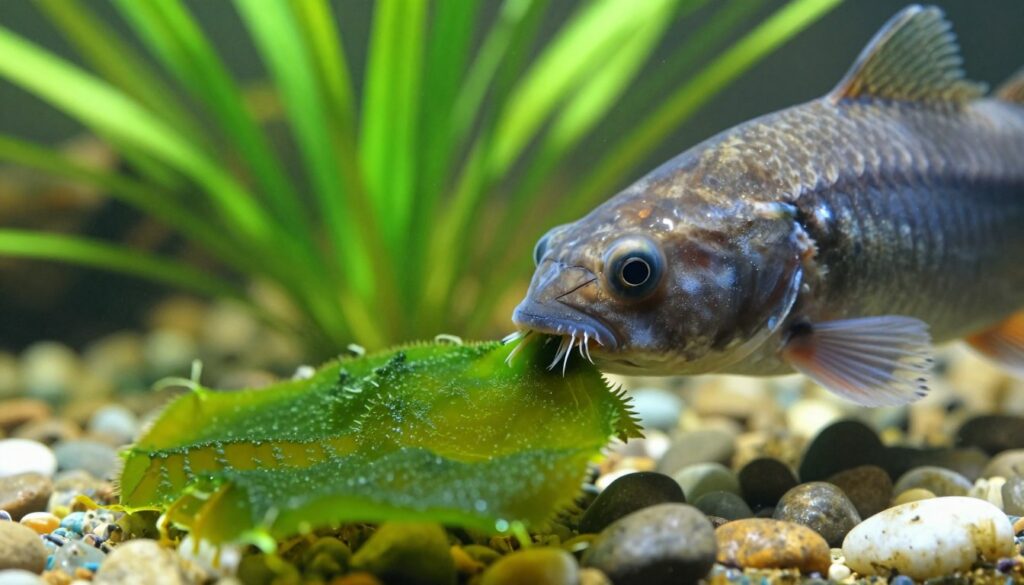
Feeding a varied, plant-forward menu helps these armored fish thrive in home aquariums. In the wild they graze mostly on algae, decaying plant matter, and tiny larvae. In your tank, that natural grazing needs sensible supplementation to support growth and color.
Staples: wafers, spirulina, and sinking pellets
Make wafers and spirulina-based sinking pellets the everyday base. These foods reach the bottom where they feed and provide fiber and vitamins that algae alone can’t supply.
Fresh veggie rotation
Offer blanched zucchini rounds, cucumber slices, peas, spinach, and romaine on a rotation. Weigh veggies down with a clip and remove uneaten pieces after a few hours to protect water quality.
Protein boosts and timing
Give bloodworms or brine shrimp as an occasional treat — once or twice a week — not daily. Feed after lights dim, since these nocturnal grazers forage at night. Check later to confirm the food is eaten.
“A balanced diet keeps the tank cleaner and the fish healthier.”
- Contrast wild vs. aquarium: algae-only in the wild vs. supplemented food in captivity.
- Prevent overfeeding: monitor belly shape, avoid piling on extra wafers, and remove leftovers.
- Use driftwood: place driftwood where flow encourages algae to grow so décor doubles as a feeding station.
Make sure you feed the right amount and remove uneaten food. Small, consistent habits protect water and promote long-term health for your bristlenose plecos.
Temperament, Tank Mates, and Territory in Community Tanks
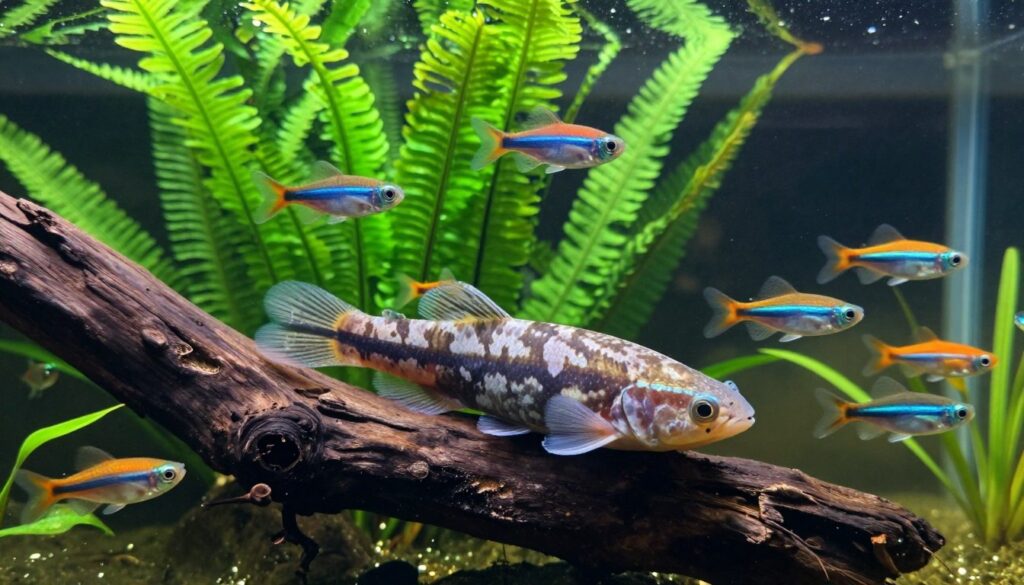
In community aquariums, temperament and territory shape daily life more than raw tank size. This catfish is usually peaceful and spends most time on the bottom while midwater swimmers occupy open zones.
Peaceful by nature: choosing compatible freshwater fish
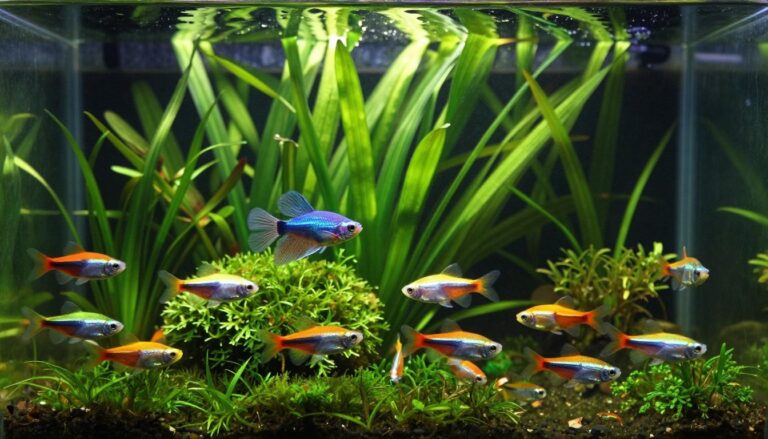
Pick calm, non-aggressive companions like neon tetras, guppies, danios, and platys. These freshwater fish occupy different levels and reduce chasing that stresses bottom dwellers.
Keeping more than one pleco: why one male per tank is often best
Males defend caves and can become territorial at maturity, especially during breeding. For most home tanks, limiting males to one prevents repeated fights and damaged bristles.
Managing aggression and bristle tangles with space, caves, and sight breaks
Provide multiple caves and clear sight breaks using plants and driftwood. Match the number of caves to the number of plecos and spread them across the footprint to lower conflicts.
- Give wide floor space so territories don’t overlap.
- Use rockwork and plants to block direct lines of sight.
- Watch for posturing or cave guarding — move decor or increase hiding spots if fights start.
With good layout and planned tankmates, this species thrives quietly alongside community fish for years.
Health and Maintenance for Easy Care Over the Long Term
Small, consistent habits are the real secret to long-lived aquarium companions. Focus on three levers: water quality, oxygenation, and stress reduction. Together they cut the risk of ich and bacterial infections.
Watch for early warning signs: lethargy, hiding more than usual, loss of appetite, or frequent surface visits. If you see these, test ammonia, nitrite, nitrate, and pH right away.
Routine maintenance that works
Do regular partial water changes (10–25% weekly). Vacuum gravel near décor and clean filter media gently so beneficial bacteria remain. Keep surface agitation for oxygen and avoid big, sudden water swings.
Breeding awareness and egg care
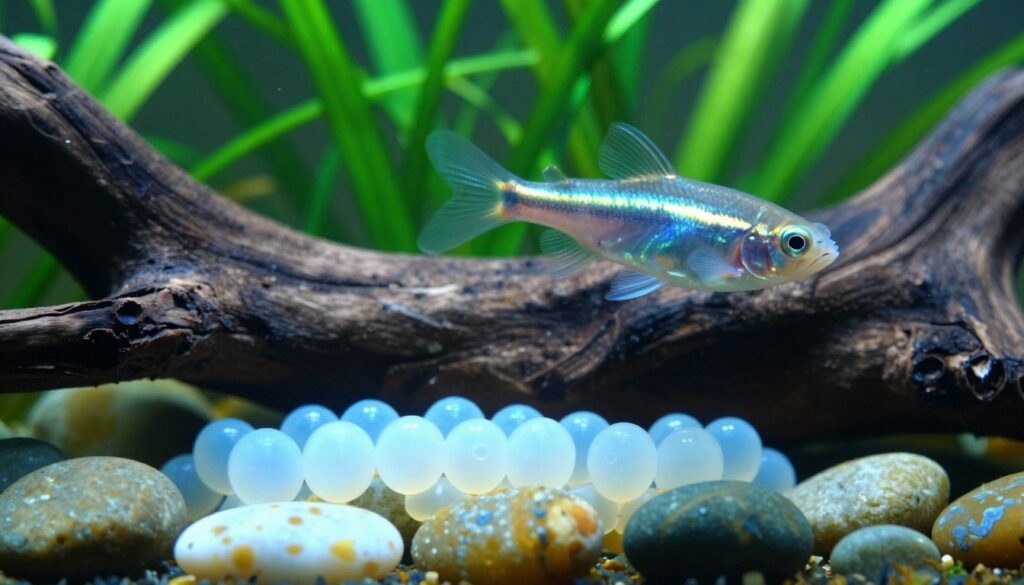
In stable tanks males will claim caves and females may lay sticky orange eggs on hard surfaces. Eggs hatch in roughly 4–10 days and the male often guards and fans them for oxygenation.
“Protect eggs and fry by limiting tank disturbances and stabilizing parameters during the spawning window.”
For practical care steps and deeper breeding notes, see this complete pleco care guide. Consistency turns a five-year fish into a ten-plus year companion.
Conclusion
A simple routine and thoughtful tank design bring steady rewards for hobbyists.
Healthy, happy care means a properly sized tank, steady freshwater parameters, strong aeration, and a diet suited for a nocturnal grazer. Add driftwood and caves so daytime hiding and nighttime foraging feel natural.
The biggest win is practical size: the bristlenose pleco tops out at only a few inches, making it ideal for many home aquariums.
Success comes over time with small habits — regular testing, measured water changes, and portion control. Replicate the calm, oxygen-rich feel of South America tributaries, and your aquarium will reward you with steady grazing, peaceful community presence, and years of fascination.
FAQ
What makes the armored catfish a great choice for beginner aquarists?
This species is hardy, adapts to a range of water conditions, and helps control algae. They stay relatively small compared with larger plecostomus species, require moderate tank sizes, and thrive when provided with hiding spots like caves and driftwood. With a steady diet of algae wafers, vegetables, and occasional protein treats, they reward steady care with peaceful, useful presence in community tanks.
How large do these catfish grow and how long do they live?
Most adults reach around 4–6 inches and can live 5–10 years or longer with good care. Size depends on variety and tank conditions. Keep them in appropriately sized aquaria — a 20–30 gallon tank suits a single adult — and provide stable water and a varied diet to maximize longevity.
What differences should I expect between males and females?
Males develop more pronounced facial bristles and sometimes longer fins; females have fewer bristles and a rounder belly when carrying eggs. Bristles begin to appear as fish reach sexual maturity, usually after several months in mature, stable tanks.
What tank setup helps these bottom-dwellers feel secure?
Mimic river tributary habitats with driftwood, rock caves, and leafy plants. Use fine to medium substrate so they can forage comfortably. Provide multiple hiding spots and sight breaks to reduce stress and territorial disputes, and include driftwood pieces for grazing and digestive benefit.
What water parameters should I maintain?
Aim for a temperature between 74–80°F, pH around 6.5–7.5, and moderate hardness. Keep conditions steady through regular testing and partial water changes. Good filtration and oxygenation are essential; a gentle to moderate flow mirrors their native streams.
What should I feed daily and how often?
Offer algae wafers or sinking pellets as staples, supplemented with blanched vegetables such as zucchini, cucumber, peas, or spinach. Feed in the evening when they are most active, and add protein boosts like frozen bloodworms or brine shrimp once or twice weekly. Remove uneaten food to prevent water-quality issues.
Can I keep more than one in the same tank?
Yes, but plan carefully. Multiple juveniles can coexist if the tank is large with many hides. Adult males may become territorial, so more hiding spots and visual barriers help. For breeding or a group, larger tanks (40+ gallons) reduce conflict and let each fish establish a zone.
Which community fish make reliable tankmates?
Peaceful species that occupy mid to top water columns work best: tetras, rasboras, gouramis, and Corydoras catfish. Avoid large, aggressive cichlids or fin-nipping species. Match water-parameter needs to minimize stress across the community.
What are the common health issues and how do I prevent them?
Watch for signs of ich, bacterial infections, and stress-related color loss or lethargy. Prevent problems with regular water changes, stable parameters, balanced diet, and quarantine new fish. Treat infections promptly with aquarium-safe medications and isolate affected individuals when necessary.
How do I encourage breeding and care for eggs?
Provide caves or PVC tubes, slightly warmer temperatures near the upper recommended range, and a nutritious diet. Males typically prepare and guard a chosen cave; once eggs are laid, remove aggressive tankmates and keep water pristine. Eggs hatch in several days, and fry feed on biofilm and finely powdered foods before graduating to small wafers and blanched vegetables.
Do they need driftwood, and why?
Yes. Driftwood offers shelter, encourages natural grazing, and sometimes provides beneficial tannins. It fosters algae growth and supports digestion when wood fibers are consumed. Include securely placed pieces so they don’t shift and injure fish.
How can I prevent overfeeding and keep the tank clean while they graze?
Feed measured portions in the evening and remove leftovers after an hour. Rotate vegetable offerings to reduce waste. Maintain strong filtration and perform weekly partial water changes to remove excess nutrients and keep nitrates low.
Is keeping an albino variety different from the standard type?
Care needs are the same, though albino varieties can be more sensitive to strong light. Provide shaded areas and extra hiding spots. Diet, water parameters, and tank setup match those of pigmented varieties.
What signs indicate a stressed or unhealthy fish?
Look for reduced appetite, rapid breathing, clamped fins, faded color, or odd swimming patterns. Surface gulping, rubbing against surfaces, and isolation suggest water-quality or parasite issues. Test water immediately and address filtration, temperature, or illness as needed.