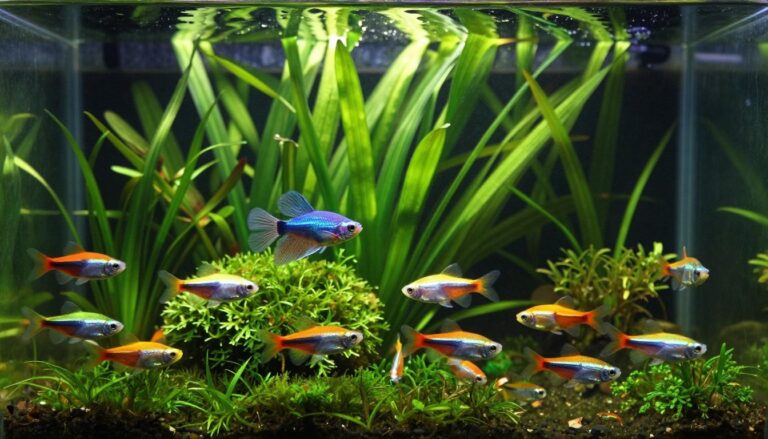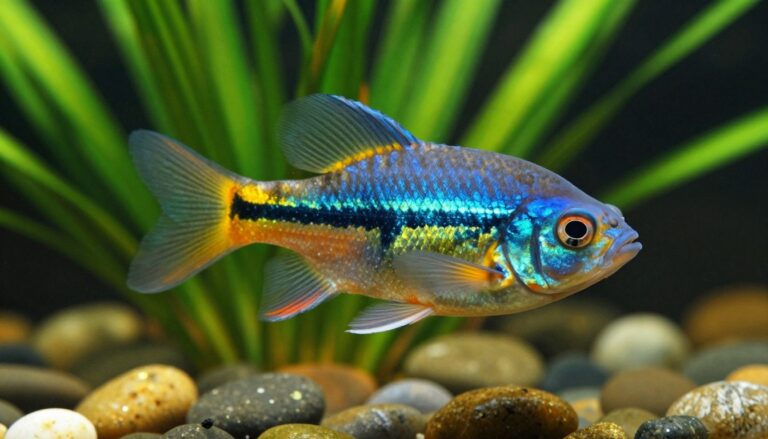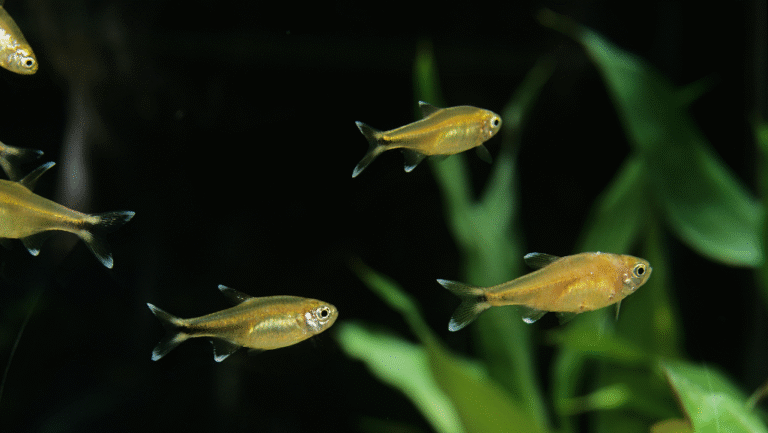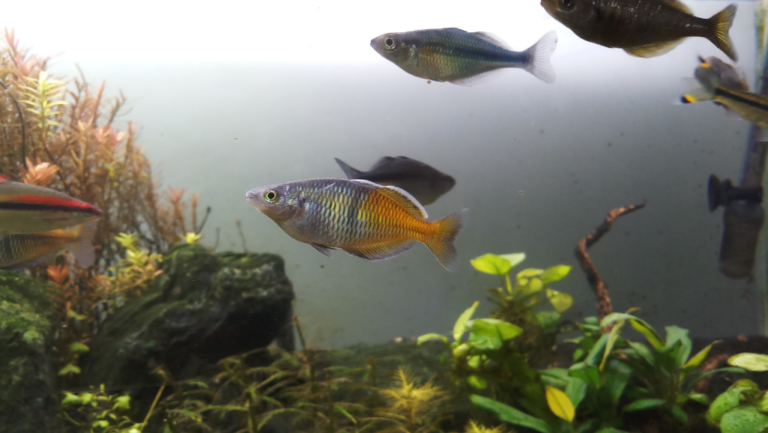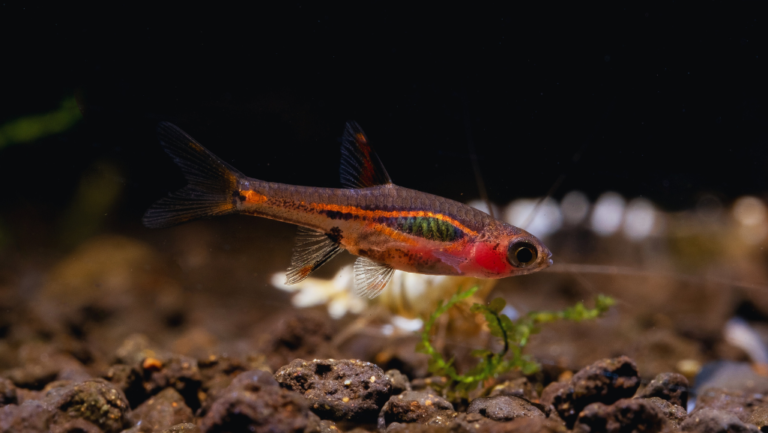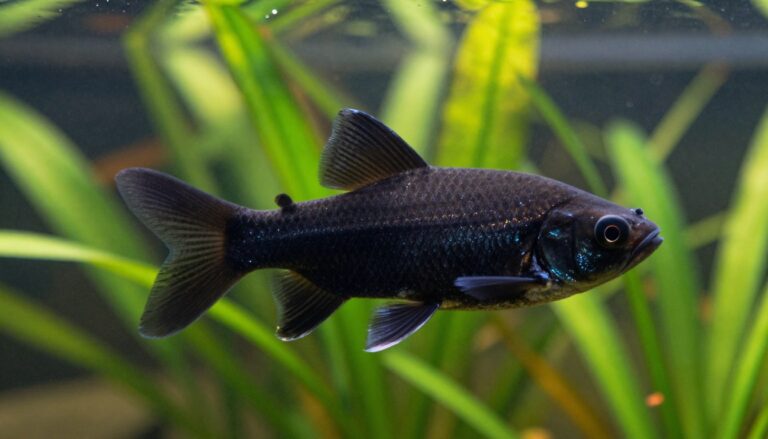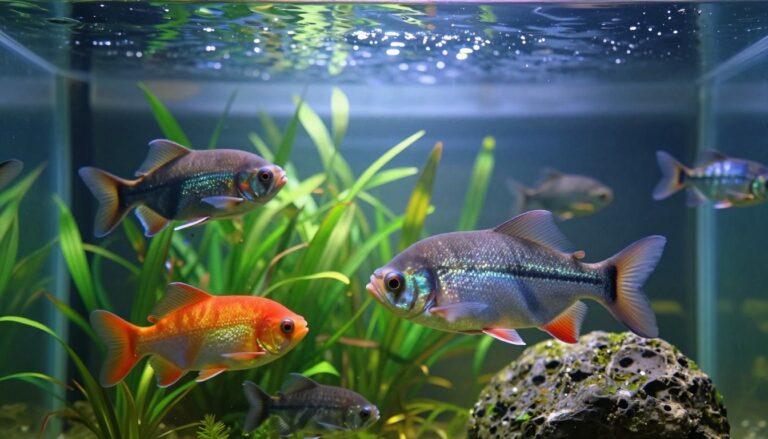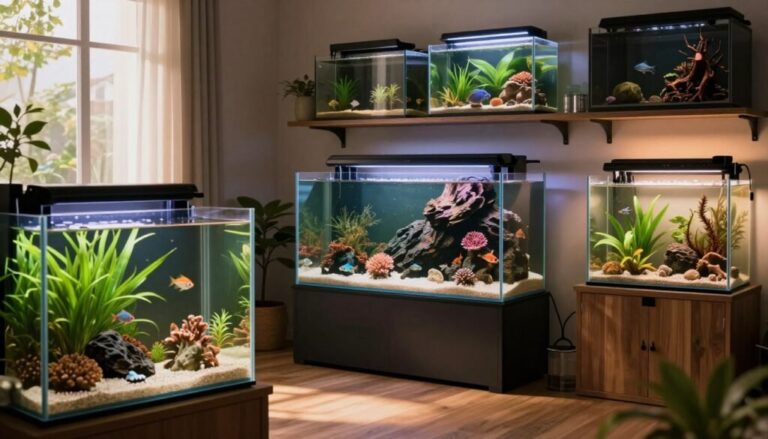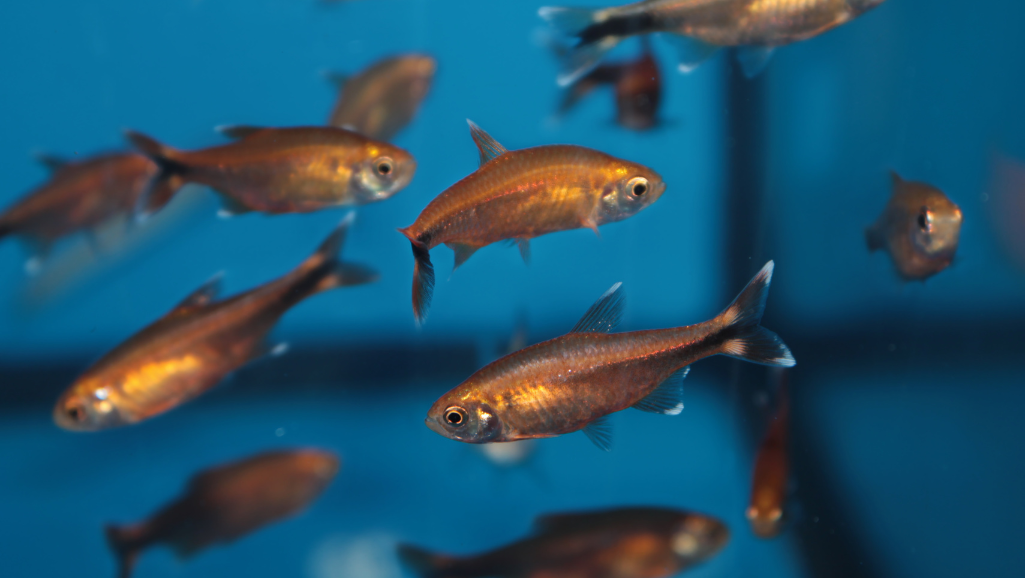
Bright contrast and calm behavior make this small characin a favorite for planted aquaria. The species reaches about 1.6 inches (30–40 mm) and shows a luminous white stripe above a dark band with a ruby eye flash—a look that stands out against dark substrate and lush plants.
Native to the upper Rio Paraguai basin, these Black Neon Tetras thrive in community tanks when kept in a group. Hardy and adaptable, the fish tolerate a range of pH and temperatures, but they reward steady maintenance and stable water with lively, confident shoals.
Setups that emphasize darker substrate, driftwood, and open swim lanes help the colors pop. Ideal for beginners and experienced hobbyists alike, they occupy the mid-to-top levels of the water column and add synchronized motion to planted aquariums.
For a practical care overview, see black neon tetra care to plan a healthy, inspiring display.
Key Takeaways
- Peaceful schooling species—keep groups (ideally 8–10+) to encourage natural shoaling behavior.
- Adults reach about 1.6 inches (30–40 mm), making them suitable for small to medium tanks when kept in proper numbers.
- Tolerant of varied water and temperature ranges when kept stable—consistency matters more than perfect numbers.
- Best showcased with darker substrate, plenty of plants, driftwood, and open swim lanes for contrast.
Meet the Black Neon Tetra: Identification, Size, and Origins
A crisp white stripe above a bold dark band and a slim red-over-yellow eye rim make this fish easy to recognize in a planted aquarium.
The species Hyphessobrycon herbertaxelrodi (sometimes written in lowercase as hyphessobrycon herbertaxelrodi in informal notes) belongs to the genus Hyphessobrycon in the Characidae family. Adults typically reach about 30–40 mm (1.2–1.6 inches); females are often slightly deeper-bodied and may appear a touch larger than males when gravid.
How to tell this species from neon tetras at a glance
Look for adjacent white-over-black lateral stripes—black neon tetras show a stacked white stripe over a dark stripe—whereas classic neon tetras have a continuous iridescent blue line with a vivid red stripe on the lower half.
Body shape helps too: black neons have a slightly taller body depth that gives a stouter profile in the water column. Note that the Diamond/Brilliant variety can lack the white stripe and display more reflective, metallic head scales.
Scientific profile and native basin
Taxonomy matters: order Characiformes, family Characidae, genus Hyphessobrycon, species H. herbertaxelrodi (Géry, 1961).
Its native range is the upper Rio Paraguai basin in Brazil’s Pantanal wetlands, though small introduced populations exist elsewhere from the aquarium trade. Don’t confuse the common name “black tetra” (Gymnocorymbus ternetzi) with the Black Neon Tetra—they are different species.
- Diagnostic cues: stacked white-over-black lateral stripes and the red-yellow eye band.
- Typical size: about 30–40 mm (1.2–1.6 inches) when mature.
- Habitat / range: clear, plant-rich tributaries and seasonal floodplains in the upper Paraguai basin (Pantanal).
Quick-Start Care Overview for a Thriving Freshwater Aquarium
Successful care begins with consistency: maintain steady water parameters, avoid strong currents, and provide a darker planted layout so these small characins can relax and display their best colors.
Maintain water temperature between 72–80 °F (22–27 °C) and aim for a mildly acidic to neutral pH—target roughly 6.0–7.2 for predictable results. Captive-bred stock often tolerates broader pH and hardness, but stability is far more important than chasing exact numbers.
Stocking and space: keep a proper school—ideally 8–10 or more. A 15‑gallon can house a small group of six in a pinch, but a 20‑gallon (especially a long tank) is a better choice for 8–12 black neon tetras plus a small cleanup crew.
- Filter gently: use a sponge or adjustable canister return to provide good biological filtration without strong flow.
- Planted layout: dark substrate, plenty of plants, and open swim lanes let the school relax and provide visual contrast.
- Routine: perform 20–30% weekly water changes, vacuum debris lightly, and service the filter on a regular schedule.
- Diet: offer a varied menu of micro flakes or nano pellets daily, plus frozen/live supplements a few times weekly to boost color and condition.
Before you stock, quarantine new fish for at least 7–14 days and inspect for illness. Keep a short care checklist—temperature, pH, hardness, nitrate control, and weekly visual checks—and you’ll find long-term aquarium success much easier to achieve.
Setting Up the Tank: Substrate, Plants, and Aquascape that Make Colors Pop
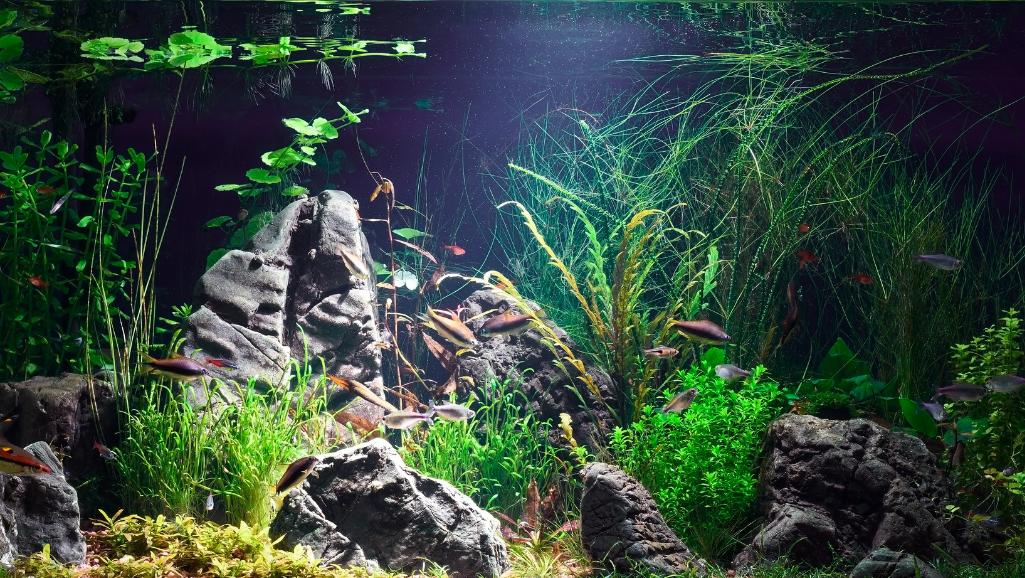
Create an aquascape that mirrors clear, plant-rich streams to help your school’s white-over-dark stripes shine.
Choose a darker substrate such as fine sand or dark gravel to increase contrast—this helps the black neon stripe pop and is gentle for fry and bottom dwellers.
Plant and hardscape choices
Plant generously with low- to mid-light species that tolerate moderate conditions: Echinodorus (Amazon swords), Eleocharis (dwarf hairgrass), and Ludwigia are good picks for texture and shade. Place taller stems at the back and sides to frame open swim lanes in the center.
Add driftwood roots and a light scatter of leaf litter (Indian almond / catappa leaves) to release gentle tannins and mimic the natural habitat. Tannins slightly darken water and can calm fish while encouraging natural behaviors.
Size, schooling, and flow
A 15‑gallon tank can hold a small group, but choose a 20‑gallon (long) or larger if you want a coordinated school—more fish produce more synchronized movement and a stronger visual display.
- Use gentle, diffused flow to avoid pushing small swimmers—sponge filters or adjustable returns work well.
- Keep lighting low to moderate to reduce glare and encourage cruising in midwater where black neon tetras show best.
- Anchor the layout with a focal root or stone and repeat plant textures for visual balance.
Sample scape (actionable): 20L long tank — dark fine sand, 10–14 plants (foreground Eleocharis, mid Ludwigia, background Echinodorus), one driftwood root, and a moss-clad rock for shrimp and fry refuge.
Shopping list: dark sand, Echinodorus, Eleocharis, Ludwigia, medium-sized driftwood, Indian almond leaves.
Tip: Make sure the tank is large enough to allow schooling behavior—open center lanes plus dense planted edges let the group feel secure and show off their stripes.
Water Parameters and Routine: Stable, Clean, and Within Range
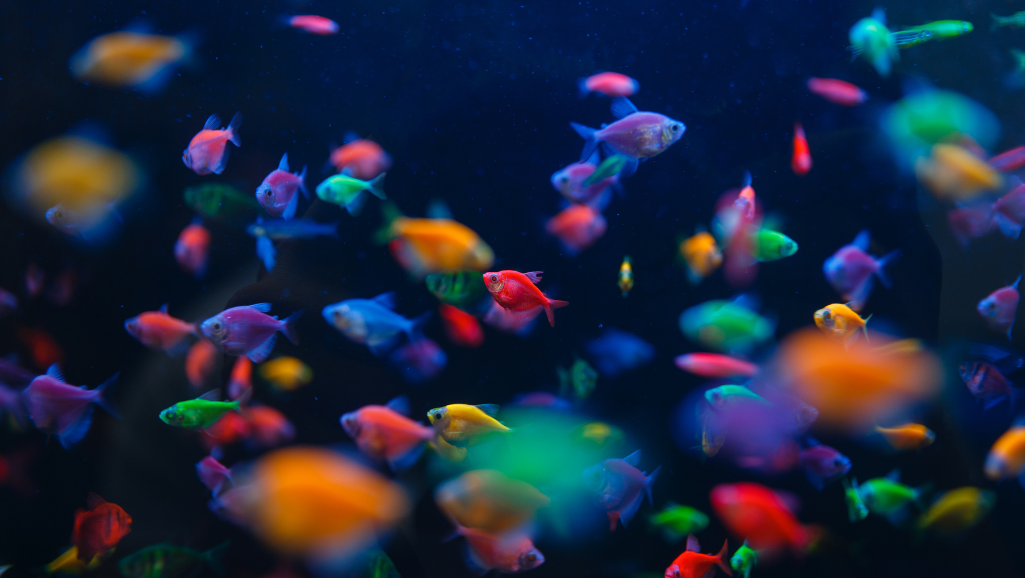
Stable chemistry and regular care are the backbone of a clear, healthy aquarium for small schooling fish like black neon tetras.
Temperature, pH, and hardness tolerance
Target a steady temperature of 72–80 °F (22–27 °C). These fish can tolerate a slightly wider range in short periods (about 68–82 °F / 20–28 °C), but avoid frequent swings.
Aim for pH around 6.0–7.2 for consistent results with most captive-bred stock; while some captive lines handle 5.0–7.5, sudden changes in pH or hardness stress fish and increase disease risk.
Hardness tolerances vary by source and stock. Keep general hardness (GH) and carbonate hardness (KH) moderate and consistent—rapid shifts in hardness are more harmful than steady values.
Filtration, flow, and maintenance cadence
Use a right-sized filter with ample biological media and an adjustable, gentle return flow. Sponge filters and canisters with flow control suit planted community tanks well—avoid strong currents that push these mid-to-top swimmers.
- Weekly: perform 20–30% partial water changes and vacuum visible debris from the substrate.
- Daily to weekly: confirm heater and thermometer readings and observe fish behavior for early warning signs.
- Ongoing: keep live plants to help buffer nutrients and polish the water naturally.
Add small bottom foragers such as pygmy Corydoras to help remove leftover food and keep the substrate tidy. Quarantine new stock for 7–14 days and purchase from reputable retailers to reduce the risk of introducing disease into your display.
Diet and Feeding: A Varied Menu that Fuels Color and Health
Feeding a balanced diet keeps black neon tetras healthy, intensifies color, and supports breeding readiness. Aim for small, frequent meals and rotate staples with nutrient-rich supplements.
Micro flakes and nano pellets
Use high-quality micro flakes or nano pellets sized for small mouths as the daily staple. These foods float or suspend in the mid-to-top column where black neon tetras feed. Offer only what the school can finish in about 60–90 seconds to avoid excess waste and ammonia spikes.
Power foods
Live and frozen options
Supplement the staple diet 2–3 times per week with frozen or live items such as daphnia, cyclops, and baby brine shrimp (Artemia). These power foods boost coloration and conditioning—important when preparing adults for spawning.
Feeding tips to reduce waste
Portions, prep, and cleanup
Feed small portions two times daily as a baseline; increase to three short feedings during conditioning or when raising fry. If you feed three times, split the normal daily ration so consumption remains under 2 minutes per feeding. Pre-soak larger pellets briefly or crumble flakes for even distribution. Consider a feeding ring if you have strong surface flow.
- Pair with cleanup crews: pygmy Corydoras and snails help consume leftovers and keep the substrate cleaner.
- Keep a feeding card: log foods and rotation (staple + 2 supplement days) to ensure variety—example: Mon/Fri frozen Artemia, Wed daphnia, other days micro flakes.
- Store smart: keep dry foods sealed and cool; thaw frozen items in tank water or a separate cup to avoid temperature shocks.
For adults, prioritize variety over a single brand—mix quality flakes/nano pellets with periodic frozen/live treats to maintain health and vivid stripe contrast. Avoid overfeeding: better to feed slightly less and watch for active, alert fish than to risk water-quality problems from excess food.
Behavior and Tank Mates: Peaceful Schooling in a Community Aquarium
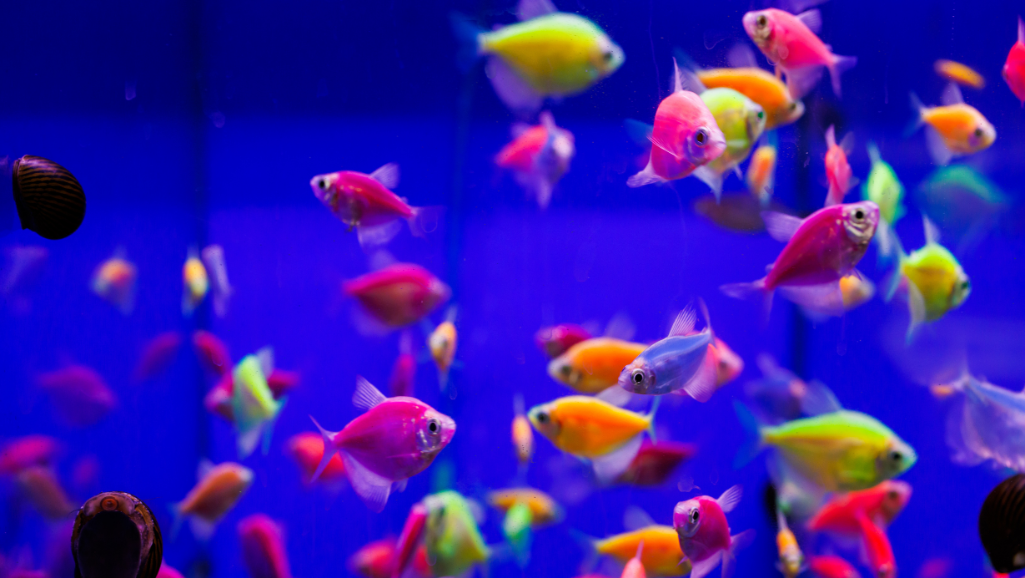
These small characins show their best behavior when kept in a confident group. Maintain schools of 8–10 or more to encourage calm, coordinated movement—schooling reduces stress and creates the most striking visual display in the planted aquarium.
They favor the upper half of the aquarium and typically cruise mid-to-top water. Pair them with species that occupy other layers to create a full, dynamic community.
- Ideal companions: peaceful rasboras (e.g., Harlequin), small characins, Corydoras catfish, Otocinclus, and gentle gouramis—choose species with similar water needs and non-nippy temperaments.
- Layer harmony: add bottom dwellers and midwater swimmers to animate every level of the tank and reduce competition for space.
- Shrimp caution: adults generally ignore dwarf shrimp, but tiny shrimplets are at risk—provide dense moss or hidden refuges to improve shrimp survival.
- Avoid: boisterous, nippy, or predatory fish; these disrupt schooling and can injure or stress black neon tetras.
“More fish means more confidence and a more natural, mesmerizing display.”
Introduce healthy adults together in groups after quarantine to reduce bullying—simultaneous addition lowers hierarchy stress. Example community setup: 20L long tank with 10 black neon tetras, 6 rasboras, and 4 pygmy Corydoras for balanced levels and a peaceful community.
Breeding Black Neon Tetras: From Conditioning Adults to Raising Fry
Successful breeding starts with well-conditioned adults and a calm, controlled tank environment.
Selecting and conditioning stock
Choose deeper-bodied females and active, well-colored males. Condition adults on high-quality live or frozen foods—daphnia and baby brine shrimp (Artemia) are excellent choices—for 7–10 days to boost gonad development and spawning readiness.
Spawning setup essentials
Use a small breeding tank (5–10 gallons) with very soft, slightly acidic water to mimic natural spawning conditions. Target roughly 72–78 °F (22–26 °C) and a pH of about 5.0–6.5 for best egg viability. Keep lighting very dim and provide spawning mops, fine-leaved plants, or a layer of marbles/mesh to protect eggs from adults.
Add a few catappa (Indian almond) leaves to darken water slightly, encourage biofilm growth for fry, and recreate natural chemistry that can improve hatch rates.
Egg care and raising fry
Black neon tetra eggs are scattered; remove adults as soon as eggs are observed since adults will readily eat eggs and hatchlings. Provide gentle filtration with a sponge filter and light aeration so water remains clean without sucking in or stressing fry.
Feed newly free-swimming fry infusoria or a fine commercial liquid fry food for the first several days, then transition to freshly hatched Artemia nauplii as the fry grow and can handle larger prey.
- Spawning often occurs at dawn—check spawning tanks in the early morning.
- Keep frequent, tiny feedings (multiple times per day) and monitor water quality closely; small changes matter more at fry densities.
“A calm tank and steady small meals give fry the best start.”
Troubleshooting & Pro Tips: Color Fading, Shoaling, and Water Issues
Many hobbyists find that simple tank tweaks restore vibrancy and calm in their fish.
If colors fade: follow this quick checklist — test ammonia/nitrite/nitrate and pH first; if water tests are OK, check lighting and background contrast, then vary the diet with power foods (frozen Artemia or daphnia) and add darker hardscape or leaf litter. In many cases stable parameters plus improved diet and contrast restore bright scales within several days to a week.
If your shoal seems timid or broken: increase group size (aim for 8–10+), add dense plant thickets or low cover, and reduce harsh flow. Add visual breaks with driftwood or rocks so fish feel protected; more cover and more companions build confidence in a community tank.
When fin-nipping or chasing appears: re-evaluate tank mates and reduce aggression by rearranging décor to break sight lines. If problems persist, remove the aggressive species or move the black neon tetras to a more appropriate community — aggressive or nippy tank mates are the most common cause of chronic stress.
Cloudy water or surface film: improve mechanical filtration, perform an immediate partial water change (20–30%), and add gentle aeration (sponge filter or airstone). Regular maintenance and avoiding overfeeding prevent recurring cloudiness and reduce disease risk.
Leftover food and substrate hygiene: trim feeding portions, feed only what is eaten in 60–90 seconds, and add a small cleanup crew (pygmy Corydoras) to help remove scraps. Persistent leftover food raises nitrates and creates conditions that encourage disease.
Sexing notes (useful for breeding): females are typically deeper-bodied than males when mature; use body depth and behavior as indicators when planning conditioning and spawning.
“When in doubt: test water, isolate affected fish, and consult reputable sources before treating.”
- If color fades and nitrate >50 ppm: do a 30% water change, vacuum substrate, and re-check parameters before changing diet.
- Prioritized diagnostic flow: test water → inspect tankmates & decor → quarantine sick individuals → treat specific disease only after correct ID.
- Watch behavior over 48–72 hours; repeat tests twice before making major changes to the tank.
Conclusion
Conclusion
When you pair steady water, the right plants, and a balanced menu, this species rewards you with lively, synchronized motion.
Black neon tetra keepers find the most success when they size a tank large enough for a confident school, use darker substrate and plenty of plants, and follow simple, consistent routines. Prioritize stable pH and temperature and a varied diet of quality flakes or nano pellets with periodic live or frozen supplements such as baby brine shrimp to boost color and condition.
Remember the species’ roots: hyphessobrycon herbertaxelrodi originates from the upper Paraguai basin and thrives in planted freshwater aquaria that mimic clear, sheltered streams. For breeding, condition adults on rich live/frozen foods, protect eggs with mops or fine mesh, and begin fry on infusoria or fine commercial starter foods before transitioning to Artemia nauplii.
Keep care straightforward, build a calm community, and step back—your aquarium will repay you with a moving canvas of color and calm.
FAQ
How can I quickly tell black neon tetras from regular neon tetras?
What is the full scientific name and taxonomic family of this fish?
What tank size and school number create the healthiest, most natural behavior?
Which substrate and background make their stripes stand out best?
What plants and hardscape work well in their aquascape?
What are ideal water temperature, pH, and hardness ranges for ease with U.S. tap water?
How often should I perform maintenance and what filtration style is best?
What should I feed daily and which power foods boost color and health?
How often and how much should I feed to avoid waste?
Which tank mates are most compatible for a peaceful community setup?
How do I condition adults for breeding and tell males from females?
What spawning setup and materials encourage successful egg laying?
How do I care for eggs and feed newly hatched fry?
What are common causes of color fading and how can I fix them?
How should I troubleshoot shoaling issues or sudden changes in behavior?
What signs of illness should make me act quickly, and what steps help recovery?
Where can I find quality foods, plants, and trustworthy species information?