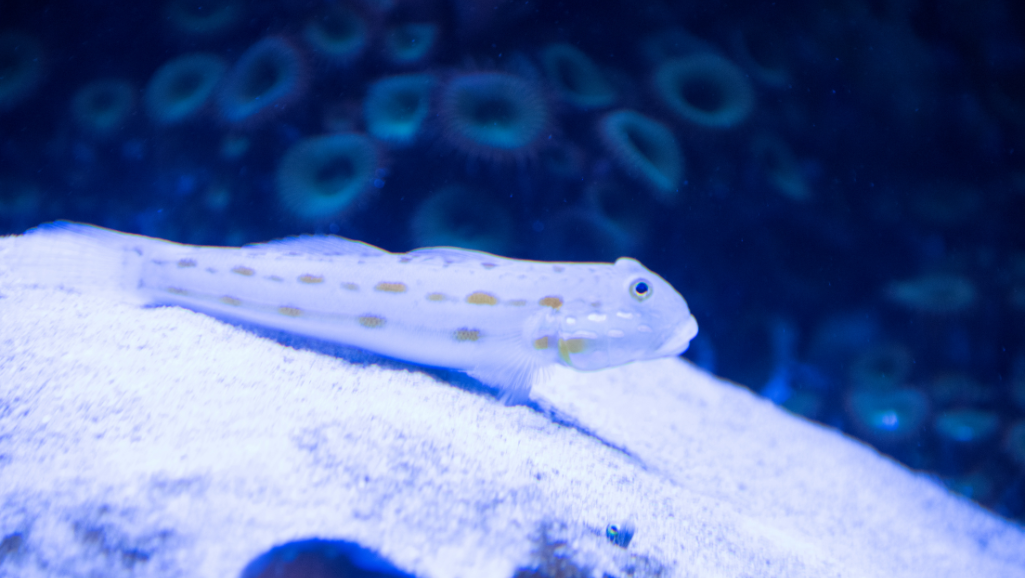
Meet a compact, colorful companion that brings personality to reef setups. The watchman goby is an easy-care marine fish that fits well into peaceful community tanks. This small goby tops out around four inches and does best in a 20-gallon or larger aquarium (20 gal is the practical starting size for most hobbyists).
Admire its alert head and bright body, commonly golden with tiny turquoise dots; juveniles sometimes show a steel-blue phase. Their independently moving eyes keep watch while they share a burrow with a pistol shrimp in the classic symbiotic pairing many aquarists love.
When possible, source captive-bred stock (ORA and similar suppliers) for healthier, hardier specimens. Keep water steady—about 75–78°F, pH ~8.0 (range 7.7–8.5), and salinity near 1.023 (see care guides for exact testing methods). Feed a carnivorous diet of varied marine foods and provide moderate flow, stable live rock, and a sand bed so natural burrow behavior can flourish.
Key Takeaways
- Easy care: Peaceful, reef-safe, and suitable for beginners.
- Prefer captive-bred (ORA) when available for better adaptation and sustainability.
- Require stable water, fine sand substrate, and secure rockwork for burrows.
- Often form a striking partnership with a pistol shrimp—watch the burrow teamwork.
- Small size and calm temperament make this watchman goby a great addition to community reef tanks.
Watchman Goby Basics to Inspire Your Build
Begin your aquarium plan with a compact fish that favors sand, rock, and a shrimp companion. The watchman goby (Cryptocentrus spp., often sold as yellow watchman or pink-spotted watchman) brings bright color and active, watchful behavior to reef tanks while staying peaceful with most community mates—great for beginner to intermediate reef hobbyists.
Yellow vs. Pink-Spotted: The yellow watchman goby typically shows a canary-gold body with tiny turquoise dots concentrated near the head and dorsal area; the pink-spotted variety ranges from pale yellow/tan to light cream with delicate pink and iridescent blue spots across the body and fins.
Size is comparable across these varieties—generally up to about four inches—so plan space around behavior as much as length. The yellow watchman is comfortable in a well-established 20-gallon tank, while many keepers prefer 30+ gallons for pink-spotted varieties or if you plan to add a pistol shrimp partner and more tankmates.
Both varieties are carnivorous and favor sand beds, and both commonly form the classic symbiosis with a pistol shrimp: the shrimp maintains the burrow while the goby stands guard. Their fused pelvic fins let them perch on rock and keep an eye out for food and threats.
- Color and spots determine the visual focal point of your display—pick the variety that best fits your aquascape.
- Provide fine sand, stable live rock, and clear sightlines so they can exhibit natural burrow-and-watch behavior.
- Expect initial hiding and shyness, followed by confident guarding once they establish a burrow.
How to Set Up a Thriving Tank for the Watchman Goby
Start your build with a stable tank that gives small reef species room to settle and a steady environment to thrive.
Tank Size and Stability
Treat 20 gallons as the true starting line. A 20-gallon aquarium provides the yellow watchman enough space and more stable water conditions to reduce stress; larger volumes (30+ gallons) further smooth out temperature and chemistry swings thanks to greater thermal mass and dilution of waste, making maintenance easier when you add more tank mates or a pistol shrimp partner.
Quick setup checklist: reliable heater and controller, quality filtration and protein skimmer, moderate flow (not blasting burrows), and secure rock placement before adding substrate. See the water parameters section below for exact temperature and salinity targets to test with a reliable refractometer or test kit.
Substrate and Burrow Design
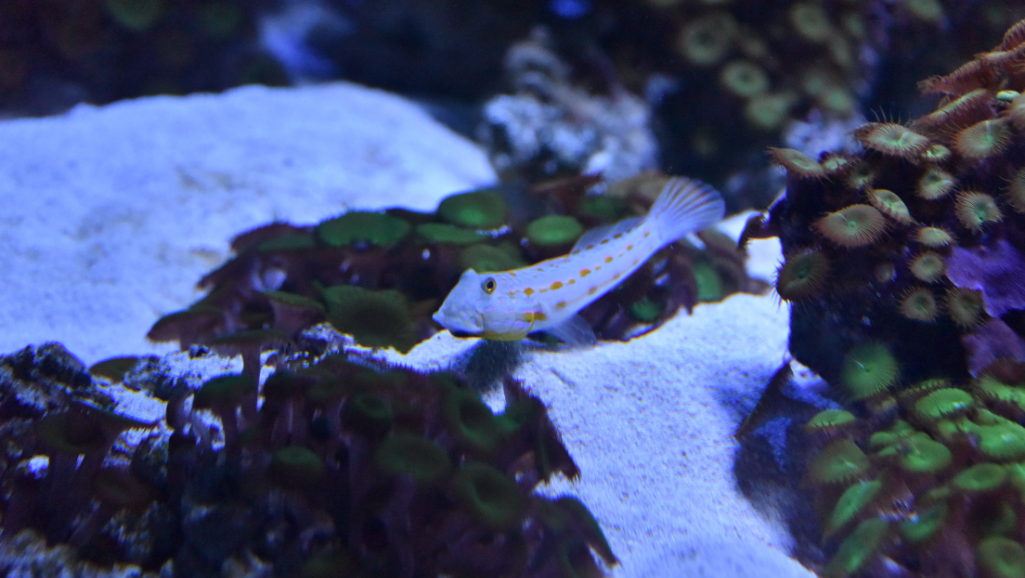
Use fine sand—about 2–3 inches deep—as the working substrate so a pistol shrimp can excavate natural tunnels and support authentic burrow behavior. Fine aragonite or silica sand is preferred over coarse gravel because it’s easier to dig and less likely to trap debris; a deeper layer (3″+) helps more complex burrows and reduces collapse risk.
Rockwork and Hiding Spots
Set up sturdy rockwork first, placing rocks on the tank glass or on deliberate supports before adding sand. This approach prevents cave collapses when tunnels are dug. Leave small, sheltered gaps at the base of rock formations to act as a “front door” to burrows and position extra hiding spots behind ledges so the goby and shrimp have escape routes and security.
Water Parameters Made Simple
Keep water steady and within the following trusted ranges: temperature around 75–78°F, pH near 8.0 (acceptable range 7.7–8.5), and specific gravity/salinity about 1.023 (commonly listed ranges 1.020–1.026). Aim for undetectable ammonia and nitrite, keep nitrate low (ideally under 10–20 ppm), and maintain moderate flow that moves waste without blasting burrow entrances. Test regularly with a reliable refractometer and standard marine test kits to keep parameters consistent for long-term goby and shrimp health.
Reef-Safe Community Planning & Pistol Shrimp Partnership
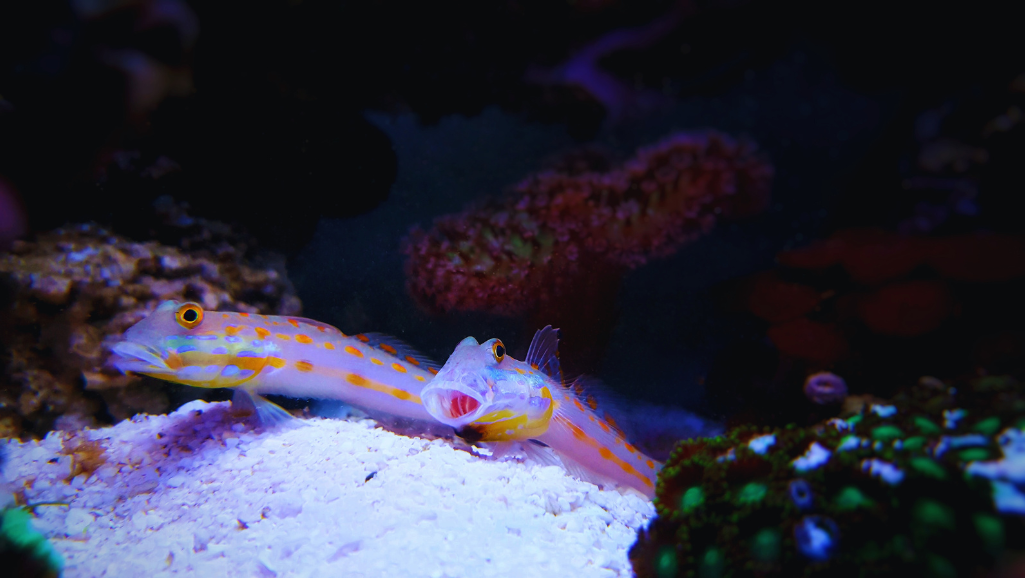
Watchman gobies are generally reef-safe and coexist well with soft corals, many LPS and SPS colonies, and most peaceful invertebrates. To encourage the iconic symbiosis, add a compatible pistol shrimp (commonly Alpheus spp.) and provide a protected tunnel entrance in a fine sand area. For step-by-step pairing tips, species choices, and troubleshooting, consult this practical care guide.
- Fine sand substrate enables natural burrow building for goby–shrimp teams.
- Robust, well-supported rockwork prevents collapses when shrimp dig.
- Stable water and moderate flow maintain a healthy habitat for both goby and shrimp.
Do: quarantine new shrimp, introduce goby and shrimp around the same time, and give them several days to weeks to pair naturally. Don’t: add aggressive or large tank mates that harass burrowers or constantly disturb the substrate.
Day-to-Day Care: Feeding, Behavior, and Peaceful Pairings

A simple daily routine—targeted meals, protected burrows, and compatible tank mates—keeps these fish thriving.
Diet and foods: Build a carnivorous diet around high-quality frozen mysis, brine, and chopped krill. Add small sinking carnivore pellets occasionally so the goby can grab bites near the substrate. Best practice: target-feed at the burrow entrance using a feeding pipette or turkey baster so both the watchman goby and any pistol shrimp partner receive food.
Feeding rhythm
Feed light, consistent meals twice per day—aim for 2 small servings (or 2–3 very small nibbles across the day). A practical portion guideline: offer only what the goby can consume in a couple of minutes (for mysis, a few pieces per feeding for a single fish). Remove uneaten food promptly to protect water quality.
Behavior and hiding
These gobies typically guard a burrow entrance and will retreat quickly when startled. Provide multiple hiding spots and a secure, tight-fitting lid (or mesh cover) to reduce jump risk and stress. If the fish hides excessively, check water parameters and tankmate behavior.
Mated pair or solo?
Pairs can form strong bonds—especially when paired with a pistol shrimp—but same-species aggression can increase with age or limited space. For small tanks, a single watchman goby is often the safest choice; if you want a bonded team, source a verified mated pair and give them ample sand and rock to claim.
Quick feeding checklist:
- Foods: frozen mysis, brine, chopped krill, occasional sinking pellets.
- Portion: only what’s eaten in ~2 minutes; 2 small feedings per day.
- Tools: feeding pipette/target feeder; remove uneaten food.
Tip: Target small, regular feedings and secure shelter—your tank will reward you with calm, engaging behavior.
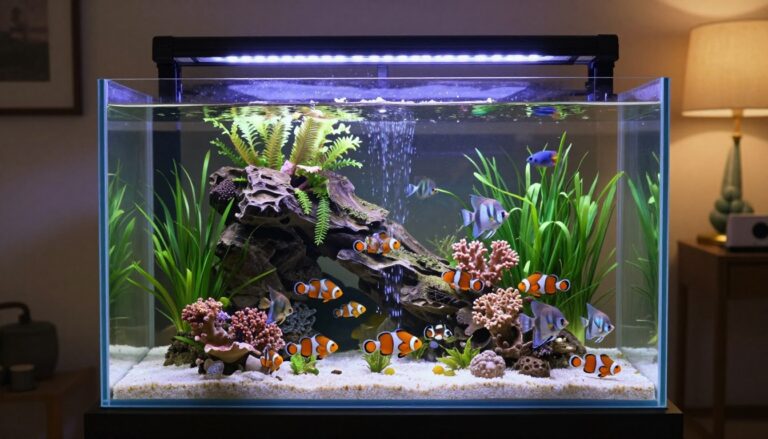
- Compatible tank mates: clownfish, cardinalfish, firefish, and small, peaceful wrasses.
- Safe invertebrates: cleaner shrimp, hermits, snails, urchins, and a pistol shrimp partner.
- Adjust flow and rock placement if hiding increases or uneaten food collects near rockwork.
Conclusion
Simple care and natural partnerships let this aquarium favorite shine without constant fuss.
The watchman goby is reef-safe and peaceful, thriving in a 20-gallon setup with clean sand, sturdy rockwork, and moderate flow. Its compact size and alert head make it an engaging addition to community aquariums.
A compatible pistol shrimp partner adds lively tunnel behavior and daily interest. Pink-spotted varieties and some other Cryptocentrus species may prefer slightly larger tanks, and same-species territoriality can occur unless fish are kept as a bonded pair.
Use this article as a practical blueprint: pick an appropriate tank size, feed meaty foods in small, regular portions, maintain steady water parameters, and build a stable habitat with plenty of hiding space.
When your pair feels secure, they’ll return curious head tilts and a steady presence that bring your reef to life.
FAQ
What size tank is recommended to start keeping a yellow watchman goby or pink-spotted variety?
How deep should the substrate be to support natural burrowing behavior?
Can this species live with corals and other reef invertebrates?
What water parameters promote long-term health?
How important is the relationship with a pistol shrimp, and how do I encourage pairing?
What should I feed to keep a balanced carnivorous diet?
How do I manage feeding to avoid overloading the tank with nutrients?
Do they show territorial or hiding behaviors I should expect?
Is it better to keep a mated pair or a single specimen?
Which tankmates are most compatible for a peaceful community setup?
How do I create stable, burrow-friendly rockwork?
Are there special concerns about lighting or tank lid requirements?
What signs indicate illness or stress to watch for?
How can I introduce a pistol shrimp without harming the existing setup?