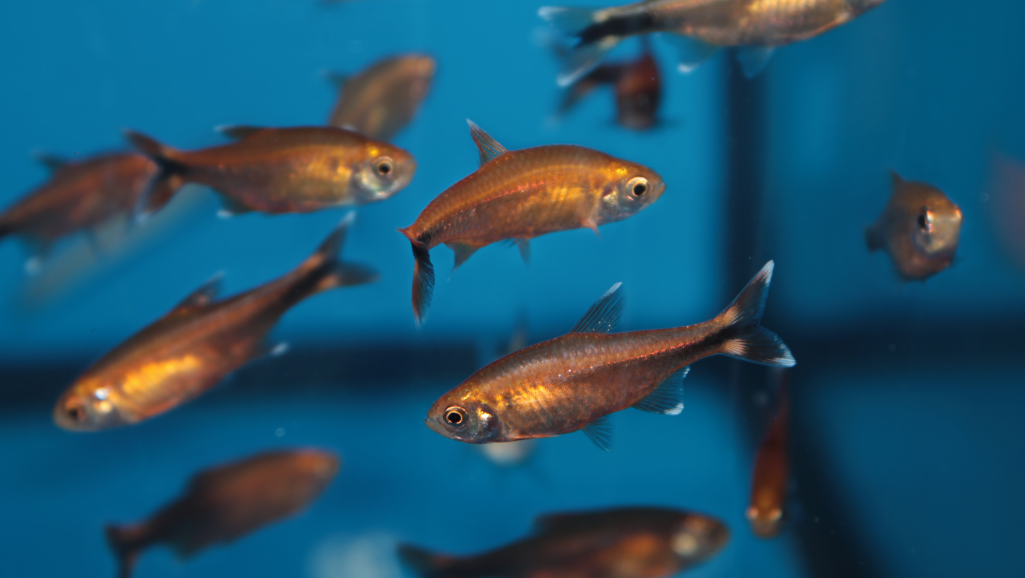
Meet a vibrant, peaceful fish that brings a copper-orange glow and a bold black lambchop mark to planted aquariums. Trigonostigma espei — commonly called the Lambchop Rasbora — wins hobbyists over with calm behavior and vivid color, turning small tanks into lively, nature-style displays.
The scientific name Trigonostigma espei helps you find healthy stock online and in stores. For the best color and natural schooling behavior, keep a group of six or more; larger groups increase confidence and make the school’s display more striking.
In a well-planted aquarium, these rasboras occupy mid to upper water columns where their copper tones pop against green foliage. A 10-gallon tank can house a very small starter group, but a 20-gallon or larger tank provides more stable water and better swimming lanes for long-term health.
Practical care at a glance: aim for steady water in the mid-70s °F (roughly 74–78°F), slightly acidic to neutral pH, soft-to-moderately soft hardness, gentle hang-on-back or sponge filtration, and dechlorinated tap water. With consistent care, expect healthy lambchop rasboras to live around 3–5 years.
Key Takeaways
- Lambchop Rasbora Care.
- Bright, peaceful rasbora ideal for planted aquarium habitats.
- Trigonostigma espei — look for the distinctive lambchop-shaped flank mark.
- Keep lambchop rasboras in groups of six+ for confident schooling and best color.
- Prefer planted tanks, soft slightly acidic water, gentle filtration, and dim lighting.
- 10-gallon minimum for a tiny school; 20+ gallons recommended for a stable community setup.
Meet Trigonostigma espei: What Makes This Rasbora Shine — a quick ID guide
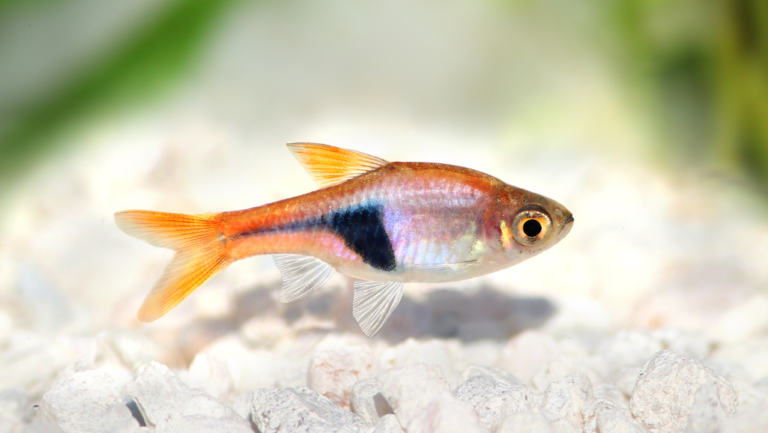
Trigonostigma espei is a small, vivid rasbora known for its burnished copper-orange body and a distinctive dark lambchop-shaped flank mark that stops short of the tail.
Quick ID: Size, color, and the “mark”
This species typically reaches about 1–1.5 inches (2.5–3.8 cm) in adult size. The body is slim and elegant, colored copper-red to orange with a paler underbelly.
Fins are translucent and delicate. The black, wedge-shaped marking broadens across the mid-body but noticeably ends before the caudal fin — a key identifying trait. Healthy individuals show brighter burnished tones under soft, diffuse lighting.
Spotting subtle differences vs. a close cousin
Compared with Trigonostigma heteromorpha (the harlequin rasbora), T. espei is usually slimmer and more orange-toned. Harlequin relatives are typically deeper-bodied with a broader, darker triangular blotch and often a pinkish cast.
Sexing tip: females often appear fuller-bodied when mature, while males usually display crisper, more angular flank markings. When buying stock, choose active, intact fish with clear markings and no torn fins.
| TraitTrigonostigma espeiHarlequin (T. heteromorpha) | ||
| Typical size | 1–1.5 inches | 1.2–1.8 inches |
| Body tone | Copper-red, brighter orange | Pinkish to copper |
| Flank mark | Narrow wedge, stops before tail | Broader, darker triangle |
| Profile | Slimmer, elegant | Deeper-bodied |
| Native range | Thailand, Cambodia | Southeast Asia broadly |
Tip: Use the scientific name Trigonostigma espei when searching care guides and sourcing fish to ensure you’re getting the correct species and the healthiest stock.
How to Set Up the Ideal Aquarium Environment — a Lambchop Rasbora Care guide
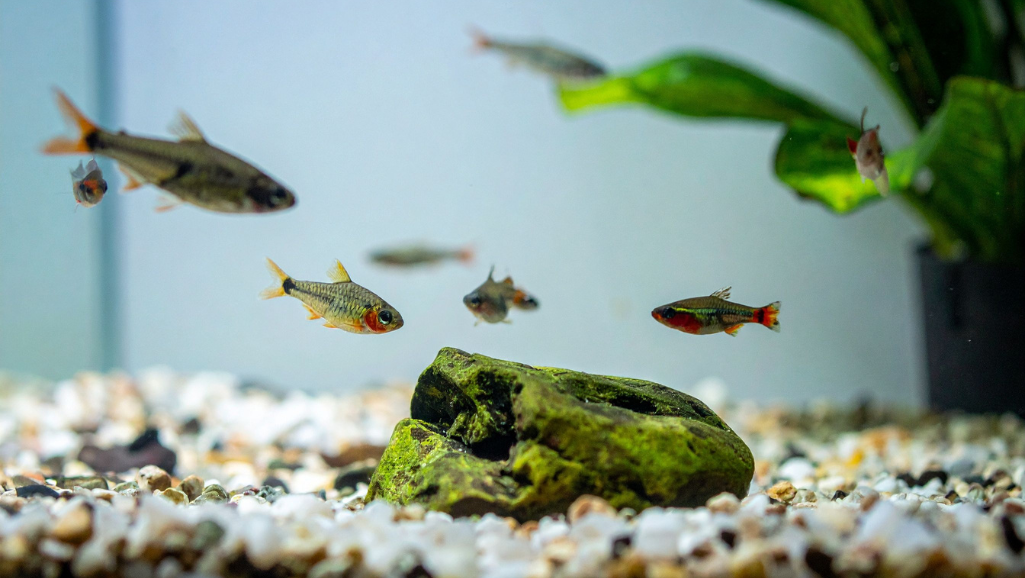
the aquarium so lambchop rasboras can school, show color, and feel secure: plan open midwater corridors for swimming and dense plant thickets for cover. Set up before you buy stock — that avoids stress and promotes healthy groups.
Tank size, open swimming space, and schooling needs
Minimum and recommended tanks: a 10-gallon tank can hold a very small starter group, but a 20-gallon or larger aquarium is strongly recommended to provide stable water and comfortable swimming lanes. Aim for groups of six or more; larger groups produce tighter schooling and bolder displays.
Layout tip: keep the foreground lower and the mid-to-background planted so the school has clear swimming lanes and nearby hideouts.
Live plants and aquascape
Use a darker substrate and add driftwood or smooth rocks to contrast and make copper tones pop. Surround open swimming areas with planted thickets so fish can dart between cover and open water.
Low-light plant picks: Anubias, Cryptocoryne, and Taxiphyllum are low-maintenance options that attach to hardscape or grow well in shaded patches.
Consider leaf litter or Indian almond leaves to add tannins and gentle shading that mimic natural habitat and can encourage natural behavior.
Lighting and floating plants
Use moderate LED lighting and floating plants like Salvinia or Riccia to diffuse glare and create shaded surface zones. Dim, diffuse light reduces stress and helps the fish feel secure while allowing plants to thrive.
Filtration and gentle flow
Choose quiet hang-on-back or sponge filtration that delivers steady, gentle flow rather than strong currents. Fully cycle the tank before adding fish, treat tap water with a dechlorinator, and perform weekly partial water changes to maintain clear, stable water.
- Equipment checklist: reliable heater, thermometer, gentle HOB or sponge filter, test kits for ammonia/nitrite/nitrate, dechlorinator.
- Aquascape examples: 10–20 gal nano layout — dense background plants, open midwater; 20+ gal community layout — layered planting with larger driftwood and more swimming lanes.
- Safety tip: use a tight-fitting lid — rasboras are active and may jump if startled.
Water Parameters and Conditions for Peak Health
Consistency is the single best gift you can give your aquarium. Set up steady systems so the school stays vivid and calm. Small swings in temperature or chemistry quickly stress delicate freshwater species like lambchop rasboras.
Temperature, pH, and hardness targets
Recommended range: keep water steady in the mid-70s °F—about 74–78°F (23–26°C) as the practical target for most home aquariums. This narrows the broader ranges you may see and reduces the chance of temperature shock; use a reliable heater and an accurate thermometer to prevent sudden drops or spikes.
Keep pH slightly acidic to neutral: aim for ~6.5–7.0. Prefer softer water chemistry for best color and breeding chances; a practical hardness target is roughly 2–10° dGH, with an upper soft limit near 12° dGH. Stability matters more than hitting a perfect number—small, slow adjustments are safer than big changes.
Cycling, dechlorinator, and weekly maintenance
Always fully cycle the tank before adding fish so nitrifying bacteria can process ammonia and nitrite. Monitor water quality with test kits for ammonia, nitrite, and nitrate until levels remain consistently safe.
- Dose a trusted dechlorinator whenever you add tap water to remove chlorine and chloramine and protect gills and beneficial bacteria.
- Perform ~25% weekly water changes to refresh minerals, remove dissolved organics, and keep nitrates low; adjust frequency in smaller or heavily stocked tanks.
- Choose a gentle filter that provides biological capacity and mechanical polish without strong currents—sponge or a low-output HOB/canister is ideal.
- Track pH and hardness regularly with drop kits; make small, steady corrections rather than abrupt swings.
| ParameterTarget RangeWhy it matters | ||
| Temperature | 74–78°F (23–26°C) | Keeps metabolism steady and reduces stress |
| pH | 6.5–7.0 | Supports appetite, color, and breeding |
| Water hardness | 2–10° dGH (soft to moderately soft) | Protects gill health and aids spawning success |
| Water changes | ~25% weekly | Stabilizes chemistry and removes toxins |
Practical tweaks and troubleshooting
If your pH slowly drifts upward, test source water and consider using RO (reverse osmosis) water mixed with tap water, or adding natural tannins (Indian almond leaves) or peat to gently lower pH and soften water. To lower hardness more reliably, blend RO water to reach the target dGH. Avoid chemical “quick fixes” unless you understand long-term effects.
In short: consistent, clean water with soft edges elevates color and supports calm schooling. Track key values (ammonia, nitrite, nitrate, pH, hardness), make small adjustments, and your tank will reward you with healthy, vibrant fish.
Schooling, Behavior, and Community Compatibility
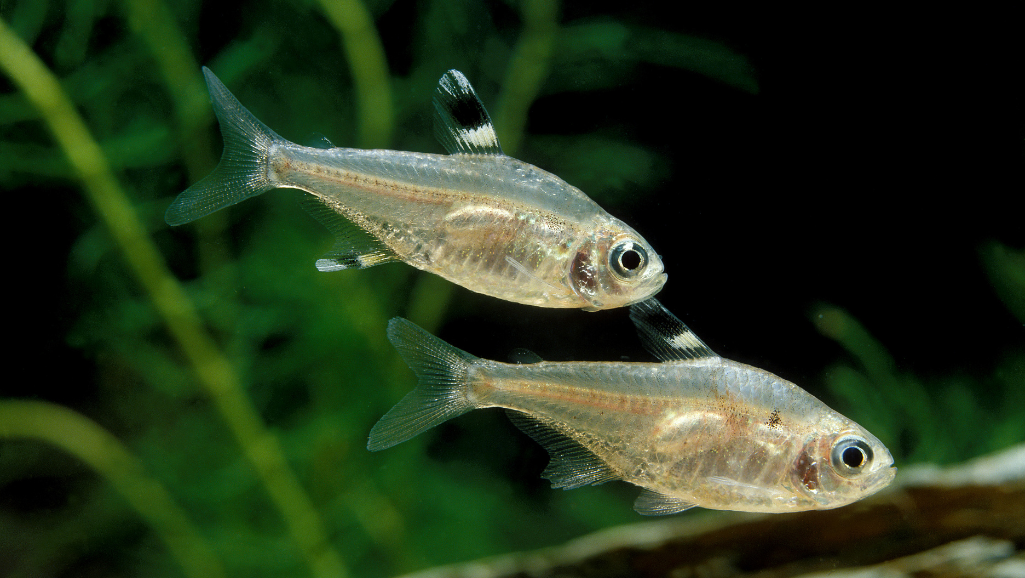
When kept in proper numbers, these small fish reveal natural schooling and confident daytime displays. Keep at least six to reduce stress and unlock coordinated swimming; larger groups produce tighter formations, bolder color, and more natural behavior.
The social pulse changes with size. Small groups commonly develop a visible hierarchy and skittishness; in larger groups pecking orders fade and steady, exploratory swimming becomes the norm.
Compatible neighbors and cautions
Good tank mates include small tetras, other peaceful rasboras, dwarf Corydoras, and Otocinclus — all species that occupy different zones and have similar freshwater parameter needs. These companions keep the midwater lane calm and reduce competition for food.
Avoid common problem tank mates: larger or boisterous cichlids, aggressive barbs, large gouramis, or fin-nipping species that may stress or injure lambchop rasboras. Also avoid fish that prefer much harder or much warmer water than rasboras.
Practical tips for a harmonious community
- Light and flow: dim, diffuse lighting and gentle current coax shy groups into the open and mimic their natural habitat.
- Hardscape and plants: design plant “rooms” and driftwood retreats so each fish can retreat; keep open midwater corridors for schooling and display.
- Observation goal: relaxed fins, coordinated swimming, and deepened color are signs your group and tank mates are well matched.
“A calm, well-sized school is the single best indicator your community is working.”
| AspectRecommendationWhy it matters | ||
| Minimum group | 6 individuals | Reduces stress and encourages schooling |
| Ideal neighbors | Small tetras, other rasboras, Corydoras, Otocinclus | Maintain calm midwater behavior and low competition |
| Lighting & flow | Dim light, gentle current | Promotes daytime activity and bold swimming |
Feeding and Diet: From Staple Foods to Brine Shrimp Treats

A precise feeding plan helps this tiny micropredator show peak color and steady energy.
Micropredator basics: Flakes, micropellets, and granules
In the wild lambchop rasboras hunt small insects, crustaceans, and zooplankton. In the aquarium, build a balanced diet around finely crushed high-quality flakes, micropellets, or microgranules sized for small mouths. Aim for brands formulated for small tropical fish or nano species.
Live and frozen options: Brine shrimp, daphnia, and microworms
Supplement staples with live or frozen treats like brine shrimp, daphnia, microworms, and white worms. These foods trigger natural hunting behavior, boost coloration, and improve overall condition.
Portion size, feeding frequency, and water quality
Feed small portions two times daily for routine maintenance; increase to three short feedings when conditioning for breeding. Offer only what your group consumes in about 60–90 seconds to avoid excess waste that degrades water quality.
- Portion guideline: for a school of six, start with a pinch of crushed flakes or 6–10 micro-pellets per feeding and adjust based on how quickly they finish.
- Weekly rotation example: Days 1–4: staple flakes/micropellets; Day 5: frozen brine shrimp; Day 6: daphnia or live microworms; Day 7: lightly vegetable-based micro food or rest feed.
- Prep frozen food: thaw and rinse frozen brine packs to remove preservatives and reduce nutrient spikes; feed small amounts and siphon uneaten debris after 10–15 minutes if needed.
- Water care link: schedule routine siphons after richer feeds and maintain your normal weekly ~25% water change to protect filtration and water quality.
Foods to avoid
Avoid oversized pellets, hard foods that require scraping, and frequent flake-only diets that lack variety. Also limit fatty treats to prevent oily water and digestive stress.
“Watch feeding time as a health check—adjust grain size and portions until the whole school eats confidently within a minute or so.”
Breeding Lambchop Rasboras: A Gentle How-To
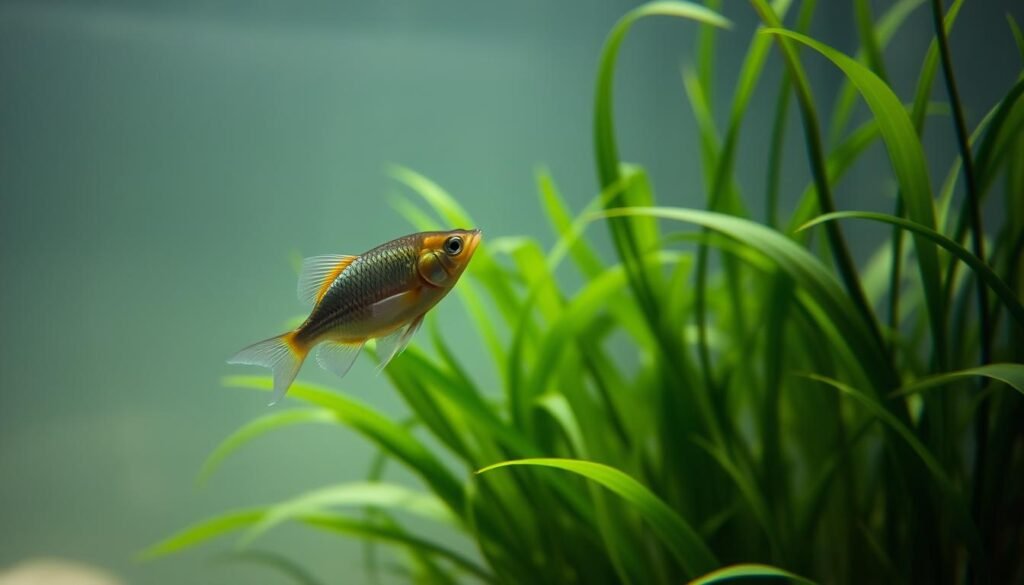
Successful breeding begins with a relaxed, healthy group so natural pairs form without fight or stress. For reliable pair formation and calm courtship, start with around 8–10 healthy lambchop rasboras in the main tank and move conditioned pairs to a dedicated breeding tank when ready.
Selecting and conditioning stock
Sexing is subtle: females typically look fuller in the belly, while males often display crisper, more angular flank markings. Condition prospective breeders on protein-rich foods — frequent small feedings of live or frozen brine shrimp, daphnia, or high-quality microfoods — for 1–2 weeks to encourage spawning readiness.
Breeding tank setup
Set up a separate, dimly lit 10–15 gallon breeding tank with very soft, slightly acidic water (target pH ~6.0–6.8, hardness around 0–5° dGH). Provide broad-leaf plants such as Anubias or Java fern, or use spawning mops — lambchop rasboras attach eggs to the underside of leaves and similar surfaces.
Step-by-step breeding checklist
- Condition a mixed group with protein-rich live/frozen foods for 7–14 days.
- Move a willing pair or small conditioned group to the breeding tank with dim lighting and low flow.
- Provide broad leaves or spawning mops for egg attachment and keep water very soft and slightly acidic.
- After spawning, remove adults (or provide dense cover) to prevent egg predation.
Spawning, egg care, and first foods
Eggs typically hatch in about 24–36 hours depending on temperature. After hatching, begin fry on infusoria or commercial liquid fry foods for the first few days, then progress to newly hatched baby brine shrimp and microworms as they grow.
- Keep flow minimal and perform tiny, frequent water changes to keep water pristine without stressing fry.
- If hatching rates are low, check water hardness and pH (eggs do best in very soft, slightly acidic conditions) and ensure no adult predation.
“Gentle conditions, patient conditioning, and good fry foods yield the best hatch rates.”
Lambchop Rasbora Care Tips, Lifespan, and Common Mistakes
Stable routines and calm surroundings help these delicate schooling fish show their best color and behavior. Prioritize steady, simple care steps — small, regular actions beat occasional dramatic fixes.
Stability over perfection: Consistency in parameters
Consistency beats corrections. Keep temperature and chemistry steady (see Water Parameters block for targets) and perform weekly ~25% water changes. Fully cycle the tank before adding stock so the biofilter can handle waste. Good filtration and clean media let plants and fish thrive and keep water quality high.
Avoiding stress: Lighting, flow, and group size
Use dim, diffuse lighting, gentle flow, and a planted environment with driftwood or Indian almond leaves to add tannins and shade. Commit to groups of six or more to prevent social stress — small or single fish often hide, show clamped fins, or lose color. Avoid overbright lights, strong currents, and cramped layouts.
Common mistakes and quick fixes
- Overfeeding: causes cloudy water and high nitrates. Fix: cut portions, vacuum uneaten food, and increase water changes.
- Too-small groups: leads to skittish behavior. Fix: add more rasboras to reach a minimum of six.
- Rapid chemistry changes: shock from big parameter shifts. Fix: correct slowly (partial mixes, RO blending) and retest frequently.
- Poor filtration or clogged media: reduces oxygen and increases waste. Fix: maintain filters, rinse sponges, and replace media per manufacturer guidance.
Expect a healthy lifespan of about 3–5 years with consistent care and clean water; some well-kept individuals can live longer. If color fades, check three things first: group size, water values (temperature, pH, hardness), and diet variety.
“A calm tank and a simple routine are the best investments for long-term color and health.”
Conclusion
Bring your tank to life by pairing soft water, living plants, and a confident school of lambchop rasboras — the result is a calm, colorful centerpiece for any planted aquarium.
Trigonostigma espei is a small species with outsized charm. Keep groups of six or more in clean, stable water with slightly acidic to neutral chemistry (target ~6.5–7.0) and gentle flow to encourage natural schooling and vivid color.
Feed a varied diet of fine staple foods plus occasional live or frozen treats to enhance health and coloration while protecting water clarity. Use dark substrate, leaf litter tones, and broad-leaf plants to create a natural habitat and spawning sites.
Think long-term: steady routines, the right group size, and a nature-forward setup turn a modest tank into a calm, living work of art. If you plan on breeding, prepare a soft, slightly acidic breeding tank and have microscopic fry foods ready to ensure the best hatch rates.
FAQ
What identifying features help me recognize Trigonostigma espei?
How does the lambchop mark differ from the harlequin pattern?
What tank size and setup suit these schooling fish best?
Which plants and lighting create a peaceful environment?
What filtration and water flow do they prefer?
What are the ideal temperature, pH, and hardness ranges?
How should I cycle and maintain the tank?
How many should I keep together for best behavior?
Which tank mates are suitable for a peaceful community aquarium?
What should their diet include for optimal health?
How often and how much should I feed them?
How do I set up a breeding tank and encourage spawning?
What care do eggs and fry need after spawning?
What common mistakes should I avoid with these fish?
How long do they typically live in a well-kept aquarium?