This base layer is the living foundation of every planted tank — and getting it right solves the two biggest problems hobbyists face: unstable water chemistry and poor plant growth.
Choose the right substrate and you simplify maintenance, reduce algae risk, and give stems and carpets a faster, healthier start.
There are three practical paths: nutrient-rich aquasoil for fast plant growth, inert sand or gravel for stable aquariums and easy cleaning, or a layered mix that combines a nutrient base with an aesthetic cap. For most setups, a grain size around 1–3 mm helps roots establish while keeping textures safe for bottom-dwelling fish.
Biofilm in the substrate and the microbial community living in the bed break down organics into plant-available forms and support clearer water. Mineral substrates such as aragonite tend to raise water hardness, while peat-rich aquasoils soften water and nudge pH downward — features to match to your target species. (See manufacturer notes for products like ADA Amazonia on initial ammonia release.)
This guide turns those technical choices into clear steps so beginners and experienced hobbyists can pick the right planted aquarium substrate, set up a stable bed, and enjoy consistent plant growth with less fuss.
Key Takeaways — TL;DR
- Planted aquarium substrate matters: it anchors roots and feeds plants via microbes.
- Pick aquasoil for fast growth, inert sand/gravel for stability, or a layered base + cap for balance.
- A grain size of about 1–3 mm is a safe, versatile choice for most planted aquariums and bottom-dwelling fish.
- Substrate materials affect water chemistry — match aragonite, peat, or neutral caps to your water and livestock.
- The right bed reduces maintenance, stabilizes parameters, and helps plants show stronger color and growth.
Ready to choose? Use the checklist in this article to match substrate, plants, and tap water — and then order the products that fit your goals and budget.
Why Substrate Matters Now: The Foundation of Every Planted Tank
A tank’s base does far more than hold décor — it runs the hidden systems that feed and anchor every plant. Under the visible aquascape, a porous substrate matrix lets roots secure themselves, exchange gases, and draw steady nutrients that support long-term plant growth.
The living layer beneath the cap hosts biofilm and beneficial microbes that bind fines, trap debris, and convert organics into plant-available forms. That microbial action helps keep the water clearer and produces steadier growth for both plants and fish.
Choice matters — pick based on your goals. If you want high plant performance (fast stems, lush carpets), nutrient-rich aquasoils are the best fit. If you prefer low-maintenance stability and easy vacuuming, inert sand or baked clay substrates work well but will require regular liquid dosing and occasional root tabs to feed demanding species.
- Grain size near 1–3 mm reduces compaction and protects barbel-bearing bottom dwellers like Corydoras and small loaches.
- Color, texture, and slope affect aesthetics and substrate stability — darker soils under plant zones and lighter caps for paths create depth without sacrificing function.
- Decide up front: prioritize maximum plant growth (aquasoil), tight parameter control (inert media + dosing), or a hybrid balance (nutrient base + decorative cap).
Get the foundation right now and you’ll see fewer uprooted stems, simpler maintenance, and an aquarium that matures predictably over time. Use the short checklist later in this guide to match substrate choice to your tap water, target species, and budget.
Planted Aquarium Substrate Types Explained
Different base materials drive plant health, appearance, and long-term tank chemistry in distinct ways — pick the type to match your goals.
Inert options (sand, gravel, baked clay) are the lowest-maintenance choice. They keep water chemistry predictable, are easy to vacuum, and come in a range of colors and grain sizes for aesthetic control. Baked clay products such as Seachem Flourite or Turface improve porosity and cation exchange capacity (CEC) compared with plain quartz sand, but they still supply little in the way of plant-available nutrients — expect to supplement with liquid fertilizers and root tabs.
Commercial aquasoils
Commercial aquasoils are pre-formulated, nutrient-charged granules designed for planted tanks. Well-known examples include ADA Amazonia, Fluval Stratum, and Tropica Aquarium Soil. These substrates often contain organic components (peat derivatives) that slightly lower pH and buffer KH, and they give a strong early boost to root development and plant color. Note: many aquasoils can release ammonia during the first days to weeks; plan for frequent water changes or a short pre-cycle to protect livestock. Best for: high-growth planted setups and aquascapes that prioritize plant performance.
DIY layered systems
DIY approaches use inexpensive mineralized garden soil, laterite, or worm castings as a nutrient base capped with decorative sand or gravel. This method saves money and offers customization, but results vary with source materials. Keep organic content moderate, avoid fresh compost or sticky clay, and use a stable cap (2–4 cm) to reduce clouding when planting. Best for: budget builds and hobbyists comfortable sourcing and testing raw materials.
- Choose by goal: inert for stability and easy cleaning; aquasoil for rapid plant growth; DIY for budget and customization.
- Maintenance differs: inert substrates need consistent water-column dosing; aquasoils ease startup but need eventual replenishment; DIY requires careful setup and monitoring.
- Planting feel: heavier, rounded grains hold stems better; finer, lighter soils encourage fast root spread but may require careful planting technique.
Choosing Grain Size, Weight, and Texture for Healthy Roots
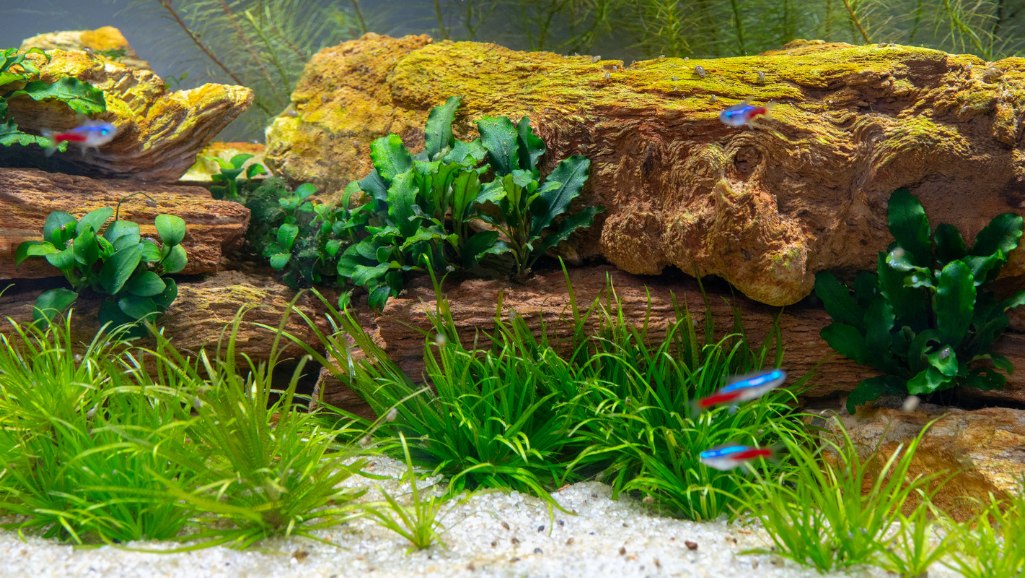
Small physical choices produce big benefits. The right grain mix helps roots breathe, holds stems steady, and protects bottom-dwelling life. Below are practical, hands-on guidelines to balance planting performance with fish safety and water flow.
Grain size sweet spot: 1–3 mm for most planted setups
Aim for 1–3 mm. This range balances aeration, root penetration, and stability while allowing easy planting and stable slopes. For quick reference: 0.3–0.8 mm = very fine sand (prone to compaction), 1–3 mm = ideal for most plants, 4+ mm = coarse gravel (good for large rootstocks and decorative paths).
Weight and plantability: why very light media complicate planting
Light or buoyant soils and pumice-heavy mixes can cause stems and newly planted runners to float during setup. Heavier gravel or mixed-weight blends hold delicate stems and rhizomes better and reduce the need to replant. If you use light media, plant deeper and consider temporary weights (planting weights or tweezers) until roots take hold.
Rounded vs sharp grains: protection for bottom fish and barbels
Choose rounded grains where barbel-bearing species live — Corydoras catfish and small loaches are common examples that appreciate smooth substrate. Sharp-edged sands or crushed clay can abrade barbels and skin. A simple layout trick — finer foreground, coarser background — both improves water movement through the bed and creates visual depth while protecting sensitive species. See this forum guide for practical layouts: finer foreground, coarser background.
- Quick test: plant a small patch with your tweezers — if stems slide out, increase grain weight or use a finer cap.
- Do not use pea gravel for carpeting plants; it’s too coarse for fine roots and prevents dense rooting.
- Match grain color to hardscape for a cohesive look, and choose lime-free caps to avoid chemistry shifts.
How Substrate Influences Water Chemistry

Substrate choices quietly steer water chemistry and set the stage for both plant performance and fish health. Before you buy, measure your tap water (pH, GH, KH) so you can pick a bed that complements your source water and target species.
Active soils that include peat or organic components tend to lower carbonate hardness (KH) and nudge pH slightly toward acidic. That softer profile helps many planted aquariums absorb nutrients from the water column and roots more efficiently, but it also means you should monitor KH and pH as the bed settles.
Many commercial aquasoils (for example, ADA Amazonia) are known to release small amounts of ammonia during the first days to weeks after setup. Mitigation: pre-rinse where appropriate, run the filter, and perform short, frequent water changes while testing ammonia and nitrite until levels fall to undetectable.
Carbonate-rich substrates such as aragonite or Onyx-style sands will raise GH and KH and push pH upward over time. The exact change depends on your water and substrate volume, so expect a modest shift rather than dramatic swings — measure before and after adding large amounts of carbonate material.
Neutral quartz sands and inert gravels generally leave water chemistry unchanged. They are ideal when you want to tune CO2 and liquid dosing in the water column without the substrate interfering.
- Match chemistry to your source water: hard tap water + aragonite = stable hard parameters; soft tap water + aquasoil = ideal for acid-loving plants.
- Don’t mix opposing beds: avoid active soils under a carbonate cap — the conflicting effects complicate maintenance.
- Test kits matter: use KH/GH/pH test kits during the first 2–4 weeks and log values so you can spot trends and adjust dosing or buffering.
Building Layers: From Base Nutrients to Aesthetic Caps
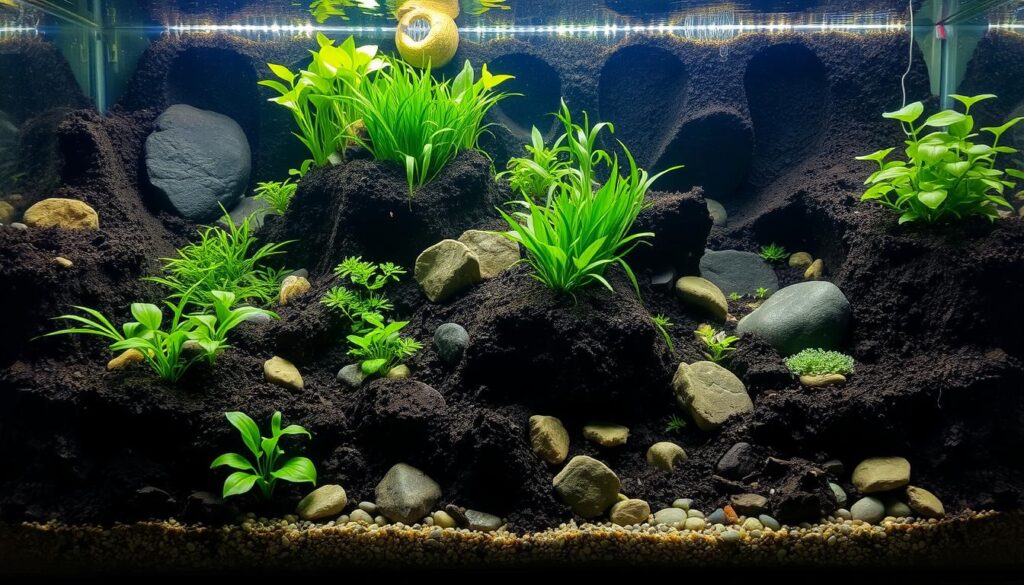
Layering materials correctly turns a simple tank bottom into a living, functional landscape. You can choose a complete soil for deep rooting and long-term nutrient storage, or build a thinner nutrient base and cap it with decorative sand or aquarium gravel for a cleaner, low-mess look.
Complete soils vs base-layer additives
Complete soils are designed to be used alone and can be filled 5–7+ cm deep to allow roots to dive and enable sculpting. They reduce early water-column dosing but will gradually lose nutrients over time.
Base-layer additives (examples: Tropica Plant Substrate, JBL AquaBasis plus, Dennerle DeponitMix) function as a concentrated nutrient layer at 1–4 cm depth. Protect that layer with a 2–4 cm cap of lime-free sand or gravel (1–4 mm) to limit clouding and surface disturbance.
Caps, slopes, and paths
Use darker soil beneath dense planting zones and lighter sand for paths or foreground contrast. Retaining stones, mesh, or aquarium-safe adhesives keep decorative caps separated and stable on steeper slopes. Caps also let you change look and maintenance style without disturbing the nutrient base.
Quick volume math
Formula: length × width × depth (cm) ÷ 1000 = liters. Example for a 60P (60×30 cm): 1 cm soil = 1.8 L; 5 cm soil = 9 L. Always order 10–20% extra to allow for shaping, compaction, and errors.
- Two winning strategies: full soil for simplicity and maximum plant performance; nutrient base + cap for precise control and cleaner maintenance.
- Practical thicknesses: 1–2 cm nutrient base under a 3–4 cm cap, or 5–7+ cm full soil for deep-rooted plants.
- Shopping tip: check product depth recommendations and price per liter when comparing products — different grain sizes and packaging change how much you need.
Planted Aquarium Substrate Setup and Cycling Best Practices
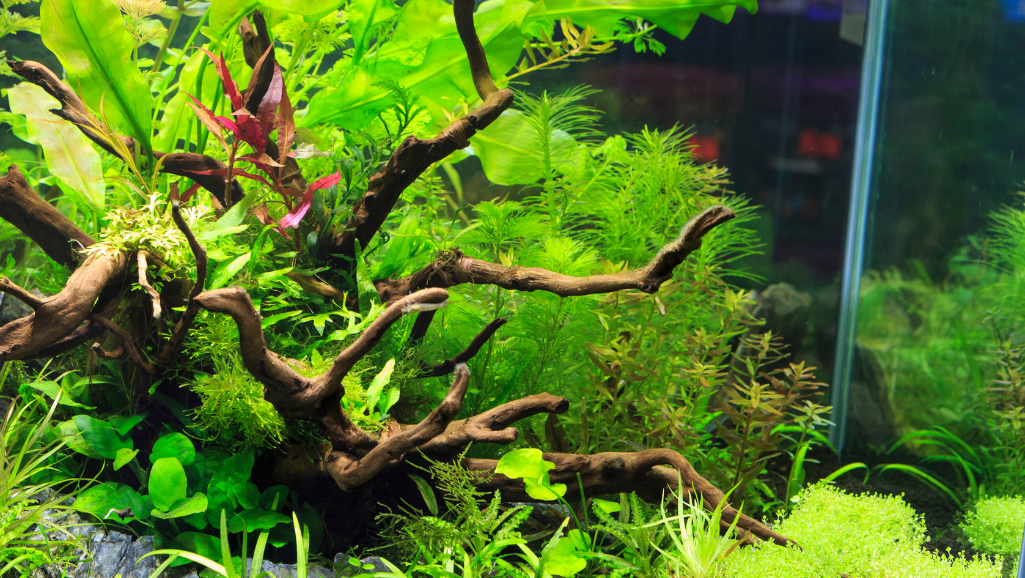
A smart startup plan reduces ammonia spikes and speeds healthy root establishment. Follow a short timeline, test frequently, and give roots time to colonize the bed — this early patience prevents rescapes and long-term problems.
Managing ammonia-rich aquasoils: many enriched soils (for example, ADA Amazonia) can release measurable ammonia and organics after setup. Pre-cycling the substrate and running filtration for 1–2 weeks before adding livestock reduces risk. Aim for a 2–3 week window and confirm ammonia and nitrite read 0 ppm before introducing fish.
Quick startup timeline
- Day 0: plant densely with fast-growing species (e.g., Limnophila, Rotala, Hornwort) and add floaters to absorb excess nutrients.
- Weeks 1–2: perform large, frequent water changes (20–50% as needed) and test daily for ammonia and nitrite; target is 0 ppm.
- Week 2–3: when ammonia and nitrite are undetectable for several days, slowly start stocking and reduce change frequency to maintenance levels.
Planting technique by grain and weight
Use angled tweezers and insert stems deeper in light soils so crowns and roots lock into place. Heavier media naturally hold stems better; very light mixes require deeper insertion, staggered spacing, or temporary planting weights to prevent floating.
For the first weeks, minimize digging. Use gentle surface skimming, a fine-suction mechanical filter, and asterisk-style water change inlets to clear dust and biofilm without disturbing the bed.
“Early patience yields long-term stability as roots and bacteria mature together.”
Practical tips: place root tabs sparingly and deep (near crowns) if using them during establishment to avoid nutrient spikes in the water column. Use a reliable KH/GH/pH test kit and log results — tracking time and changes makes adjustments predictable and lowers long-term cost and troubleshooting time.
Feeding Roots vs Dosing the Water Column
Feed plants where they take it: root-feeding species and heavy root feeders need concentrated nutrients in the bed, while fast stem plants and epiphytes respond faster to regular liquid dosing in the water column. Choosing the right mix of root tabs and water-column fertilizers gives predictable, even growth.
Root tabs, sticks, and capsules for nutrient-hungry species
Root tabs and capsules are best for species that draw most nutrition through roots — think Echinodorus, Cryptocoryne, and Sagittaria. Place tabs beside crowns and push them deep to reduce nutrient leaching. Typical practice: space tabs 2–3 inches apart in heavy-feeding zones and plan to refresh or replace them roughly every 4–8 months depending on product and uptake (manufacturer guidance varies).
Balancing substrate nutrition with liquid fertilizers over time
Balance is key. Even nutrient-rich soils (like ADA Amazonia or Tropica Soil) benefit from weekly water-column dosing to support stem plants, mosses, and epiphytes that take nutrients primarily from the water. Use smaller capsules for nano tanks and larger sticks for deep beds in big aquariums.
- When to choose what: majority stems or epiphytes → prioritize liquid dosing; majority rosettes and root feeders → prioritize root tabs with supplemental dosing.
- Starter dosing schedule: nano tank — 1 capsule or fewer + light weekly liquid dose; medium tank — root tabs every 4–6 months + weekly liquid dosing; heavy planted/high-demand tank — root tabs 2–3 inches apart in heavy zones + weekly liquid dosing calibrated to plant uptake.
- Begin light in fresh, “hot” soils: start with reduced dosing to avoid spikes and increase only as plants show steady uptake.
- Extend bed life: clay-based and organic soils deplete—use root supplements to extend service life and delay full rescape.
“Synchronized root and column nutrition drives lush, balanced growth across diverse plant groups.”
Shopping checklist: one pack of root tabs (brand and size to match tank depth), one liquid fertilizer for weekly dosing, and a basic test kit to monitor nitrates and plant health. Consider product price and dose recommendations when comparing options for your aquarium size.
Real-World Pros and Cons of Popular Substrates
Choosing the right bed material shapes how your plants, fish, and maintenance routine perform over time. Here are three realistic paths, a one-line summary of each, and what to expect for cost and effort.
Inert options: control and clarity — Best for low-maintenance community tanks
Pros: Stable water chemistry, easy vacuuming, attractive color options, and good surface area for beneficial bacteria when using rounded gravel or sand.
Cons: Provide little to no plant-available nutrients; you must supply fertilization via the water column and add root tabs for heavy root feeders. Initial product price may be lower than aquasoils, but expect ongoing cost for fertilizers and root tab replacements.
Aquasoils: faster growth, softer water — Best for high-growth planted aquariums
Pros: Commercial soils (ADA Amazonia, Fluval Stratum, etc.) jump-start root development and color, gently soften water, and reduce early liquid dosing needs for many plants.
Cons: They can release ammonia early and gradually deplete nutrients over months to years; plan for initial water changes and occasional replenishment with root tabs or fresh soil. Aquasoils often cost more up front (price varies by product and grain size), but they save time on early dosing.
DIY soil systems: low cost, variable results — Best for budget builds and custom mixes
Pros: Significant savings and flexibility in mix and cap choices; you control the ingredients and can optimize look and texture.
Cons: Quality and consistency vary. Avoid heavy clay or fresh compost-rich mixes that cause excessive clouding or nutrient spikes. A firm sand or gravel cap is essential to reduce mess when planting or reworking the scape.
- Community tank scenario: choose rounded sand or fine gravel to protect sensitive fish and barbels; lower ongoing product costs but budget for fertilizers.
- High-tech planted scenario: aquasoil + CO2 and weekly dosing delivers fast plant growth; expect higher initial product price but strong visual payoff.
- Budget scape scenario: DIY nutrient base + decorative cap keeps costs low; plan for careful testing and occasional corrections to chemistry and nutrients.
Planted Aquarium Substrate: Selection Checklist for the U.S. Hobbyist
Use this concise checklist to match your plants, fish, and tap water to the right bed for long-term success. Start with clear goals and a short list of must-haves before you buy.
Match to plants, fish, water, and style
Start with the plant list. Heavy root feeders (Echinodorus, Cryptocoryne, Vallisneria) benefit from nutrient-rich soil or regular root tabs. Stems and epiphytes (Rotala, Hemianthus, Java moss) do well over inert caps when you dose the water column correctly.
Check fish requirements and barbel safety. For most community tanks, choose rounded grains in the 1–4 mm range to protect sensitive bottom dwellers (Corydoras, loaches) and simplify maintenance.
Budget, availability, and long-term care
Know local supply and cost. Brands and packaging vary across U.S. stores — compare price per liter and grain size before ordering. Order 10–20% extra to allow for shaping, compaction, and mistakes.
- If/then quick rules: if your tap GH/KH is high → favor inert or aragonite caps; if your tap is soft → aquasoil or peat-based options suit acid-loving plants.
- Product notes: mixes like Eco-Complete arrive nutrient-packed but still benefit from periodic fertilization; carbonate sands (Onyx-style) raise hardness slightly and suit hard-water setups.
- Maintenance tips: decorative sand and fine gravel look clean but show detritus and algae — plan gentle surface cleaning (siphon edges) without digging into planted zones.
Quick pre-buy checklist: plant list, fish list, tap water test (pH, GH, KH), preferred aesthetic (paths vs full soil), budget and price per liter, grain size, chemistry targets, and time you can commit. Use this checklist before checkout to avoid costly rescapes and keep your planted tanks stable for years.
Conclusion
Your choice of bed material sets the stage for years of healthy plant growth. Don’t chase trends — pick a planted aquarium substrate that matches your tap water, livestock, and long-term goals so the tank matures predictably.
Aquasoils provide a strong early nutrient charge that jump-starts rooting and reduces initial water-column dosing, but their reserves diminish over months to years and require topping up with root tabs or periodic reapplication. Inert options (sand, gravel, baked clay) keep chemistry stable for years when combined with a steady regimen of liquid fertilizers and occasional root support.
Pay attention to grain size, texture, and edge safety — sand, gravel, or clay caps change planting technique, maintenance, and algae risk. Do the simple volume math, document your setup and results, and you’ll make each subsequent tank faster and less expensive to build.
Next steps: run a quick tap-water test (pH, GH, KH), choose the substrate strategy that fits those results, and then order products sized to your tank — remember to compare price per liter and grain size. Download the article checklist or follow the “Quick pre-buy checklist” above to avoid costly rescapes.
Act now: choose the right substrate, plant generously, observe weekly, and adjust dosing — the right bed will keep your scape thriving for years.
FAQ
What exactly does the substrate do for a planted tank?
Which grain size works best for most aquatic plants?
Can I use regular sand or gravel without nutrient-rich soil?
What are the pros and cons of commercial aquasoils?
How do I set up layered substrates like soil topped with sand or gravel?
Are lightweight soils a bad idea for tall or heavy-rooted plants?
How does substrate affect water chemistry and pH?
Do I need to pre-cycle nutrient-rich soils before adding fish?
How often should I use root tabs versus liquid fertilizers?
What should U.S. hobbyists consider when choosing a substrate?