How to Choose an Aquarium Heater for a 20-Gallon Tank
This quick introduction helps U.S. hobbyists pick the right aquarium heater for a 20-gallon (≈76 L) tank so fish thrive and water temperature stays steady. A simple, reliable way to start: use watts per gallon as your baseline and adjust for room temperature and your target water temperature.
Practical example: raising water from about 68°F (20°C) to 77°F (25°C) in a 20-gallon setup typically needs roughly a 50W heater when you follow the common 2.5–5 watts per gallon guideline. Many aquarists and manufacturers recommend aiming near 3 watts per gallon and adding redundancy for safety and stability.
Two smaller heaters placed on opposite sides near the filter outflow deliver safer, more even heating and reduce strain on each unit. Mount heaters at about a 45-degree angle into the flow, verify temperature in multiple spots with a reliable thermometer, and unplug heaters during major water changes to protect equipment and fish.
At a glance — Key takeaways
- What size aquarium heater for 20-gallon tank: plan approximately 50–75 watts total for a typical home aiming for mid-70s°F (24–26°C).
- Use watts per gallon as your baseline (2.5–5 watts per gallon) and adjust based on the degrees you must add from room temperature.
- One 50W unit is a common single-heater answer for moving a 20-gallon tank from cool room temps into the mid-70s, but two heaters are safer.
- Two smaller heaters provide redundancy and smoother circulation — split total wattage between them (for example, two 25–40W units).
- Place heaters near the filter outflow and orient them to promote mixing (about a 45° angle) to avoid hot or cold pockets.
- Always verify water temperature around the tank and unplug heaters during major water changes; maintain heaters and other equipment to extend their useful years.
Quick answer: the right heater wattage for a 20-gallon aquarium today
A straightforward baseline helps you choose quickly. In an average U.S. room, aim for a total of 50–75 watts to keep mid-70s water temperature (about 24–25°C) steady. A 68°F (20°C) room to a 77°F (25°C) target (about a 9°F / 5°C rise) typically needs roughly 50W when using the common 2.5–5 watts per gallon rule.
For safety and even heating, split that total into two smaller heater units. Two 25–40W devices (or two 25–50W units if your room is cooler) placed at opposite ends improve circulation and provide backup if one heater malfunctions.
Avoid oversizing. Excess total wattage increases the risk of rapid overheating if a thermostat sticks. Choose the next larger step only when you’re between chart points, and always verify results with a reliable thermometer placed in several spots around the tank.
- 50–75 watts total suits most home setups for a 20-gallon tank (≈76 L) aiming for mid-70s°F water.
- Use two heaters to reduce hot spots, share the job of heating, and add redundancy.
- Lean toward higher wattage (for example, ~100 watt total) only for colder rooms (low 60s°F / ~16°C) or heat-loving fish that need warmer water.
What size heater for 20 gallon tank: how to calculate by room temperature and target water temperature

Start with the delta. Subtract your average room temperature from the target aquarium temperature to find how many degrees you must add — that difference guides the watt calculation.
Apply the common baseline of 2.5–5 watts per gallon, then confirm with a sizing chart or manufacturer guidance. For a 20-gallon tank (≈76 L) in a typical U.S. room, a 68°F (20°C) room rising to 76–78°F (24–26°C) — an 8–10°F / 4–6°C jump — usually works with roughly 50–75 watts total. That range generally covers normal heat loss from circulation, lighting, and equipment.
Quick calculation example: room 68°F → target 77°F is a 9°F (5°C) difference. Choose ~3 watts per gallon as a midpoint: 3 × 20 gallons = 60W total, which you can split as two 30W heaters or one 60W unit (two units are safer).
Colder rooms or warm‑loving fish? If room temps drop into the low 60s°F (~16°C) or you need mid-80s°F water for certain species, plan higher wattage — commonly ~100–150 watts total for faster recovery and stable mid‑80s tanks. For a 20-gallon tank, avoid a single very high‑watt unit; split wattage across two heaters to reduce risk and even out heating.
- Quantify the degree gap first (target temp − room temp = degrees to add).
- Apply 2.5–5 watts per gallon as a baseline, then pick a sensible wattage and confirm with a chart or manufacturer spec.
- Use two heaters for redundancy so each unit shares the job and your fish are protected if one fails.
Choosing your aquarium heater type for a 20-gallon: submersible, hang-on, inline, or cables
Picking the right heating type shapes how steady your aquarium temperature stays and how easy upkeep will be. Match the heater style to your layout, plants, and how visible you want equipment to be — and consider your maintenance routine and other equipment when deciding.
Pros and cons by type: efficiency, placement, and planted setups
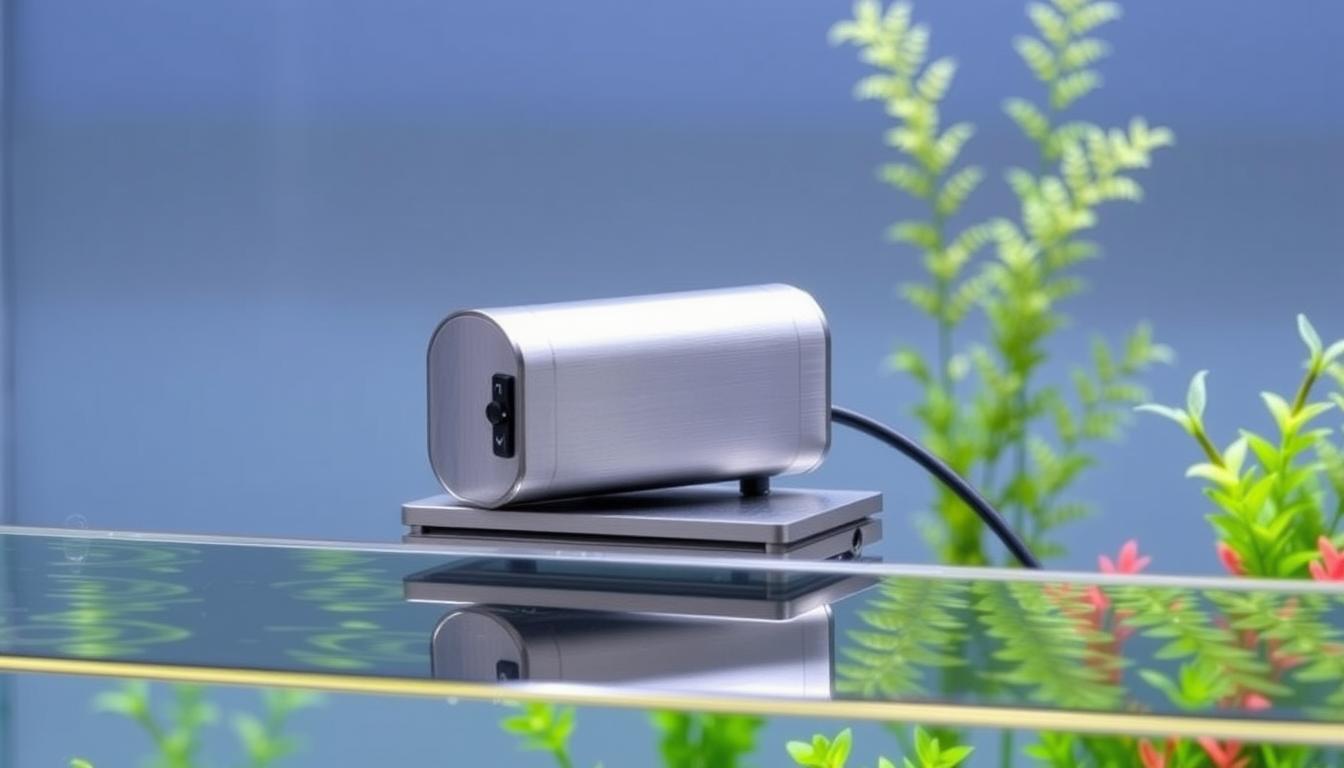
Submersible heaters sit fully in the water and provide consistent, efficient heat. They’re easy to position (behind décor or near the filter outflow), work well in most freshwater tanks, and are a common choice for a 20-gallon display.
Hang-on models (partially submerged) can be simpler to install but tend to be a bit less efficient than fully submersible units. If you use hang-on heaters, consider two smaller units on opposite ends to reduce cold pockets and even out temperature across the tank.
In-line heaters install in the filter loop (canister or external filter) and hide equipment for a clean look. They give very even circulation and steady temperature but require compatible plumbing and a pump rated for the added head; they’re a good fit when your equipment supports inline mounting.
Heating cables or mats sit under the substrate and are useful in planted tanks where warming the root zone helps plant growth. They distribute gentle heat but complicate later substrate work and can be less practical for routine maintenance; follow manufacturer guidance closely, especially with acrylic tanks or deep substrates.
Choosing the right type is partly about trade-offs: submersible for simplicity and efficiency, inline for hidden, even heating, hang-on for easy retrofits, and cables/mats for planted setups that need distributed warmth.
One unit vs two: even heat and redundancy
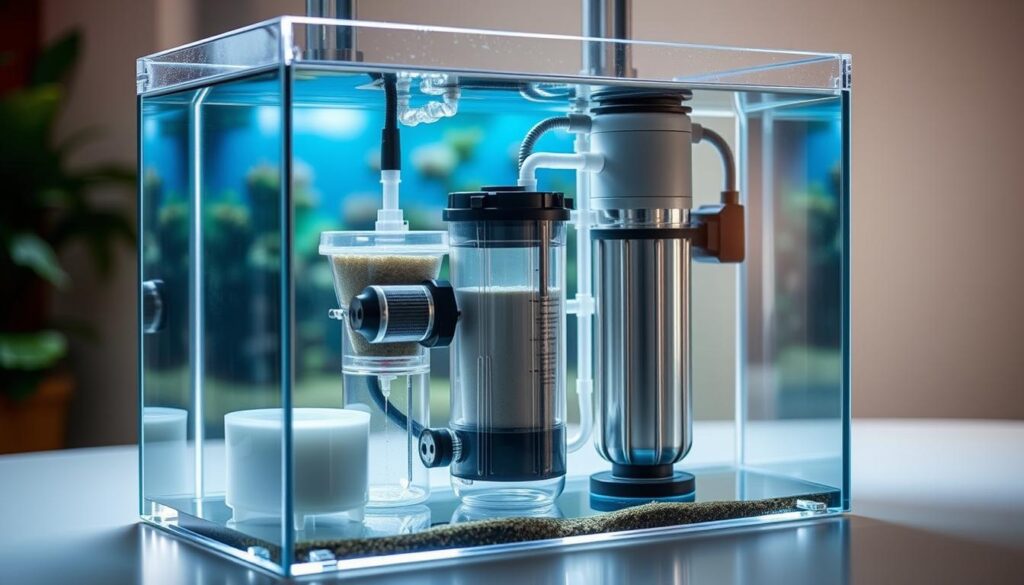
Running two heaters eases strain on each device and protects fish if one fails. For a 20-gallon tank, split your total wattage so each heater shares the job — for example, instead of one 60W unit use two 30W heaters, or two 40W units if you need extra recovery power. Position them on opposite sides near the filter return so warm water spreads quickly and temperature gradients are minimized.
Match the heater element length to aquarium height so flow carries heat through the column without creating hot spots at the glass. A practical placement guideline is to mount each heater within ~6–12 inches (15–30 cm) of the filter outflow and angle them slightly into the current to promote mixing. Avoid oversized gear — a stuck thermostat on a high-wattage unit can raise water temperature several degrees quickly.
“Two smaller units offer smoother control and safer backup than a single oversized option.”
Quick examples
- Typical living room (68°F / 20°C) to mid-70s target: two 25–35W heaters (total ≈50–70W).
- Cool room (low 60s°F / ~16°C) or faster recovery needed: consider two 50–75W heaters rather than one large unit (total ≈100–150W).
Troubleshooting if one heater fails
- Immediate steps: unplug the failed heater, check its thermostat and power lead, and monitor tank temperature with a reliable thermometer.
- Short-term: if the second heater remains functional, it should hold temperature while you replace or test the failed unit.
- Long-term: treat heater failure as a prompt to inspect equipment yearly — mineral buildup, cracked glass, or erratic cycling are signs it’s time to replace the unit.
- Place heaters in strong flow near the filter outflow.
- Match tube/element length to tank height for even distribution.
- Choose heater wattage and type that fits your maintenance routine and equipment setup.
Set up for success: placement, control, and safety to maintain stable water temperature
Good placement and simple routines keep temperatures steady and fish calm. Place heating elements near the filter outflow so warm water moves across the display and avoids cold pockets. Mount each device at roughly a 45-degree angle into the flow to smooth thermostat cycling and reduce frequent on/off stress.
Thermostat and controller strategy
Use two units with staggered set points—set the primary heater to your target temperature (for example, 77°F / 25°C) and the secondary a few degrees lower (74–75°F / 23–24°C) to act as a safety net. If you add an electronic controller, make it the primary control for precision and alarms; keep the second heater as a mechanical backup so one device catches failures.
Verify and fine‑tune with thermometers
Check temperature in multiple spots: front and back, top and mid-level, and near the outflow. Use a reliable digital thermometer or dual probes and record readings over several days. Nudge heater position, angle, or setpoints until readings match within a degree or two across the tank.
Essential safety habits
Before major water changes, unplug heaters so elements never run dry. Fit drip loops on all cords and use a snug cover to reduce evaporation and heat loss. Avoid oversized heater wattage to limit the risk if a thermostat sticks; remember that pumps and lighting add small amounts of heat that can affect your final settings.
“Thoughtful placement, layered control, and routine checks deliver the steady environment fish need.”
Quick safety checklist
- Position heaters in strong flow near the filter outflow (mount within ~6–12 inches / 15–30 cm of return when possible).
- Stagger set points or use a dedicated controller with alarm and auto-shutoff as the primary control.
- Verify temperatures in several locations with a reliable thermometer or dual-probe controller.
- Unplug during large water changes, use drip loops, and inspect heaters yearly for cracks, buildup, or erratic cycling.
Conclusion
Small, thoughtful choices in wattage and setup make the biggest difference to fish health. For a typical home with a 68°F (20°C) room aiming near 76–78°F (24–26°C), plan about 50–75 watts total for a 20-gallon (≈76 L) tank and split that power between two heaters to add redundancy and even flow.
Stagger set points, place units near the filter outflow, and verify temperature in several spots with a reliable thermometer. Avoid oversizing — a stuck thermostat can cause rapid rises in degrees and put fish at risk.
Use drip loops on cords, unplug heaters during major water changes, and choose the heater type that fits your layout and maintenance routine. Do these simple steps and your equipment will quietly keep the environment stable while fish thrive.
FAQ
How many watts do I need to heat a 20-gallon aquarium?
How do I calculate wattage using room and target water temperatures?
Can you give real scenarios showing why 50–75W is enough in U.S. homes?
When should I use more power, like 100–150 watts total?
Which heater type is best: submersible, hang-on, inline, or heating cables?
Should I use one heater or two in a 20-gallon setup?
Where is the best place to mount a heater for consistent temperature?
How should I set thermostats and controllers for reliability?
How can I verify temperature uniformity throughout the tank?
What safety practices prevent accidents and protect equipment?